Sphynx Cat, the Hairless Cat: Personality, Care and Price

Some cats go unnoticed, and then there's the Sphynx. You can't cross paths with this feline without noticing it: bare skin stretched over a muscular body, huge bat-like ears, an intense stare, and a surprising warmth when it curls up against you. It's nicknamed "the cuddliest cat in the world," and that's no marketing myth. Many people also search for it as the "Egyptian cat," convinced it descends straight from the cats of the pharaohs, but as we'll see, the reality is far more surprising. Behind its alien looks hides one of the most affectionate, funny, and endearing companions you could ask for. Let's find out who is really hiding under that peach fuzz.
Sphynx and Egypt: Where Does the "Egyptian Cat" Really Come From?
This is the most persistent confusion about the breed, and it deserves to be cleared up right away: the Sphynx cat has no Egyptian origins. Neither its ancestors, its mutation, nor its breeding come from Egypt. The mix-up comes down to a single word: its name, chosen by the first breeders in reference to the Great Sphinx of Giza, whose sleek silhouette, seated posture, and enigmatic profile strangely echo those of this hairless cat. The "y" in Sphynx is actually used to tell the breed apart from the monument.
This association was reinforced by an iconographic detail: the ancient Egyptians did revere cats, linking them to the goddess Bastet, and portrayed them in smooth, golden statuettes with tall, upright ears, figures that look a lot like a modern Sphynx. But those statuettes stylized ordinary furry cats. No text, no mummy, and no fresco proves that a hairless cat existed in ancient Egypt.
If you're looking for a true "Egyptian cat," the breed that claims that lineage is the Egyptian Mau: a naturally spotted cat with a short, speckled coat, whose markings resemble those seen in the wall paintings of ancient Egypt. So it has nothing to do with our hairless Canadian cat. Two breeds, two histories, two continents, and a search-engine mix-up that refuses to die.
- Sphynx: hairless cat, Canada, 1966, spontaneous genetic mutation.
- Egyptian Mau: spotted cat, claimed lineage from ancient Egypt, short and dense coat.
- Common ground: only an ancient-inspired name for the first, and a temple-statue look.
A cat without fur gets cold before anyone else: our chenille cat cave gives it a semi-enclosed cocoon to warm up in, at €44.99 (about $49.49), free shipping.
History and Origins of the Sphynx Cat
The true story of the Sphynx begins in Canada in 1966, when a completely hairless kitten was born in an otherwise ordinary litter in Toronto. Its mother was a perfectly ordinary domestic shorthair. The lack of hair comes from a spontaneous, natural genetic mutation carried by a recessive gene: to be born hairless, a kitten must inherit the mutated version of the gene from both parents. Intrigued, breeders decided to work with this trait to stabilize it, giving rise to a full-fledged line.
The road was full of obstacles: inbreeding, fragile early litters, and the need for outcrosses to strengthen the gene pool. In the 1970s, other hairless kittens appeared spontaneously in North America and widened what was then a dangerously narrow gene pool. It was notably through pairings with Devon Rex cats, themselves carriers of a coat mutation, that the breed gained robustness, health, and diversity. These crosses also explain some shared traits: the fine build, the large ears, the exuberant temperament.
The name "Sphynx" was chosen in reference to the enigmatic statues of antiquity, whose sleek silhouette recalls that of this singular cat. Long regarded as a mere curiosity, it is now recognized by all the major cat associations, TICA, CFA, FIFé, LOOF, and regularly appears among the most adopted breeds. The Sphynx has gone from genetic oddity to beloved companion all over the world.
Physical and Behavioral Characteristics
Size, Weight, and Appearance
The Sphynx is a small to medium-sized cat with a surprisingly muscular, heavy body for its frame: expect 7 to 9 lb (3 to 4 kg) for a female and 9 to 11 lb (4 to 5 kg) for a male. Its best-known feature is of course its coat… or rather its apparent lack of one. The Sphynx isn't truly bare: a fine down, soft as peach skin, covers its warm, velvety skin. To the touch, it feels like petting warm suede. A light fuzz often remains on the nose, ears, tail, and toes.
Its skin has wrinkles, especially pronounced on the muzzle, forehead, and shoulders, and a well-typed Sphynx should in fact show a nicely wrinkled forehead. It can come in all the colors and patterns you'd find on the fur of a regular cat: the pigment is in the skin itself, so a Sphynx can be "tabby," "bicolor," or "colorpoint" to the naked eye. Its ears are large and wide open, and its lemon-shaped eyes are expressive and wide open to the world. Its tail is thin and whip-like, often ending in a small tuft of hair. Another little-known detail: the Sphynx doesn't have full whiskers, and its whiskers are short, broken, or even absent.
Its body temperature feels higher to the touch, not because it has a fever, but because no fur sits between its skin and your hand. That's what earns it its reputation as a "living hot water bottle."
Personality and Temperament
While the Sphynx fascinates with its looks, it's above all its personality that wins over adopters. This cat is a true velcro cat, exuberant and deeply attached to its humans. It follows you from room to room, invites itself onto your lap and under the covers, and demands constant attention. Solitude and Sphynx don't mix: this feline needs company and gets down easily if left alone for long hours.
Energetic and playful, it keeps a kitten's spirit all its life. Curious about everything, it climbs, explores, fetches the balls you throw, and takes an active part in household life, even when nobody asks. Its sociable nature makes it an excellent companion for families, children, and even other pets; it often handles the arrival of another cat or a dog better than most cats. Smart, it learns fast, understands its name, opens cupboards, and loves interactive play. It's also quite talkative, with a repertoire of meows, trills, and loud purrs.
Finally, the Sphynx is a real heat seeker. Its bare skin constantly pushes it to look for warmth: your lap, the crook of your arm, a radiator, a sunbeam, or the coziest blanket in the house. This need for warmth only strengthens its clingy side, and it's precisely what creates such a special bond with it.
To channel this quest for warmth, a bed that mounts on the radiator is the solution Sphynx cats love most: discover our selection of radiator cat beds.
Sphynx Diet and Nutrition
This is the point future adopters underestimate the most. A Sphynx eats significantly more than a typical cat of the same weight, often 20 to 30% more calories. The reason is simple: without insulating fur, it constantly loses heat and has to burn more energy to maintain its body temperature. A hungry Sphynx isn't a greedy Sphynx: it's a Sphynx keeping itself warm.
A few pointers for feeding it well:
- A diet rich in animal protein: look for a food with meat or fish as the first ingredient, a high protein level (ideally 38% or more for dry food) and few grains.
- Quality fats: they provide the energy its metabolism needs and nourish its skin from within. Omega-3 and omega-6 fatty acids (salmon oil, borage oil) help limit dry skin and excess sebum.
- Small meals rather than unlimited free feeding: three to four small meals a day, or an automatic feeder, suit its rhythm better than a single big meal. Free grazing can work for a very active cat, but keep an eye on its weight.
- Wet food on the menu: pâté and fresh pouches increase its water intake and ease the load on its kidneys and bladder. The ideal is a mixed ration of dry and wet food.
- Encouraged hydration: the Sphynx often drinks little on its own. A cat water fountain, fresh water and several water stations around the house make a real difference.
Beware of the myth that "the Sphynx can eat without limits." Its huge appetite actually makes it prone to weight gain when it lives in an apartment and doesn't burn much energy, and a few extra ounces weigh heavily on a 4 kg (about 9 lb) cat. Weigh it once a month: on a hairless cat, weight gain shows up to the naked eye well before it would on a furry one. Finally, adjust portions for winter, when its energy needs climb even higher.
Sphynx Health and Common Conditions
The Sphynx is generally a sturdy, lively cat, with a life expectancy of 12 to 16 years given good care. Like any breed that comes from a limited gene pool, though, it has predispositions you should know about before adopting.
Hypertrophic cardiomyopathy (HCM)
This is the breed's main health concern. HCM is a thickening of the heart muscle that eventually interferes with how the heart works. It can stay silent for a long time, then show up as shortness of breath, unusual tiredness or, in severe cases, an acute episode. Two habits are essential: choose a breeder who has their breeding cats' hearts scanned every year by a veterinary cardiologist, and have a follow-up echocardiogram done on your own cat, usually around age 1 and then regularly throughout adulthood. When caught early, HCM can be managed well with medical care.
Skin conditions
With no fur to absorb sebum, the Sphynx's skin gets oily and can develop seborrheic dermatitis, blackheads (often on the chin and tail), and even fungal infections in folds that aren't dried properly. None of this is inevitable: regular, well-done skin care is enough in the vast majority of cases. A sunburn, on the other hand, happens quickly, even behind a window, and repeated exposure raises the risk of long-term skin damage.
Other things to watch
- Dental problems: gingivitis and tartar are common; a yearly checkup and regular brushing are strongly recommended.
- Respiratory sensitivity: kittens are more vulnerable to upper respiratory infections in their first weeks.
- Congenital myopathy: rare, but present in certain bloodlines and detected through genetic testing of breeding cats.
- Getting chilled: a home below 68°F (20 °C), a draft or an unprotected winter outing can quickly make it sick.
- Anesthesia and thermoregulation: always tell your vet that your cat is a Sphynx, since heat loss during surgery is more pronounced.
Pet health insurance is especially worth considering for this breed, given the heart monitoring and possible dermatology visits. And remember, the Sphynx is an indoor cat: it isn't made for extreme cold or prolonged direct sun.
Curious about your cat's age in human years? Our tool calculates it instantly.
Daily Care: The Skin, Ear and Nail Routine
Having no fur doesn't mean "zero upkeep." It's actually the opposite. The Sphynx needs specific care that no other breed requires, but it quickly becomes a routine of just a few minutes:
- Regular baths: its oily skin needs a lukewarm bath every 1 to 2 weeks, with a gentle, cat-safe pH-balanced shampoo, to prevent skin blemishes. Dry it right away in a warm towel, never in a draft. Get it used to bath time as a kitten: most Sphynx cats end up enjoying warm water.
- Wiping between baths: a soft alcohol-free wipe or a damp cloth run over the skin folds, armpits and belly two to three times a week noticeably spaces out the baths.
- Ears: its large ears, with no protective hair, quickly build up brown wax, so plan on a weekly cleaning with a vet-approved ear cleaner.
- Nails and paw pads: trim the nails every two to three weeks and clean the base of the claws, where sebum also builds up.
- Cold and sun: it feels the cold in winter (clothes and a warm cat bed are welcome) and is prone to sunburn behind a window in summer. Provide shaded spots.
- Household linens: the Sphynx leaves greasy marks on light-colored fabrics. Washable throws over its favorite napping spots make life easier.
One reassuring point: it doesn't shed, doesn't get hairballs, and its "grooming" comes down to this hygiene ritual. In practice, many adopters find the upkeep less demanding than the daily brushing a Persian needs.
Sphynx Price and the Real Yearly Budget
Adopting a Sphynx is a significant investment. From a breeder, the price generally falls between €1,200 and €2,500 (about $1,320 to $2,750), with higher prices for cats meant for showing or breeding. Several factors explain the differences: the kitten's bloodline and pedigree, the rarity of its coat and skin color (colorpoint patterns and rare coats cost more), the reputation and seriousness of the breeder, and the care provided, including genetic testing, heart scans of the parents, vaccines, identification and vet follow-up.
To put that price in context, here are typical price ranges from European breeders for breeds often compared with the Sphynx:
| Breed | Typical breeder price | Distinctive trait |
|---|---|---|
| Sphynx | €1,200 to €2,500 (about $1,320 to $2,750) | Hairless cat, very affectionate, feels the cold |
| Devon Rex | €800 to €1,500 (about $880 to $1,650) | Short, wavy coat, genetic cousin of the Sphynx |
| Toyger ("tiger cat") | €1,200 to €3,000 (about $1,320 to $3,300) | Tiger-striped coat like a miniature tiger, a rare breed |
| Egyptian Mau ("Egyptian cat") | €900 to €1,800 (about $990 to $1,980) | Naturally spotted cat, with a claimed ancient lineage |
| Bengal | €1,000 to €2,500 (about $1,100 to $2,750) | Leopard-like coat, very active temperament |
These figures reflect typical prices on the breeder market, not prices charged by our store. To be perfectly clear: Le Félin does not sell cats. Our job is to equip and pamper the ones who already share your life.
How much does a Sphynx cost each month?
The purchase price is only the entry ticket. The real budget is what comes back every month, and it runs higher than for a typical cat:
- Premium food: €35 to €55 (about $39 to $61), for more generous portions and a large share of wet food.
- Skin care: €8 to €15 (about $9 to $17), for gentle shampoo, wipes and ear cleaner.
- Litter box supplies: €10 to €20 (about $11 to $22).
- Health costs spread over the year: €20 to €45 (about $22 to $50), for vaccines, dewormers, heart checkups or an insurance premium.
- Warmth and accessories: €10 to €25 (about $11 to $28), for clothes, warm bedding, wear and tear on fabrics, and slightly higher winter heating.
That adds up to a realistic budget of around €85 to €160 per month (about $94 to $176), not counting unexpected vet bills. Also plan for a first-year setup budget of €200 to €400 (about $220 to $440): a cat tree, beds, a cat carrier, a cat water fountain, a litter box and a small wardrobe.
Welcoming and Equipping Your Sphynx
Welcoming a Sphynx starts with thinking about how much it feels the cold. Keep your home at a mild, steady temperature, at least 68 to 72°F (20 to 22 °C), away from drafts. Set up warm, soft spots where it can take refuge, ideally up high and near a heat source. A well-padded, enveloping warm cat bed is the number one investment for a Sphynx: it gives your cat the cozy cocoon its bare skin needs to stay at a comfortable temperature.
Consider a few light clothes for the chilliest days, which protect its skin without hampering it. Choose soft fabrics with no prominent seams or tight elastic, and check that no fold rubs against the skin. For hygiene, have what you need to clean its skin and ears regularly. Finally, this bundle of energy needs to burn it off and climb: a sturdy cat tree, scratching posts and interactive cat toys will suit its playful temperament. A cat water fountain will also encourage it to drink well, which is valuable for its urinary health.
One last piece of advice, and often a decisive one: because it copes very poorly with being alone, think about your daily rhythm before adopting. A Sphynx thrives in a home where someone is around, or with another pet to share its days and its warmth.
Affectionate, playful, and always on the hunt for warmth, the Sphynx is an extraordinary companion who transforms daily life for those who adopt one. Give them the right gear and plenty of company, and they'll repay you a hundredfold in cuddles. Want to see how this one-of-a-kind cat fits into the wider family of cat breeds? Keep exploring with the cat breed family tree.
Similar breeds to discover: Cornish Rex and Selkirk Rex.
Gear for a Sphynx: our recommendations
Above all, the Sphynx seeks warmth and calm. A spot by the radiator, a closed cave, or a cat bed with high sides suits them better than a large cat tree.
- Radiator cat bed: natural wood, hangs on the radiator with no tools, €39.99 (about $44)
- Cat cave: enclosed bed, 14 in (35 cm) tall, cocoon effect, €44.99 (about $49)
- White cat bed: ribbed plush fabric, high sides, €39.99 (about $44)
See the full collection → · Free shipping worldwide.
Sphynx Cat Breed Profile
The key traits of the hairless cat at a glance:
| Trait | Details |
|---|---|
| Origin | Canada, 1966 (natural mutation), no connection to Egypt |
| Size | Small to medium, 6.6 to 11 lb (3 to 5 kg) |
| Life expectancy | 12 to 16 years with good veterinary care |
| Coat | Hairless, covered in fine down; wrinkled skin that feels warm to the touch |
| Eyes | Large, lemon-shaped |
| Temperament | Very affectionate and playful, a true "Velcro cat," talkative |
| Diet | Energy needs 20 to 30% higher than a typical cat |
| Grooming | Bath every 7 to 15 days, ears cleaned weekly |
| Health | Predisposed to hypertrophic cardiomyopathy (HCM) |
| Breeder price | €1,200 to €2,500 (about $1,320 to $2,750), monthly budget of €85 to €160 (about $94 to $176) |
| Good to know | Not hypoallergenic (they still produce the Fel d 1 protein) |
 Le FélinOur picks
Gear for a Sphynx who's always cold
A well-settled Sphynx is a cat who finds warmth without hunting for it all day. Here are three beds that cover their whole day, from sunbathing to deep naps.


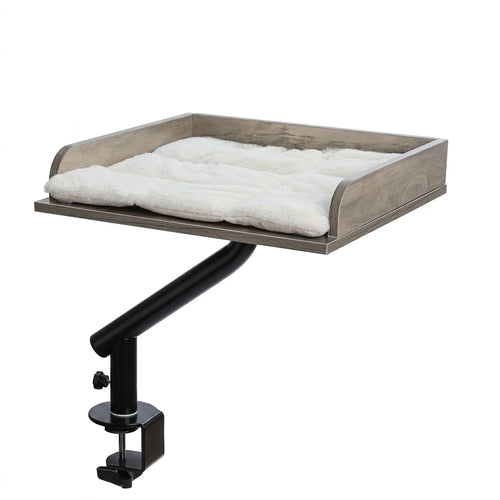
- 01Full sun up high, without taking up floor space€29.99 (about $33)
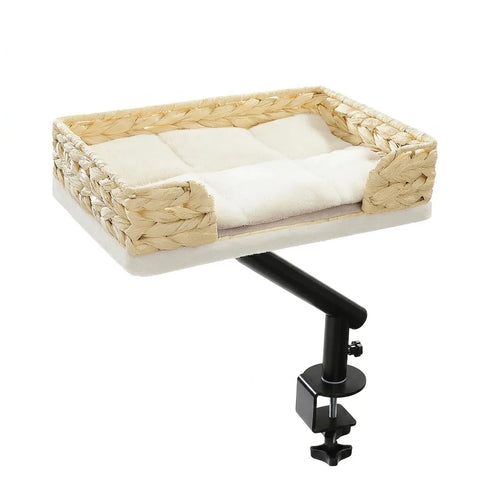
- 02Wraparound sides for sleeping curled up€39.99 (about $44)
- 03Sisal for burning energy, a plush hammock for recovering€106.99 (about $118)
📚 Sources et références
- LOOF (Livre Officiel des Origines Félines). Standard de race : Sphynx. https://loof.asso.fr
- TICA (The International Cat Association). Sphynx, profil de race. https://tica.org
- CFA (Cat Fanciers' Association). Sphynx, profil de race. https://cfa.org
- FIFé (Fédération Internationale Féline). Standard de race Sphynx. https://fifeweb.org
- International Cat Care. Sphynx, fiche de race. https://icatcare.org
- International Cat Care. Hypertrophic Cardiomyopathy (HCM) in cats. https://icatcare.org
FAQ
-
No, the Sphynx isn't completely naked: its skin is covered in an extremely fine down, soft as a peach, often more noticeable on the nose, ears, tail, and toes. This fuzz never forms a true coat, so the cat looks hairless at first glance and feels warm to the touch. Its whiskers are short, broken, or missing altogether.
-
No, this is the most common myth about the breed. Cat allergies are triggered by the Fel d 1 protein found in saliva and skin secretions, and the Sphynx produces it just like every other cat. It simply spreads fewer allergens through the air because it doesn't shed, which may help some people with mild allergies, but an extended trial visit before adoption is still essential.
-
The Sphynx is an extremely affectionate and sociable cat, often nicknamed "the world's cuddliest cat." It follows its humans from room to room, demands constant attention, burrows under the covers, and doesn't cope well with being alone. Energetic, chatty, and playful throughout its life, it gets along very well with children and other pets.
-
From a breeder, a Sphynx kitten typically costs between €1,200 and €2,500 (about $1,320 to $2,750). The price varies with bloodline, pedigree, coat rarity, and the breeder's reputation, and the care included (genetic testing, cardiac ultrasound of the parents, vaccinations, identification) also plays a role. To be clear, Le Félin does not sell cats: this range only reflects prices seen in the breeder market.
-
The Sphynx's main predisposition is hypertrophic cardiomyopathy (HCM), a thickening of the heart muscle that calls for regular echocardiograms and a breeder who screens their breeding cats. It is also prone to skin conditions (seborrhea, blackheads, sunburn) and dental problems like gingivitis, and as a kitten it is more vulnerable to cold and respiratory infections. With good veterinary follow-up, its life expectancy is 12 to 16 years.
-
Its skin produces oil that no fur absorbs, so plan on a lukewarm bath with a gentle cat-safe, pH-balanced shampoo every one to two weeks, followed by immediate drying in a warm towel, away from drafts. Between baths, a damp washcloth or an alcohol-free wipe run over the folds, belly, and armpits two to three times a week is enough. Also clean its ears weekly, protect it from the sun, even behind a window, and support its skin from within with a diet rich in omega-3s.
-
Its easygoing nature and sociability make it an excellent first cat when it comes to bonding, but it is not a "no-fuss" cat. It needs a regular hygiene routine, a heated home at around 20 to 22 °C (68 to 72°F), a higher-than-average budget, and above all daily company, because it copes very poorly with long days alone. A motivated, available beginner will do very well; someone who is often away should look at a more independent breed.
-
Budget a realistic €85 to €160 (about $94 to $176) per month, not counting unexpected vet bills. It breaks down into premium food (€35 to €55, or about $39 to $61, since its energy needs are 20 to 30% higher than an average cat's), skin and ear care (€8 to €15, or about $9 to $17), litter box supplies (€10 to €20, or about $11 to $22), health costs spread over the year or insurance (€20 to €45, or about $22 to $50), and thermal comfort (€10 to €25, or about $11 to $28). Add €200 to €400 (about $220 to $440) in first-year setup costs for the cat tree, warm cat beds, cat water fountain, and clothing.


Your cat’s well-being, our number one priority
A French team that lives with cats, products chosen for their instincts (climbing, scratching, watching, hiding) and over 100 guides written to help you choose well.
- Free deliveryFrance and Europe, no minimum
- Secure paymentCard, Apple Pay, PayPal, Shop Pay
- 30-day returnsSatisfied or refunded
- Expert advice100+ guides and tutorials, support in France