Why Is My Cat Meowing at Night?

Does your cat turn into a fire alarm the second you turn off the light and slide under the covers? You're not alone in this forced insomnia. Nighttime meowing is one of the most common behavior problems for cat owners, and one of the most exhausting. It's often linked to boredom, hunger, territorial insecurity, or plain instinct, but it isn't inevitable. With a few targeted changes to your cat's environment and routine, you can fix it.
Why Does My Cat Meow at Night?
During the day, your cat may look like a zen master who can sleep 16 hours straight, but at night a very different personality often shows up: more active and much more vocal. Understanding why your cat meows at night means looking at their ancestral biological rhythm. Cats aren't strictly nocturnal, they're crepuscular: they're naturally wired to hunt at dawn and dusk.
Is your cat up at the crack of dawn? The suction cup cat window perch gives them a lookout post without waking the whole house, for €29.99 (about $33), free shipping.
In most cases, this behavior is a form of communication amplified by the sudden silence in the house. Your cat is trying to express an urgent unmet need: ravenous hunger, deep boredom, territorial stress, or simply a wish for social interaction. Before looking for a miracle fix, you need to identify the exact trigger, because you can't treat a hungry cat the same way as a bored one.
What's more, cats see extremely well in low light thanks to their tapetum lucidum, a reflective layer behind the retina. Where you see only darkness, they see a fascinating playground full of shadows and tiny movements. This sensory gap between you and your cat is often the source of the misunderstanding: they're awake and stimulated while you're trying to rest.
Why Does My Cat Meow at the Closed Door?
It's an absolute classic: as soon as your bedroom door closes, the concert begins, sometimes with frantic scratching on the wood. It's not (only) to annoy you or out of whim. For a cat, a closed door is an illogical and stressful break in their territory. Cats are "control freaks": they have a deep need to patrol their entire domain to make sure no intruder or danger is lurking.
By blocking access to a room where you are (your bedroom), you create a double frustration. First, you create an inaccessible "mystery zone" that obsesses them. Second, you cut yourself off from the colony. Cats may hunt alone, but they're still social animals that like to sleep near the people they're attached to in order to feel safe.
If you absolutely want to sleep with the door closed for hygiene or allergy reasons, it's crucial to set up their space outside the bedroom so they feel completely comfortable there. A super comfy spot like our white cat bed can offer a reassuring alternative. The soft, enveloping texture of this type of cat bed mimics a mother's touch, which helps considerably to reduce nighttime separation anxiety.
As experts at the SPA (a French animal protection society) note in their guides on feline behavior, being able to see or simply smell their owner is often enough to calm a cat, without necessarily needing direct physical contact in the bed.

Why Does My Older Cat Meow at Night?
With age, our companions' behavior and physiology change dramatically. If your once quiet, independent cat starts crying out at night as they get older (usually after age 10 or 12), it should never be ignored. It can be an early sign of cognitive dysfunction, a syndrome similar to Alzheimer's disease in humans.
Disorientation in space and time causes major anxiety once the house goes dark. An older cat can get "lost" in their own living room, no longer recognize familiar shapes, and meow in distress to locate their humans and feel reassured. On top of that, the silence of the night can heighten the feeling of isolation.
Physical pain shouldn't be overlooked either. At night, the temperature drops and long periods of lying still can trigger joint pain from arthritis. A cat in pain doesn't sleep: they pace and cry out. Other medical causes like high blood pressure or hyperthyroidism can also increase nighttime irritability. A vet visit is a must to rule these out.
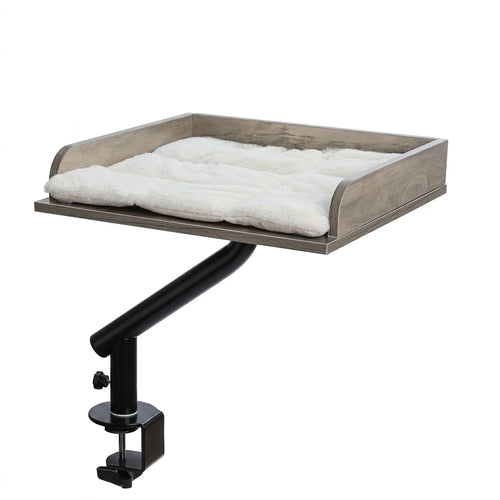
To help them day to day, put small night lights in the hallways to help them find their way. It's also essential to give them a comfortable, easy-to-reach lookout spot that doesn't require much physical effort. A cat window perch placed low to the ground lets them watch the outdoors and stay mentally stimulated without straining their sore joints.

Why Does My Cat Wake Me Up at Night to Eat?
You probably know the infamous "empty bowl syndrome" at 4 a.m. In the wild, cats are opportunistic grazers that eat 10 to 15 small meals a day, including at night. Their stomach is small and their metabolism is fast. If they go 8 hours without food, their hunting instinct kicks in... and so do you.
The classic mistake 90% of owners make is getting up, even just once, to fill the bowl for some peace and quiet. By doing that, you set up "intermittent reinforcement." It's the same psychology as a slot machine: your cat learns that if they meow long enough and loud enough, they eventually hit the jackpot (kibble). By giving in, you lock in this behavior for years.
The solution is feeding independence. Forget the empty bowl in the evening. Use automatic feeders programmed to dispense a small portion at 3 a.m., or better, scatter treat-dispensing cat toys around the house. They'll have to "hunt" for their food, sniffing and handling objects to eat. This keeps them mentally busy, tires out their brain, and fills their stomach with no human involvement at all.

Why Does My Cat Meow at Night with a Toy?
You may have already found your cat yowling in a low, guttural voice with a plush mouse or a foam ball stuck in their mouth. That muffled cry is very distinctive and often startling. It's a triumphant hunting behavior, inherited directly from their wild ancestors.
Your cat is proudly announcing that they've "killed" prey. In the wild, a mother cat brings prey, alive or dead, back to her kittens and makes this sound to call them to the feast. Here, you are the "colony." It's a gift, or a show of hunting skills, meant to help the group survive. Whatever you do, don't scold them. It's a sign of excellent mental and physical health, even if the timing is terrible for a hunting lesson.
However, if this happens every night, your cat has too much energy to burn. To channel that predator energy before lights out, give them a suitable structure like one of our cat trees, where they can climb, jump and act out a vertical hunt to burn off every last bit of energy before bedtime.

How to calm a cat that meows at night
Restoring peace and quiet to your home takes patience, consistency and a behavioral strategy with three key steps: ignore, enrich and ritualize.
-
Total ignoring (the hardest part): This is the cornerstone of success. Don't yell, don't get up, don't pet them, and don't even sigh loudly. Any reaction from you, even a negative one (shouting "Be quiet!"), is a form of social attention. For your cat, that's a win: they got you to interact. Invest in earplugs for the first two weeks, because the behavior will get worse before it fades (this is the "extinction burst").
-
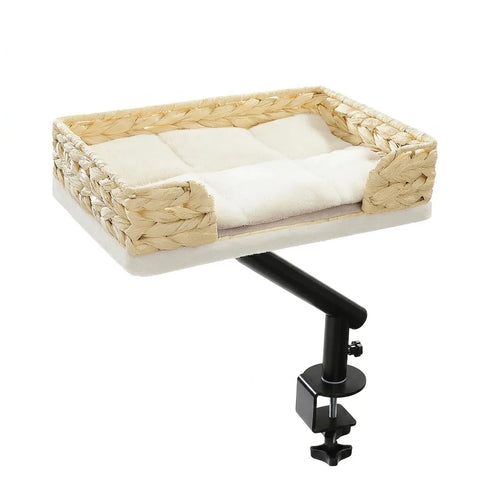
Enriching their environment: A bored cat will sleep all day to store up energy... and then burn it at night. They need plenty of independent activities while you're away. This is where vertical space really pays off. Giving your companion a cat window perch is an excellent strategy: it lets them watch the outside world (birds, passersby), stimulating their brain as much as a play session.
- The evening "Predation Cycle" ritual: Recreate the natural cycle of a wild cat. 15 to 30 minutes before bed, play hard with them (wand toy, laser) until they're out of breath. Right afterward, give them the biggest meal of the day (wet food if possible). Digestion will naturally lead to grooming and sleep. It's the "Hunt - Eat - Groom - Sleep" cycle.
If the problem persists despite all this, the National Order of Veterinarians sometimes recommends calming pheromone diffusers to reduce background stress and help your cat settle down overall.
 Le FélinWhat they need
Get ready for the night, starting in the evening
Ignore, enrich, ritualize: the last two steps take the right gear, not just patience. Here's what you need to keep their territory busy before lights out.


- A cozy, enclosed hideaway for quiet naps€24.99 (about $27)
- Three sisal poles and a ball to burn off energy in the evening€75.82 (about $83)
- A floor-to-ceiling course that doesn't waste a square foot€119.99 (about $132)
📚 Sources and References
- International Cat Care. Cat senses. https://icatcare.org
- MSD Veterinary Manual. Normal Social Behavior and Behavioral Problems of Domestic Cats. https://msdvetmanual.com
- Turner, D.C. & Bateson, P. (eds.). The Domestic Cat: The Biology of its Behaviour. Cambridge University Press.
- Bradshaw, J. (2013). Cat Sense. Basic Books.
FAQ - Why Does My Cat Meow at Night?
-
No, absolutely never. Physical punishment (hitting, spraying water) or verbal punishment (yelling) backfires. It raises your cat's stress level, which can make the meowing worse or trigger other problems like litter box accidents. Ignoring the behavior is the only effective "punishment" because it doesn't reward your cat's bid for attention.
-
Your cat is probably seeing or hearing something you can't perceive. Their senses are far sharper than yours: they can hear a mouse scurrying in the attic, water running through pipes, or spot a tiny gnat. It's often a frustration behavior, since they can't reach that "prey."
-
It's usually not necessary, since cats see very well in dim light. However, for a disoriented senior cat or an anxious kitten who just arrived, a small night light in the main room can reduce anxiety and help them find their litter box without stress.
-
It's completely normal, and heartbreaking. Your kitten has just left the warmth of their mother and the comforting scent of their littermates. They feel alone, lost, and vulnerable in an unfamiliar place. You can put a lukewarm hot water bottle (wrapped in a towel) and a piece of clothing that smells like you in their bed to mimic the presence of another body.
-
Yes, considerably. Spaying and neutering eliminate the hoarse, nonstop yowling linked to heat cycles (females calling for a mate) and to searching for partners or defending territory (males). If your cat isn't spayed or neutered and meows at night, that's often the main cause.


Your cat’s well-being, our number one priority
A French team that lives with cats, products chosen for their instincts (climbing, scratching, watching, hiding) and over 100 guides written to help you choose well.
- Free deliveryFrance and Europe, no minimum
- Secure paymentCard, Apple Pay, PayPal, Shop Pay
- 30-day returnsSatisfied or refunded
- Expert advice100+ guides and tutorials, support in France