Will My Cat Actually Use a Cat Window Perch?

You've spotted a lovely cat hammock made to attach to a window, and one question keeps nagging you: "What if my cat never uses it?" Don't worry, this is a very common concern. Cats are creatures of habit and are often wary of anything new... but they also love height, warmth, and a good lookout spot.
In this article, we'll look at how to tell whether your cat is likely to love a cat window perch, and above all how to choose one that's safe, comfortable, and irresistible. We'll go over the key buying criteria (weight limit, mounting, materials, placement...), the different types of hammocks (window, radiator, wall-mounted, hanging beds...), and practical tips to help your companion take to it without stress.
Why do cats love window hammocks?
To figure out whether your cat will use a hammock, it helps to understand what cats find so appealing about this kind of bed. A cat hammock, especially one placed up high or at the edge of a window, checks several boxes that matter to their well-being:
- Height: in the wild and indoors alike, cats like to survey their surroundings from above. A window hammock gives them an ideal perch to watch everything going on without being disturbed.
- Security: being up high helps a cat feel safe, out of reach of children, other pets, and foot traffic.
- Warmth and light: placed next to a window, a cat window perch lets your cat soak up the sun's rays, which they often love for long naps.
-
The view: birds, passersby, cars, rustling leaves... everything becomes a captivating show for your cat.
If your cat already likes to perch on the back of the couch, the windowsill, or the top of a cat tree, there's a good chance they'll enjoy a well-chosen, well-placed hammock.

Is your cat a good fit for a window hammock?
Every cat is unique. Before buying a cat window perch, ask yourself a few questions about your cat's temperament and build.
Your cat's temperament
Your cat is likely to use a hammock if:
- They already like to climb up high (chair backs, shelves, countertops, the top of a wardrobe...).
- They spend time at the window watching the outdoors.
- They're curious and readily explore new objects in your home.
On the other hand, a very timid cat that tends to stay on the floor or under furniture may need more time to accept a hanging bed. That doesn't mean they'll never use it, just that you'll need to introduce it gently.
Age and physical condition
A window hammock is a great fit for:
- Most healthy adult cats.
- Young cats and kittens (with supervision at first).
For senior cats, overweight cats, or cats with joint problems, look for:
- A hammock placed at a reachable height (ideally with a piece of furniture or a step nearby to make it easier to get up).
- A very stable bed with a wide surface and a non-slip fabric.
In every case, follow the manufacturer's weight guidelines and choose a model suited to your cat's size.

Key criteria for choosing a cat window perch
The right hammock can make all the difference between an accessory your cat ignores... and a bed that becomes their official nap spot. Here's what to check before you buy.
1. Weight limit and sturdiness
This is the first safety criterion. Always check:
- The maximum weight supported (some hammocks hold up to 22 to 33 lb / 10 to 15 kg, others much less).
- The quality of the suction cups or hooks: they should be wide, thick, and sturdy.
- The strength of the cables or straps connecting the platform to the glass.
If you have a large cat (Maine Coon, Norwegian Forest Cat, British Shorthair...) or a cat that's a bit "chunky," look for an XXL cat hammock or a model explicitly designed for larger cats.
2. How it attaches to the window
Most cat window perches use suction cups. To help them hold properly:
- Choose smooth glass with no texture, decorative film, or stickers.
- Look for suction cups that come off easily for regular cleaning.
- Some models come with suction cups that have locking levers, which are very handy for a more secure hold.
You can also find hanging cat beds that attach to the window frame or to a radiator. In that case, make sure the frame is compatible and stable.
3. Bed size and comfort
Your cat should be able to lie down, curl up, and even stretch out without hanging over the edge. So check:
- The width and length of the surface.
- Whether there's a cushion or a thick, comfortable fabric.
- Whether you can add a small blanket or throw in winter.
For cats that feel the cold, a good alternative is the radiator cat bed, which combines warmth and comfort while staying suspended.
4. Where to put the window hammock
Even the best hammock won't get used if it's in the wrong spot. Ideally, install it:
- On a window with an interesting view (garden, street, birds, trees...).
- Away from strong drafts.
- At a reasonable height for your cat (they should be able to get up there without putting themselves at risk).
- On a pane that you don't open wide several times a day.
If possible, avoid windows that get full sun all day in summer, which could turn the hammock into an oven. Choose a spot with a few hours of sun, or add a light curtain.
5. Materials, care, and durability
A good cat hammock should be easy to care for:
- Look for removable or machine-washable fabrics.
- Avoid materials that hold on to too much fur or odor.
- Regularly check the seams, cables, and suction cups for signs of wear.
A slightly non-slip fabric will feel more reassuring to your cat than a surface that's too smooth, where they could slide.

Cat Window Perch, Radiator Cat Bed or Wall-Mounted Hammock: Which Type to Choose?
Even if you're mainly looking for a cat window perch, it helps to know the other options so you can find the ideal hanging bed.
The cat window perch
This is the well-known suction cup model that attaches directly to the glass. Its advantages:
- Panoramic view of the outdoors.
- Saves floor space.
- Flexible installation that's easy to move.
It's the perfect choice if your cat loves watching out the window and you want to make the most of your space.
The radiator cat bed
The radiator cat bed hooks onto the radiator like a little hanging bed. It's a great fit for cats that feel the cold and love to sleep somewhere warm. Always check that it's compatible with your type of radiator, and don't use it if the temperature is too high.
The wall-mounted hammock or hanging bed for a cat tree
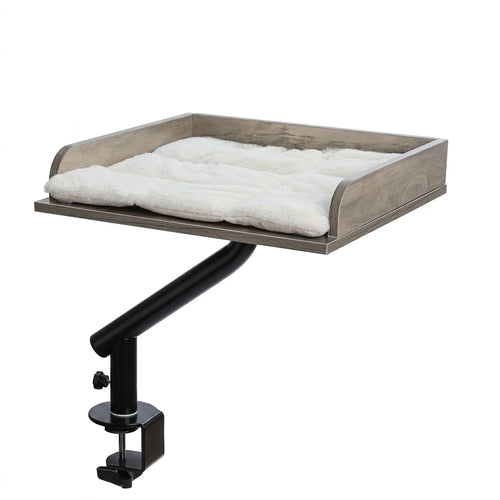
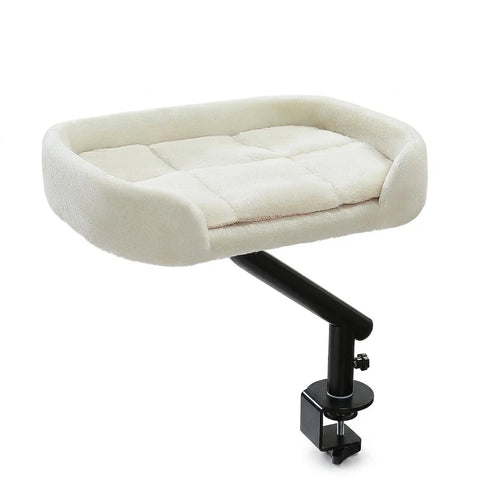
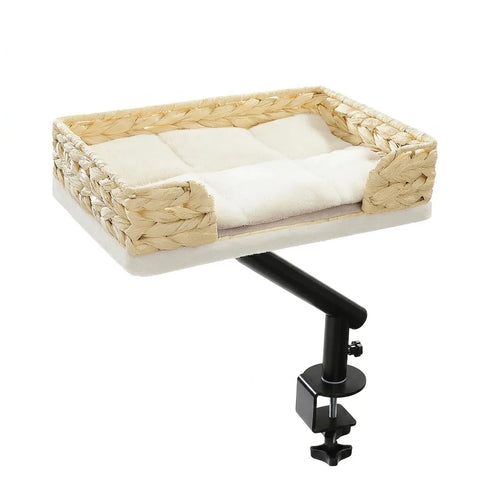
Some hammocks mount on the wall or are built into a cat wall shelf system, while others hang from a cat tree. They're perfect for stylish interiors or very active cats that love to climb. However, they take a bit more work to set up (drilling, wall mounting).
If your top priority is a view of the outdoors and keeping your cat mentally stimulated, a cat window perch is often the best first purchase.
How to Get Your Cat Used to Their New Hammock
Even with the ideal hammock, some cats take a little while to warm up to it. Here are a few tips to help them take the leap.
- Let them explore at their own pace: set up the hammock and let your cat come sniff it out, without forcing them to climb on.
- Make it inviting: place a few kibbles, treats or a favorite toy on the hammock.
- Use catnip if your cat is sensitive to it, to make the spot even more appealing.
- Add a familiar fabric (blanket, towel) carrying their scent to reassure them.
- Lead by example: gently pat the hammock, talk to your cat in a soft voice and offer encouragement.
Above all, never pick up your cat and place them in the hammock by force: they could come to associate this new item with being restrained and stay wary of it for a long time.

Mistakes to Avoid with a Cat Window Perch
For worry-free, safe use, be sure to avoid these common mistakes:
- Sticking the suction cups on dirty or greasy glass, which greatly reduces grip.
- Not checking the mounts regularly, especially at the beginning.
- Installing the perch on a window that opens wide, without taking precautions.
- Ignoring the weight limit stated by the manufacturer.
- Placing the perch too close to hazards below (toxic plants, sharp furniture corners, etc.).
By taking a few minutes to check these points, you greatly reduce the risk of accidents and improve the chances that your cat feels completely at ease.
Conclusion: Will My Cat Really Use Their Hammock?
There's no absolute guarantee, but one thing is certain: the better you match a cat window perch to your cat's size, temperament and habits, the more likely they are to adopt it. By following the safety criteria (mounting, weight, materials), placing the perch in the right spot and gently guiding your companion, you'll turn this simple accessory into a true favorite nap spot.
In the end, a cat hammock is more than a gadget: it's a way to enrich your cat's daily life, giving them a front-row view of the world and a cozy nook all their own. So, are you ready to try a window perch for your cat?

 Le FélinMail
Le FélinTo: youToday
Le FélinMail
Le FélinTo: youToday
Subject: The right cat hammock your cat will actually use
Hello,
Size, mounting, material: choosing the right model for your cat is what separates an ignored accessory from a favorite spot. Here are the hanging beds that check all those boxes.
Shop all cat window perches →📚 Sources and References
- International Cat Care (ISFM) and American Association of Feline Practitioners (AAFP). (2013). Feline Environmental Needs Guidelines. https://icatcare.org
- Turner, D. C. and Bateson, P. (eds.). The Domestic Cat: The Biology of its Behaviour. Cambridge University Press.
- Bradshaw, J. (2013). Cat Sense.
- MSD Veterinary Manual. Normal Social Behavior and Behavioral Problems of Domestic Cats. https://msdvetmanual.com
Cat Window Perch FAQ
-
A properly installed cat window perch with clean, good-quality suction cups is designed to stay firmly in place. Clean the glass and the suction cups before installing, press down firmly to push out the air, and stay within the stated weight limit. Check the mounts from time to time, especially in the first few weeks. If you have a large cat, choose a reinforced or XXL model for extra security.
-
With a shy cat, patience is key. Set up the cat hammock at a reasonable height and let your cat sniff it first. Put a few treats or a toy on it, without trying to pick your cat up and place them inside. Speak calmly and reward small steps (like putting a paw on it). Little by little, your cat will come to see the hammock as something positive and reassuring.
-
Yes, as long as you choose the right model and location. For a senior or overweight cat, opt for a hanging cat bed that comfortably supports their weight, with a wide, stable surface. Place it at a height that's easy to reach (perhaps with a piece of furniture in between to help your cat climb up) and keep an eye on their first attempts. If your cat has significant joint problems, ask your vet for advice before setting up an elevated bed.
WE'LL BE LAUNCHING OUR COLLECTIONS SOON, SO BE SURE TO SUBSCRIBE TO OUR NEWSLETTER.


Your cat’s well-being, our number one priority
A French team that lives with cats, products chosen for their instincts (climbing, scratching, watching, hiding) and over 100 guides written to help you choose well.
- Free deliveryFrance and Europe, no minimum
- Secure paymentCard, Apple Pay, PayPal, Shop Pay
- 30-day returnsSatisfied or refunded
- Expert advice100+ guides and tutorials, support in France