Indoor Cats: Ideal Apartment Size and Expert Tips

What Is the Minimum Space for a Cat in an Apartment?
Plan on about 20 to 25 m² (215 to 270 sq ft) for one cat, 40 m² (430 sq ft) for two cats, and 60 m² (645 sq ft) for three cats. No law sets a minimum living space for keeping a cat: these numbers are behavioral guidelines, not requirements. A small home with plenty of vertical space always beats a big, empty one 🐾.
The key numbers at a glance:
- 1 cat: 20 to 25 m² (215 to 270 sq ft), well organized (a studio is enough).
- 2 cats: about 40 m² (430 sq ft), with duplicate resources.
- 3 cats: about 60 m² (645 sq ft) and several retreat zones.
- Each additional cat: + 15 to 20 m² (160 to 215 sq ft) and + 1 litter box.
- Bare minimum: never less than 3 linear meters (about 10 ft) of perches and 2 hiding spots per cat, no matter the square footage.
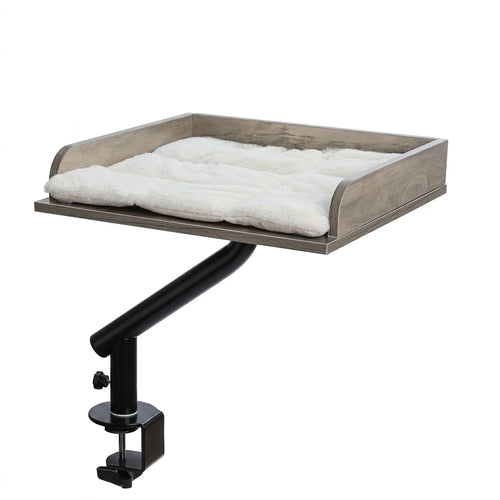
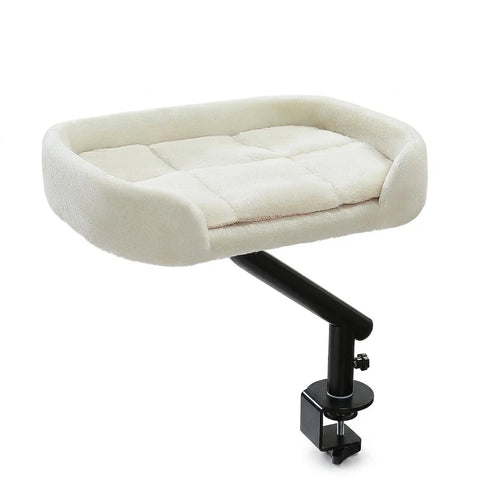
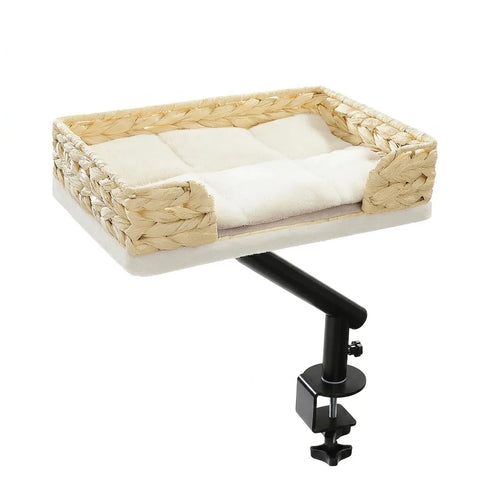
The small-space trick: a cat window perch adds a lookout spot without taking up a single square meter of floor.
The space you have and how you arrange it directly affect your cat's physical and mental well-being. An indoor apartment cat that lacks room or stimulation can become stressed, frustrated, overly hyper, or, on the contrary, very lethargic.
But these numbers are only a guideline: what really matters is how you set up the apartment for your cat. A few key elements for making the most of your apartment size:
- separate the zones: rest, play, meals, litter;
- provide vertical spaces for climbing and watching;
- offer corners where your cat can hide and feel safe.
An apartment cat needs to move, climb, and watch what's going on, even if it never goes outside. A well-organized space therefore includes enough floor area, elevated zones (a cat tree, shelves, cat perches, cat furniture), and several quiet spots for sleeping.
💡Key takeaway: more than square footage, it's how well the space is organized that truly shapes the well-being of a cat living in an apartment.
For more on this topic, listen to our podcast on Spotify, on how to make your indoor cat happy.
How Much Space Do You Need Based on the Number of Cats?
For a single apartment cat, 20 to 25 m² (215 to 270 sq ft) put to good use is often enough to create a comfortable environment. That's a studio or a small, well-organized home, with distinct zones:
- a rest corner (a cat bed or small cat house),
- a dining corner for the cat bowls,
- a spot for the litter box,
- play and climbing zones.
When you have several apartment cats, it's important to increase the available space and to multiply resources to limit tension:
- add 15 to 20 m² (160 to 215 sq ft) per additional cat when possible;
- provide several elevated spaces: shelves, cat trees, cat hammocks near windows;
- set up several sleeping spots, several scratching posts, and enough hiding places.
Even in 50 to 60 m² (540 to 645 sq ft), two or three indoor cats can live together peacefully if each one has:
- enough litter boxes (generally one per cat, plus one extra),
- at least one cat tree with several levels,
- wall-mounted pathways or shelves to reduce conflicts on the floor.

Calculate Your "Usable Cat Space" Instead of Floor Square Footage
Here's the angle almost nobody covers: a cat doesn't perceive its territory in square meters of floor, but in usable volume. Two 30 m² (320 sq ft) apartments can offer completely different territories depending on their vertical setup.
To get a concrete idea, try this quick home calculation:
- Floor space actually accessible: subtract off-limits or unusable areas (blocked space under the couch, closed closets, a bedroom shut at night).
- Elevated surface area: add up the surface of cat tree platforms, shelves, window sills, and accessible tops of furniture.
- "Cat" total = accessible floor + elevated surface.
A 22 m² (240 sq ft) studio equipped with a 4-platform cat tree, 3 wall shelves, and a cat window perch easily gains 2 to 3 m² (22 to 32 sq ft) of extra territory, and above all lookout points, which is what cats value most. Conversely, a 55 m² (590 sq ft) apartment with no perches at all offers a poor territory despite its size.
A second useful indicator: the number of "life points." Count the places where your cat can do something distinct (sleep in peace, watch outside, scratch, hide, eat, play, climb). Aim for at least 8 life points per cat. Below 5, the home is under-equipped, whatever its size.
Small, Medium, or Large Space: What's the Difference for Your Cat?
Every type of home has its strengths and its watch-outs. It's not a question of "good" or "bad," but of the trade-offs you need to make up for.
Studio and Small Apartment (Under 30 m² / 320 sq ft)
A cat can absolutely be happy here, as long as you make up for the size with height. The main risk isn't a lack of room, but a lack of separation between zones: a litter box too close to the cat bowls, a bed in the traffic path, no place to retreat when you have guests.
- Strength: your cat is close to you, and social stimulation is high.
- Watch-out: keep the litter box at least 1.5 m (about 5 ft) from the feeding area, create at least two enclosed hiding spots, and secure the window.
Medium Apartment (30 to 60 m² / 320 to 645 sq ft)
This is the most comfortable size for one or two cats. The rooms naturally let you spread out resources and offer different atmospheres (a quiet room, a lively room, a sunny room).
- Strength: you can create real circuits between rooms.
- Watch-out: don't put all the gear in the living room; spread out perches and scratching posts.
Large Apartment (Over 60 m² / 645 sq ft)
Space is no longer a limit, but a big empty home is still boring. Many cats living in large spaces actually use only 30% of them, for lack of points of interest.
- Strength: living with 3 or more cats is realistic and calm.
- Watch-out: create reasons to go everywhere: a perch in the hallway, a puzzle cat bowl in another room, a scratching post near every high-traffic area.
Keep this simple principle in mind: a cat only uses the space that has been made interesting for it. Adding square meters without adding uses changes almost nothing for its well-being.
How Many Square Meters Do You Need for Your Number of Cats?
The "20 to 25 m² per cat" guideline is a starting point, to be adjusted based on your home's layout and how much vertical space you provide. Here's a clear summary:
| Number of cats | Recommended space | Watch-out |
|---|---|---|
| 1 cat | 20-25 m² (215-270 sq ft) | Use vertical space (cat tree, shelves) |
| 2 cats | ~40 m² (~430 sq ft) | Duplicate litter boxes, cat bowls, and beds |
| 3 cats | ~60 m² (~645 sq ft) | Provide several retreat zones |
| 4 cats or more | +15 to 20 m² (+160 to 215 sq ft) per cat | Multiply resources and perches |
Remember that layout matters more than square footage: a well-designed studio, rich in high perches and hiding spots, beats a big empty apartment.
One more rule worth knowing: the "n + 1" rule. For essential resources (litter boxes, water bowls, beds, scratching posts), always provide one more than the number of cats you have. This prevents most cohabitation conflicts in an apartment, and does so far more effectively than a few extra square feet.
Your Cat's Profile Affects How Much Space They Need
Two cats of the same size don't have the same space needs. Before relying on square footage, look at who your cat is.
Breed and Size
- some calmer cat breeds, like the British Shorthair, Russian Blue, Persian, Ragdoll or Birman, adapt very well to apartment life, even in a small space;
- a very active cat, such as a Bengal, Abyssinian, Siamese or Oriental, needs much more stimulation and room to roam, or boredom sets in fast;
- a large breed like the Maine Coon needs oversized, stable furniture (wide platforms, an XXL litter box) more than extra floor space;
- some hairless cat breeds, like the Sphynx, prefer warm, sheltered corners over big open spaces.
Age, Background and Temperament
- a kitten burns an enormous amount of energy: they need climbing routes and 3 to 4 play sessions a day, no matter the size of your home;
- a senior cat needs less space but easier access: ramps, intermediate steps, a low-entry litter box;
- a cat who has spent time outdoors adapts less easily to a small apartment than a cat born and raised indoors;
- a shy or fearful cat needs more hiding spots than floor space: feeling safe matters more than volume.
Finally, spaying or neutering and access to a secure window make a big difference. A neutered cat with a lookout post and regular play sessions will do very well in 270 sq ft (25 m²). What matters most is choosing a cat suited to apartment living and giving them a rich, safe environment ✨
How to Set Up a Stimulating Apartment for Your Cat
Use Vertical Space to Make Up for a Small Apartment
When floor space is tight, the best strategy is to think vertically. A cat in an apartment loves to watch their territory from a high vantage point. Using walls and the tops of furniture greatly increases the "perceived" surface area for your cat, without moving a single wall 🐾.
Ideas for creating elevated spaces:
- Cat tree: the essential piece, with scratching posts, platforms and hiding spots.
- Wall shelves: arranged like stairs (10 to 16 inches, or 25 to 40 cm, apart), they create a mini climbing route.
- Perches near windows: a cat window perch, hammock or mounted shelf for watching the outdoors.
- Wall-mounted or corner scratching posts: perfect for saving floor space and letting your cat scratch to their heart's content.
In a small space, choose a slim, tall cat tree. It takes up less floor space while still offering several levels for resting and watching the room. By choosing stable cat trees and scratching posts, you give your companion exercise, high spots to settle in, and lookout zones where they feel safe.

Practical Tips for a Small Apartment
Even with just 215 to 270 sq ft (20 to 25 m²) for a cat in an apartment, you can create a pleasant, stimulating environment:
- Use the tops of furniture (wardrobes, bookcases) as elevated resting spots, with a cushion or a small non-slip mat.
- Install a radiator cat bed or cat window perch to give your cat a lookout spot without using any floor space.
- Choose built-in cat furniture: coffee tables with a cubby, shelves with a little hideout, benches with storage.
- Make use of underused corners: behind a sofa, under a table or in an angle, there are often great resting spots.
- Rotate accessories: moving a play mat or a cardboard box from one room to another renews their curiosity without buying anything.
To prevent boredom, vary the daily activities:
- interactive cat toys and wand toys,
- balls, tunnels, and cardboard boxes to explore,
- puzzle feeders and food-foraging games,
- two play sessions of 10 to 15 minutes a day with your pet, ideally in the evening.
Cats love routine, but they also enjoy small, regular novelties: a new cat toy, a box to explore, a cushion in a different spot.
Essential Gear for an Apartment Cat
Apartment living calls for a few adjustments to keep a cat comfortable, happy and balanced. Contrary to popular belief, a cat who doesn't go outside can live a very happy life if their indoor environment is enriched and suited to their natural needs: climbing, watching, hiding, scratching, playing and resting in peace 🐾.
1. The Cat Tree: The Centerpiece of Their Territory
The cat tree is the most important piece of furniture in an apartment designed for a cat. It partly replaces what nature would offer: a high point for keeping watch, surfaces to climb, and a personal zone where they can retreat.
- scratching posts to meet their daily need to mark and scratch,
- several platforms for climbing gradually and observing,
- a cubby or hideout to feel safe,
- sometimes a cat hammock or soft zones for sleeping.
In a small apartment, go for a compact but tall model to save floor space while still offering several levels to explore. The more height your cat has, the more their territory "grows" without changing the actual size of your home ✨.

2. Scratching Posts for Cats: Essential for Their Well-Being
Scratching posts play a vital role, far beyond simply protecting your furniture. They allow your cat to:
- relieve stress by scratching,
- mark their territory with the pheromones in their paw pads,
- stretch fully, which is vital for their muscles.
For best results, provide one scratching post per cat and a second one in the main room. Wall-mounted or corner scratching posts are especially well suited to small spaces: they take up almost no floor space and offer a vertical surface that cats love.

3. Cat Bed or Cat Hammock: An Essential Refuge
An indoor cat needs a place where they can retreat, sleep and feel safe. Soft cat beds, small cat houses and enclosed hideaways do this job perfectly. They offer:
- a quiet resting zone away from foot traffic,
- a space where your cat can hide when stressed,
- a true personal territory that's essential to their balance.
In an apartment, this kind of refuge is crucial, because your cat can't go outside to get some alone time. Multiplying the hiding spots calms your pet and improves cohabitation between several cats.

4. Litter Box: A Crucial Item You Should Never Overlook
The litter box is a key part of daily life for an apartment cat, since they take care of all their business indoors. Poor litter box management can lead to stress, inappropriate marking or conflicts between cats. It should be:
- big enough (at least 1.5 times the length of your cat),
- placed in a quiet spot,
- kept away from the cat bowl and resting areas,
- cleaned daily.
If you have several cats, provide one litter box per cat + one extra. A clean litter box does a lot for the emotional balance of an indoor cat 🐾.

Spotting the signs of stress or lack of space
Even if the ideal amount of space for a cat seems to be covered, certain signs should alert you in an apartment cat:
- excessive scratching on furniture,
- very frequent or unusual meowing,
- nighttime restlessness and wild sprints at dawn,
- hiding away in a single room or, on the contrary, being unable to settle down,
- excessive licking, lethargy or loss of appetite,
- sudden litter box accidents or urine marking,
- redirected aggression during petting or between cats.
If you notice these, ask yourself a few questions:
- does your cat have enough high-up spaces?
- does it have a variety of hiding spots and resting corners?
- does it get enough play and interaction during the day?
- are resources spread out, or all grouped in the same spot?
Sometimes all it takes is adding a cat tree, a new scratching post or rearranging the furniture to help your cat feel better. If the problems last beyond two to three weeks, see a veterinarian or a feline behaviorist: a medical issue can hide behind behavior blamed on a lack of space.
Conclusion: making every square meter count for an apartment cat
In short, for a cat living in an apartment, use 20 to 25 m² (about 215 to 270 sq ft) for a single cat, around 40 m² (about 430 sq ft) for two and 60 m² (about 645 sq ft) for three as a benchmark, then adjust to your cats' personalities. But that number only means something if your home is:
- well organized (rest, play, meals and litter box kept separate),
- enriched with high-up spaces (cat trees, shelves, cat perches),
- equipped with the right gear (scratching posts, a cat house, a cat hammock, cat toys),
- brought to life by daily play sessions, the factor most often overlooked.
Even in a small home, you can create a comfortable, stimulating cat-friendly apartment. What matters is designing the space for your cat and not only for the humans ✨.
Make the most of your apartment cat's space
A well-organized apartment starts with a cat tree: in a single piece of furniture, your cat gets high-up zones, a resting nook and a scratching post, without giving up your floor space.

If your home has a balcony, consider making your balcony safe for your cat: it adds a few extra square meters of territory, plus an irreplaceable source of scents and sounds.
 Le FélinThe blueprint
Make every square meter count for your cat
As you've read, in an apartment, going vertical matters more than floor space. Here's how to create high-up zones without taking over your living space.
- →
 Flower cat tree with a metal frame hammock, made for small indoor cats$104.99
 - →
 Cactus cat tree with a cozy nest condo: climbing and scratching in one piece$139.99
LEFELIN.COMLesson #1: Le Félin📚 Sources and References
- International Cat Care. Indoor cats. https://icatcare.org
- Cornell Feline Health Center. Environmental Enrichment for Indoor Cats. https://vet.cornell.edu
- MSD Veterinary Manual. Normal Social Behavior and Behavioral Problems of Domestic Cats. https://msdvetmanual.com
- AAFP & ISFM. Feline Environmental Needs Guidelines, Journal of Feline Medicine and Surgery.
- Turner, D. C. & Bateson, P. The Domestic Cat: The Biology of its Behaviour. Cambridge University Press.
- Bradshaw, J. (2013). Cat Sense.
FAQ
-
No minimum floor area is required by law. In practice, a cat can thrive in as little as 20 to 25 m² (about 215 to 270 sq ft), as long as you use vertical space (a cat tree, shelves, cat window perches) and keep the rest, meal and litter box areas separate.
-
Plan on about 40 m² (roughly 430 sq ft) for two cats, with doubled-up resources: two cat bowls placed well apart, three litter boxes (the n + 1 rule), several beds and at least two separate cat perches to avoid territory conflicts.
-
Yes. A well-planned studio of 20 to 25 m² (about 215 to 270 sq ft) works perfectly, especially for a calm cat or one born indoors. Add plenty of vertical space, at least two hiding spots, a secured window lookout and two play sessions a day.
-
Separate four zones (rest, meals, litter box, play), set up a tall, compact cat tree, add wall shelves as steps and a cat window perch, provide one scratching post per cat plus one extra, and keep at least two enclosed hiding spots where your cat can retreat.
-
The British Shorthair, Russian Blue, Ragdoll, Persian and Birman adapt very well to small spaces thanks to their calm temperament. By contrast, the Bengal, Abyssinian and Siamese are very active and need far more stimulation.
-
Not necessarily. An indoor cat mostly gets bored when its environment is bare: no perches, no daily play, nothing new. With a lookout spot onto the outdoors, simulated hunting games and interactive feeders, the lack of a yard is easy to make up for.
-
Watch for the warning signs: excessive scratching, insistent meowing, restlessness at night, litter box accidents, compulsive licking, lethargy or tension between cats. Also count your cat's "life spots": if there are fewer than five distinct places where it can sleep, watch, scratch or hide, the environment is too bare, not necessarily too small.


Your cat’s well-being, our number one priority
A French team that lives with cats, products chosen for their instincts (climbing, scratching, watching, hiding) and over 100 guides written to help you choose well.
- Free deliveryFrance and Europe, no minimum
- Secure paymentCard, Apple Pay, PayPal, Shop Pay
- 30-day returnsSatisfied or refunded
- Expert advice100+ guides and tutorials, support in France