Bengal Cat 101: Temperament, Price, and F1 to F4 Generations Explained

Picture a miniature leopard slinking through your living room, dunking a paw in its water bowl just for fun, and waking you at dawn because it has decided the day starts now. Welcome to the world of the Bengal, the spotted cat that fascinates and exhausts in equal measure. Wild in looks, deeply domestic at heart, the Bengal cat is not like other cats: it's a true ball of adventurous energy. Origins, appearance, personality, F1 to F5 generations, budget, daily needs: here's the complete guide to help you decide whether this little wildcat is right for you and, just as important, whether you're right for it.
Table of Contents
This guide is designed to be read in one sitting or browsed section by section. Click to jump straight to the topic that interests you:
- Breed history: a half-wild, half-domestic cat
- Appearance: a lithe animal with an exotic coat
- Bengal personality: a lively, intelligent feline
- F1, F2, F3, F4, F5 generations: what French law allows
- Lifestyle: what do these cats need?
- Health and life expectancy: HCM, PK-Def, PRA-b
- Bengal price: how much does one cost, and why?
- Welcoming and equipping a Bengal: the essentials to plan for
- Bengal, Savannah or Toyger?: comparing the "wildcat-look" cat breeds
- Fact sheet: the essentials in one table
Breed History: A Half-Wild, Half-Domestic Cat
The Bengal is a relatively young cat breed, officially born in the United States in 1986, the year TICA recognized it. Its story begins a few decades earlier, though, the result of a bold gamble: crossing a domestic cat with the Asian leopard cat (Prionailurus bengalensis), a small wild feline whose rosette-covered coat gave the breed its look, and whose scientific name also explains where the name "Bengal" comes from.
A Bengal needs height, not a backyard: the adjustable floor-to-ceiling cat tree gives it a vertical course from floor to ceiling, at €119.99 (about $132), free shipping.
From a Scientific Experiment to a Living Room Cat
The first documented crosses date back to the 1960s, led by American geneticist Jean Mill (Jean Sugden). The story takes an unexpected turn in the 1970s: Dr. Willard Centerwall of Loma Linda University crossed Asian leopard cats with domestic cats as part of feline leukemia research, since the wild cat showed natural resistance to the virus. Several of these hybrids were entrusted to Jean Mill, who folded them into her breeding program. By pairing them with Egyptian Maus, Abyssinians, Burmese and American Shorthairs, she laid the foundations of the modern breed.
From Hybrid to Fully Domestic Cat
Breeders never aimed to capture wildness, but to refine it: a companion with the spectacular look of a wildcat, yet with a sociable temperament and a real attachment to people. After several generations of careful selection, the breed stabilized in the 1980s. Today we speak of "SBT" Bengals (Stud Book Tradition), meaning cats descended from at least four generations of Bengals bred to each other, fully domestic and recognized by cat registries. In France, the LOOF recognizes the breed and registers cats starting from the F5 generation. This hybrid past alone explains the boundless energy and out-of-the-ordinary personality of this "living room leopard."
Appearance: A Lithe Animal with an Exotic Coat
The Bengal is a large, muscular, athletic cat with a sleek build that instantly gives away its sporty temperament. Its long, powerful body, hind legs slightly taller than the front ones and prominent musculature give it a supple, rolling gait, feline in the wildest sense of the word. People often say a Bengal doesn't walk: it prowls.
Size and Weight of the Bengal Cat
An adult male weighs 11 to 15 lbs (5 to 7 kg) on average and stands 16 to 20 in (40 to 50 cm) at the shoulder, while a female weighs 9 to 13 lbs (4 to 6 kg). Some males from large bloodlines top 17 lbs (8 kg). So it isn't a giant cat in the Maine Coon sense, but a compact, dense athlete: at the same weight, a Bengal always looks more imposing than a typical domestic cat, because its mass is mostly muscle. Growth is slow, and it only reaches its full size at around 18 to 24 months.
The Coat: Rosettes, Marble and Glitter Effect
Naturally, the coat is its signature. Its short coat, dense and silky to the touch, is covered in rosettes, two-toned spots with a border darker than the center, unique among domestic cats. Breeders distinguish several types of rosettes: "paw print," "donut," "cloud" or "arrowhead." Other Bengals sport a marbled pattern ("marble") with fluid, horizontal swirls that recall veined marble.
- Brown tabby: the most common coat, from golden beige to mahogany red, with strong contrast.
- Snow (seal lynx, mink, sepia): cream to ivory background, softer markings, eyes often blue or aqua.
- Silver: silvery gray background with black rosettes, a very graphic look.
- Charcoal, blue, melanistic: rarer variants, recognized unevenly depending on the registry.
The fur sometimes has a sparkly effect, the famous "glitter," caused by an air bubble inside the hair shaft that makes it literally shimmer in the light. Another typical detail: the belly is spotted too, and the paw pads and tail tip are black. Soft and easy to maintain, this coat needs only weekly brushing, a real convenience day to day, especially since the Bengal sheds relatively little.
The head is rather small relative to the body, with a distinct profile, a broad muzzle, small rounded ears and large, expressive eyes (green, gold, copper, or blue in snow Bengals). Together they create that much-sought-after "wild" gaze.
Bengal Personality: A Lively, Intelligent Feline
If you're looking for a quiet cat that sleeps twenty hours a day on the couch, look elsewhere. The Bengal is hyperactive, playful and deeply adventurous. It's a tireless explorer that climbs to the top of furniture, opens cupboards, watches the world from above and demands near-constant stimulation.
Its intelligence is remarkable. Many Bengals learn to fetch a ball, walk on a harness, answer to their name, even open doors and turn on faucets, for better or worse. This mental sharpness comes with a constant need for interaction: the Bengal bonds intensely with its family, follows its humans from room to room and hates boredom. A bored Bengal is a Bengal that invents mischief: nighttime yowling, objects knocked off shelves, toilet paper unrolled, the refrigerator inspected.
- Sociable and chatty: they happily "talk" with their humans through a range of meows, sometimes raspy, often insistent.
- Water lover: a trait inherited from their wild ancestor. They love playing with a dripping faucet, splashing in a basin, and even joining you in the shower.
- Nonstop energy: they need to burn off energy several times a day to thrive, with activity peaks at dawn and in the evening.
- Possessive and curious: they take an interest in everything you do, including your plate and your keyboard.
Is the Bengal a good family cat?
Yes, as long as you understand what they need. This is an ideal cat for people who are home often, playful, and ready to invest time every day. Bengals generally get along well with energetic children who respect their rest time, and they happily live with other pets, dogs included, if they were properly socialized between 3 and 12 weeks of age. They do handle long stretches alone poorly, though: ten hours of absence every day with no feline companion and no enrichment is a recipe for a frustrated cat.
A wild cat? No, a domestic cat with an intense personality
Despite appearances, the SBT Bengal is a 100% domestic cat, just like a Birman. It is not aggressive, unpredictable, or dangerous. What sometimes throws new owners off isn't wildness but intensity: Bengals play harder, talk louder, and bond harder. Mistaking them for a wild cat is the most common misunderstanding, and the main reason for surrenders, when an adopter expected a placid apartment cat.
F1, F2, F3, F4, F5: Understanding the Generations
This is the most misunderstood point about the breed, yet the most decisive one, both legally and in daily life. The "F" (for filial) indicates the number of generations separating the cat from its wild ancestor, the Asian leopard cat. The higher the number, the more domestic the animal.
| Generation | Wild blood share (approximate) | Status and temperament |
|---|---|---|
| F1 | ≈ 50% | First-generation hybrid. Males are sterile. Reserved, very active temperament, often unsuited to typical family life. |
| F2 | ≈ 25% | Still a hybrid. Males are generally sterile. Sociability varies depending on socialization. |
| F3 | ≈ 12.5% | Much more domestic, but still subject to strict regulation in France. |
| F4 | ≈ 6% | Domestic cat behavior. The last generation still considered non-domestic in France. |
| F5 / SBT | ≈ 3% or less | Fully domestic cat, eligible for LOOF registration. This is the Bengal most families bring home. |
What French law says
In France, Bengals of generations F1 to F4 are classified as non-domestic animals. Keeping one is regulated by the Environmental Code and requires specific authorizations (a certificate of capacity and a facility operating permit), which are out of reach for a private individual. Only cats from F5 onward are considered domestic cats and can be owned, sold, and registered with the LOOF freely. In practice: if a listing offers you an "F1" for sale as a pet, walk away. It's either illegal or a lie about the pedigree.
An F1 therefore can't live in an apartment like an ordinary cat, and it's not just a legal question: their needs for space, territory, and quiet are those of a wild feline. The right choice for 99.9% of households is an SBT Bengal from a registered cattery.
Lifestyle: What Do These Cats Need?
A Bengal doesn't need a yard: they need an environment designed for them. Many Bengals live perfectly well in apartments, as long as vertical space, play, and mental stimulation make up for the lack of outdoor access.
Apartment living: yes, with conditions
Plan on at least two active play sessions of 15 to 20 minutes a day, morning and evening, with a feather wand or a toy that mimics prey. Add plenty of high spots: shelves, clear furniture tops, a cat tree that reaches the ceiling. A Bengal who can roam at 5.9 ft (1.8 m) off the ground uses three times more "surface" than a cat stuck on the floor. Be sure to secure windows and balconies with netting: this daredevil has no sense of heights.
Diet: an athlete to feed
Their muscle mass and high metabolism call for a diet rich in quality animal protein (at least 40% on a dry matter basis) and low in grains. Many Bengals have a sensitive digestive system: favor a slow food transition and include some wet food (pâtés) to support hydration. Food dispensers and food puzzle toys are especially well suited: they turn mealtime into a hunt and slow down fast eaters.
Training, cleanliness, and living together
Bengals learn fast, which works for good habits and bad ones alike. Positive reinforcement (treats, clicker) works remarkably well: recall, harness wearing, the "shake a paw" trick, walking into the cat carrier on their own. Never punish physically: you'd get a wary cat, not an obedient one. As for the litter box, the breed is known for being picky about cleanliness: a large box, fine-grain litter, daily scooping, and one more litter box than you have cats.
Safe outdoor time and walks
The Bengal is one of the few breeds that readily accepts a harness. Supervised outings, a catio, or a screened-in balcony make excellent enrichment. Free roaming, on the other hand, is not recommended: their market value makes them a target for theft, and their boldness puts them at risk on the road.
Bengal Health and Life Expectancy
The Bengal enjoys good overall health and real robustness, with a life expectancy of 12 to 16 years, and some cats live past 18. Like any selectively bred cat, however, they have a few hereditary predispositions that a serious breeder screens for systematically.
- HCM (hypertrophic cardiomyopathy): thickening of the heart muscle, the most common heart disease in cats. It's screened through an annual or biennial echocardiogram of breeding cats, not by a simple DNA test.
- PK-Def (pyruvate kinase deficiency): a genetic anemia that can be detected with a DNA test. A breeder should be able to show you the results for both parents.
- PRA-b (progressive retinal atrophy): gradual vision loss, also detectable with a DNA test.
- Digestive sensitivity: chronic diarrhea and giardiasis are not uncommon in kittens; an appropriate diet and veterinary follow-up take care of most cases.
- Patellar luxation: occasional and generally mild.
A kitten should be sold microchipped, vaccinated, dewormed, and accompanied by a veterinary certificate less than three months old. After that, the usual routine applies: an annual checkup, booster vaccines, a dental cleaning if needed, and weight monitoring, since a sedentary Bengal gains weight quickly.
To see what those years mean on a cat's scale, check out our cat age in human years chart.
Bengal Cat Price: How Much Does It Cost and Why?
Adopting a Bengal from a breeder is a significant budget. On the French market, the average indicative price falls between €1,000 and €2,500 (about $1,100 to $2,750), and show or breeding cats can exceed €3,000 (about $3,300). This range reflects the price level seen among breeders, not a fixed rate: several factors change the amount.
- Bloodline: a kitten from award-winning parents or prestigious lines commands a higher price.
- Coat: certain colors (silver, snow, charcoal) and above all the quality of the rosettes, contrast, sharpness of the pattern, and absence of "stripes," strongly influence the price.
- Sex and purpose: females and cats sold with breeding rights cost more than a neutered male companion.
- Breeder professionalism: a registered breeder who runs genetic tests, performs ultrasounds on breeding cats, vaccinates, microchips, and socializes kittens in a home environment justifies a higher price, which is a guarantee of health and well-being.
Why are Bengals so expensive?
Three very concrete reasons. First, the real cost of a litter: DNA screenings, annual heart ultrasounds, matings, pregnancy monitoring, vaccines, microchipping, premium food, and registry fees add up to hundreds of euros per kitten before the sale even happens. Second, litters are small (3 to 4 kittens on average) and ethical breeders don't breed their females often. Finally, demand far outstrips supply: the "leopard cat" look has made the breed explode in popularity, as with the Toyger, the Savannah, or the Egyptian Mau, all of which sit in the same price bracket.
The budget after adoption
The purchase price is only the beginning. Next, plan on €60 to €100 per month (about $65 to $110) for food and litter, neutering at €150 to €250 (about $165 to $275), optional health insurance at €15 to €40 per month (about $17 to $44), and an initial equipment budget of €300 to €600 (about $330 to $660) for a proper setup. An unusually low purchase price should always raise a red flag: it often hides poor breeding conditions, a missing pedigree, or a kitten imported without health follow-up.
To be clear about our role: Le Félin does not sell cats. We are not a cattery and we don't offer any animals for adoption. Our job is to equip yours with accessories designed for their well-being.
How to Welcome and Equip a Bengal Cat
Bringing home a Bengal means setting up a space that can handle their energy. Otherwise, your curtains and shelves will pay the price. Here are the essentials for a peaceful life together.
- Height, always: Bengals need to climb and survey their territory. A sturdy XXL cat tree built for large cats is probably the most important investment for this breed.
- Tough scratching posts: sisal and cardboard, both vertical and horizontal, to channel their urge to scratch and protect your furniture.
- A cat water fountain: given their love of running water, a fountain encourages them to drink more, a real benefit for kidney health, and keeps them happily busy.
- Interactive, rotating cat toys: feather wands, balls, tunnels, treat dispensers, food puzzles... Put half the toys away and swap them weekly: novelty keeps their interest high.
- A harness and leash: for supervised outings, which most Bengals love after gradual training.
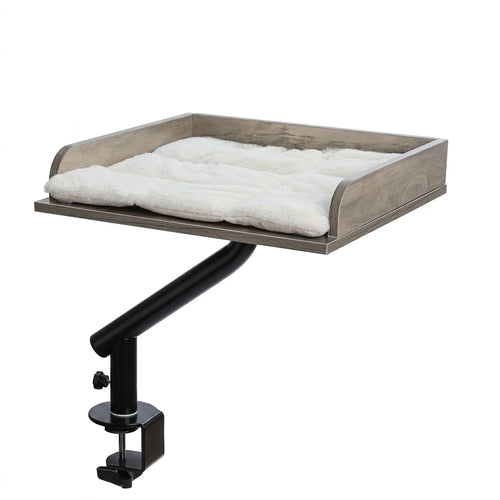
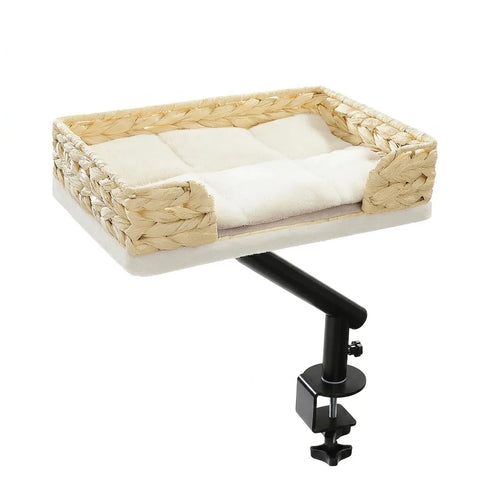
- A cozy resting spot: despite their hyperactivity, they need comfortable places to sleep, ideally up high, to recharge between adventures.
Finally, secure windows and balconies, tuck away electrical cords and small objects they could swallow, and set up daily play sessions: a tired Bengal is a happy, balanced Bengal.
Equipping a Bengal: our recommendations
Bengals climb nonstop. A tall cat tree, ideally floor to ceiling, and a high lookout spot keep them off your shelves.
- Ceiling cat tree: 274 cm (about 9 ft) floor to ceiling, tension-mount fixing, €119.99 (about $132)
- Solid XXL cat tree: 178 cm (about 5.8 ft), wide platforms for watching the world, €169.99 (about $187)
- Cat window perch: a lookout spot at the window, zero floor space needed, €39.99 (about $44)
See the full collection → · Free shipping in France and Europe.
Bengal, Savannah or Toyger: Which Wild-Looking Cat Should You Choose?
The Bengal isn't the only cat breed that looks like a wild feline. Before you decide, here's how they compare with their look-alike cousins, a rarely offered comparison that can make all the difference.
| Criteria | Bengal | Savannah | Toyger |
|---|---|---|---|
| Wild ancestor | Asian leopard cat | African serval | None (selectively bred from Bengal + European Shorthair) |
| Pattern | Rosettes or marbled | Solid spots | Tiger stripes |
| Adult weight | 4 to 7 kg (about 9 to 15 lb) | 6 to 12 kg (about 13 to 26 lb) depending on generation | 4 to 7 kg (about 9 to 15 lb) |
| Energy | Very high | Extreme | Moderate to high |
| Typical price | €1,000 to €2,500 (about $1,100 to $2,750) | €2,000 to €10,000+ (about $2,200 to $11,000+) | €1,500 to €3,000 (about $1,650 to $3,300) |
| Best for | Active families, well-equipped apartments | Experienced households with a large, secure space | Anyone who wants the look without the hyperactivity |
In short: the Toyger is the calmest, the Savannah is the most demanding and the most expensive, and the Bengal sits in the sweet spot: spectacular and athletic, yet perfectly compatible with normal family life. If you're still undecided, ask yourself just one question: can I offer 40 minutes of play every single day for fifteen years? If so, a Bengal will repay you a hundredfold.
And if the world of cat breeds fascinates you, keep exploring with the cat breed family tree: you'll see how the Bengal fits into the big family of cats from around the world. Related cat breeds to discover: Savannah and Toyger.
Bengal Cat Breed Profile
Everything you need to know about the Bengal at a glance:
| Criteria | Details |
|---|---|
| Origin | United States, 1960s to 1980s (domestic cat × Asian leopard cat) |
| Recognition | TICA (1986), LOOF, FIFé, registration from the F5 generation |
| Size | Male 5-7 kg (11-15 lb), female 4-6 kg (9-13 lb) |
| Life expectancy | 12-16 years |
| Coat | Short, dense and silky, spotted or marbled (rosettes), possible glitter effect |
| Colors | Brown tabby, snow, silver, charcoal, blue |
| Temperament | Active, playful, intelligent, vocal, devoted to their family |
| Grooming | Weekly brushing, low shedding |
| Special traits / health | F1-F4 generations regulated in France (F5 accepted by LOOF); risks include HCM, PK-Def and PRA-b |
| Typical price | €1,000 to €3,000 (about $1,100 to $3,300) for a companion kitten |
Lively, intelligent and stunning, the Bengal repays families who can keep up with their pace a hundredfold. Well equipped and well loved, this little living-room leopard will become an exceptional companion.
 Le FélinWhat Your Cat Needs
Gear Up a Bengal Without Giving Up Your Living Room
A well-exercised Bengal is a balanced Bengal: vertical space, scratching posts and supervised outings make all the difference day to day. Here's what you need to build a real territory for them.


- A full-length stretch, with your couch spared€80.54 (about $89)
- An entire vertical territory for a tireless climber€149.99 (about $165)
- For the supervised outings these adventurers demand€79.99 (about $88)
📚 Sources and References
- The International Cat Association (TICA). Bengal, Breed Standard. https://tica.org
- LOOF (Livre Officiel des Origines Félines). Bengal, Breed Standard and Registration Rules. https://loof.asso.fr
- FIFé (Fédération Internationale Féline). Bengal, Breed Standard. https://fifeweb.org
- International Cat Care. Bengal, Temperament and Behavior. https://icatcare.org
- Encyclopaedia Britannica. Bengal cat. https://britannica.com
- French Ministry of Ecological Transition. Keeping Non-Domestic Animal Species, Environmental Code. https://www.ecologie.gouv.fr
FAQ
-
The average price of a Bengal from a breeder typically falls between €1,000 and €2,500 (about $1,100 to $2,750), and can top €3,000 (about $3,300) for a show-quality or breeding-quality cat. The range depends on bloodline, coat quality, sex and the breeder's reputation. After that, budget €60 to €100 per month (about $66 to $110) for everyday care, plus spaying or neutering and equipment. Please note: Le Félin does not sell cats.
-
The Bengal is a hyperactive, playful and deeply adventurous cat that needs almost constant stimulation. Very intelligent, it can learn to fetch a ball, walk on a harness or even open doors. It bonds intensely with its family, tends to be chatty and loves playing with water, a legacy of its wild ancestor. A bored Bengal quickly becomes destructive, so two play sessions a day are essential.
-
The number shows how many generations separate the cat from its wild ancestor, the Asian leopard cat. An F1 has about 50% wild blood, an F2 about 25%, an F3 about 12.5% and an F4 about 6%. In France, F1 to F4 generations are legally classified as non-domestic animals, and keeping one requires specific permits. Only Bengals from the F5 generation onward, known as SBT, are fully domestic and eligible for LOOF registration.
-
Yes, as long as you have the time for one. Bengals are affectionate, deeply attached to their people, and generally get along well with active kids and other pets, dogs included, provided they were properly socialized between 3 and 12 weeks of age. They do not handle long stretches alone or boredom well. A Bengal is a great companion for an active, playful household, and a poor choice for anyone who wants a calm, independent cat.
-
There are three main reasons. First, the real cost of raising a litter: PK-Def and PRA-b DNA tests, annual heart ultrasounds for breeding cats, stud fees, vaccinations, microchipping, and premium food add up to several hundred euros per kitten. Second, litters are small, averaging 3 to 4 kittens from queens that are not bred too often. Finally, demand for the spotted coat far outstrips supply. An unusually low price almost always signals a questionable breeder.
-
No. In France, an F1 Bengal is classified as a non-domestic animal: keeping one requires a certificate of capacity and an establishment operating permit, both out of reach for a private owner. Legal issues aside, its needs for territory, space, and quiet are those of a wild cat, and they don't fit a typical home. An SBT Bengal, from the F5 generation onward, does very well in an apartment as long as it has height, daily play, and secured windows.
-
Bengals typically live 12 to 16 years, and some pass 18. This is a generally hardy cat breed, but it is predisposed to hypertrophic cardiomyopathy (HCM), pyruvate kinase deficiency (PK-Def), and progressive retinal atrophy (PRA-b). A responsible breeder screens for these conditions, and an annual vet checkup with weight monitoring directly supports longevity.
-
No. The SBT Bengal, the kind families actually bring home, is a 100% domestic cat, just like a Sacred Birman or a Maine Coon. It is neither aggressive nor unpredictable: what surprises people is its intensity, not any wildness. Only the hybrid F1 to F4 generations, which are very rare and strictly regulated, are legally classed as non-domestic.


Your cat’s well-being, our number one priority
A French team that lives with cats, products chosen for their instincts (climbing, scratching, watching, hiding) and over 100 guides written to help you choose well.
- Free deliveryFrance and Europe, no minimum
- Secure paymentCard, Apple Pay, PayPal, Shop Pay
- 30-day returnsSatisfied or refunded
- Expert advice100+ guides and tutorials, support in France