Savannah Cat: Temperament, Price, and F1-F7 Generations

Picture a cat that leaps onto the fridge from a standstill, follows you around the house like a loyal dog, and has a spotted coat that recalls the African savanna more than a living room cushion. That cat exists: the Savannah, the largest of all domestic cats, an athlete with a wild gaze and a surprisingly devoted heart. Part miniature wildcat, part faithful companion, it fascinates and intrigues in equal measure, but it also comes with some very specific rules, including in France, where not every generation can be freely owned. Before you fall for this bundle of extraordinary energy, let's look at its history, appearance, temperament, real price, and everything you need to know to welcome one home the right way.
Table of Contents
Here is what you'll find in this complete guide to the savannah cat:
- Origins of hybrid cats, from the African serval to the European living room
- Appearance: a true miniature serval, coat, ears, build
- Size and weight: the largest domestic cat
- F1 to F7 generations, finally understanding the labels
- Personality and temperament, the "dog-cat" of the savanna
- Savannah cat price + comparison with other cat breeds
- Legislation in France, authorization and certificate of competency
- Health, diet, and life expectancy
- Welcoming and equipping a Savannah
- Breed ID card
- FAQ, the 8 questions everyone asks
A Savannah can clear nearly 8 ft (2.5 m) straight up: our floor-to-ceiling cat tree adjusts from 7 to 9 ft (210 to 274 cm), at €119.99 (about $132), with free shipping.
Origins of hybrid cats
The Savannah story begins in the United States in 1986, when a breeder produced a kitten from a bold cross: a domestic female cat and an African serval (Leptailurus serval), a wild cat with long legs and big ears. That first kitten, named "Savannah," would give the whole breed its name.
The idea quickly won over a handful of enthusiasts who wanted to fix a very particular type: the spectacular, exotic look of the serval combined with the sociable temperament of a companion cat. The selective breeding work is painstaking, because combining wild and domestic genes takes patience and rigor. Males of the early generations are almost always sterile, a classic phenomenon in hybrids, which forces breeders to go back to hybrid females mated with domestic males, generation after generation. This reproduction difficulty is exactly why the breed is rare and expensive.
The breed was eventually officially recognized by TICA (The International Cat Association) in the early 2000s, and earned championship status in 2012. In France, the LOOF recognizes the Savannah, but only from the generations considered domestic.
Cousins to other "wild indoor" cats
The Savannah is not the only hybrid cat to find its way into our homes. The Bengal descends from the Asian leopard cat, the Chausie from the jungle cat, and the Safari from Geoffroy's cat. Alongside them, breeds with a wild look but fully domestic, such as the Toyger, a tiny tiger for your living room, or the Egyptian Mau, the only naturally spotted cat, offer a similar aesthetic without the legal constraints of hybridization. If you came here searching for the price of a tiger cat or an Egyptian cat, the comparison further down should help.
Appearance: a true miniature serval
The Savannah is first and foremost a very large cat, lean and muscular, built for verticality. Its endless legs give it a graceful, feline stride, almost like a cheetah in miniature. The hind legs, slightly taller than the front, explain its phenomenal jumping power: a fine specimen can clear nearly 8 ft (2.5 m) straight up from a standstill.
The coat: the serval's signature
Its short, spotted coat is its calling card: a golden, tawny, silver, cinnamon, or black base dotted with solid, dark, round or oval spots, sharply contrasted and never rosettes. That is what instantly sets it apart from the Bengal, whose markings are hollow in the center. The LOOF mainly recognizes brown spotted tabby, silver spotted tabby, black, and black smoke. This silky coat needs little upkeep: a weekly brushing keeps it glossy and limits loose hair.
The head and radar ears
You can't miss its radar ears: very large, tall, wide at the base, and set high on the skull, they often carry an "ocellus" on the back, a pale spot ringed in black inherited from the serval. The head is small relative to the body, triangular and elongated, with a slim muzzle. Add a long, slender neck and almond-shaped eyes often accented by dark tear-line markings running down toward the cheeks, and you get the miniature wildcat look that made the breed famous.
How can you tell a real Savannah?
- Proportions: a Savannah is clearly taller on its legs and longer in the neck than an ordinary spotted cat.
- Solid spots, lined up in parallel rows along the flanks, rather than rosettes.
- Ocelli on the backs of the ears and tear-line markings.
- A LOOF pedigree stating the generation: without paperwork, a "Savannah" is just a cat with a spotted look.
Size and weight: the largest domestic cat
It is one of the few cats that can claim the title of giant cat, alongside the Maine Coon. But be aware that size depends heavily on the generation. An F1 is an impressive animal, while an F5 is still a large cat, but no more than that.
- Shoulder height: 16 to 18 in (40 to 45 cm) for a male F1, 12 to 15 in (30 to 38 cm) from F4 on.
- Length: up to 39 in (100 cm) from nose to tail tip on the largest individuals.
- Male weight: 18 to 26 lb (8 to 12 kg) in F1-F2, 13 to 20 lb (6 to 9 kg) in F3-F4, 11 to 18 lb (5 to 8 kg) in F5 and beyond.
- Female weight: 11 to 20 lb (5 to 9 kg), consistently lighter than the male.
- Growth: slow, with full adult size reached only between 2 and 3 years.
This size has very practical consequences for gear: a standard litter box will be too narrow, an ordinary cat tree will sag under its weight, and a medium-sized cat bed will leave it hanging over every edge. We come back to this further down.
F1 to F7 generations: finally understanding the labels
Savannahs are classified by how closely they are related to the serval. The "F" stands for filial: the lower the number, the closer the wild ancestry. This is the criterion that determines the animal's look, personality, price, and above all its legal status.
| Generation | % serval (approximate) | Profile |
|---|---|---|
| F1 | ~50% | Direct offspring of a serval. Huge, very distinctive, with the wildest behavior. Reserved for authorized keepers. |
| F2 | ~30% | Still very spectacular, large, with a demanding temperament. |
| F3 | ~15% | A good balance of looks and sociability, but still outside domestic status in France. |
| F4 | ~10% | Much more "cat-like," the last regulated tier. |
| F5 | ~5% | First generation considered a domestic cat. Keeps the look, with a calmer personality. |
| F6 / F7 | < 5% | A full-fledged companion cat, with a distinctive coat and build, and care very close to that of a regular cat. |
Another useful subtlety in breeding: the letters A, B, C, and SBT indicate pedigree purity. An SBT (Stud Book Tradition) cat descends from Savannahs for at least three generations, with no input from another breed, which is the highest guarantee of conformity.
Savannah cat personality and temperament
If the Savannah's looks are impressive, its personality lives up to them. This is a fearless athlete with boundless energy and endless curiosity. Nothing is off limits: half-open doors, high shelves, dripping faucets, badly closed cabinets… it explores everything, tests everything, and keeps a constant thirst for adventure.
Contrary to the aloof image cats sometimes get, the Savannah is deeply loyal. It bonds intensely with its family, follows its humans from room to room and demands interaction. Many owners describe it as a "dog-cat": it learns to fetch a ball, walks on a harness, answers to its name and happily takes to clicker training.
Its relationship with water is surprising too: descended from a wild cat that hunts near water sources, it plays in its cat bowl, joins you in the shower and loves fountains. Its voice is a chapter of its own: meows, chirps, and sometimes an impressive low hiss inherited from the serval, which isn't aggression but simply a warning.
The Flip Side of Intelligence
Boredom is unbearable for it. A Savannah deprived of stimulation quickly becomes destructive, noisy, and even starts going outside the litter box. It needs games, challenges, height and company. Plan for at least two active play sessions of 15 to 20 minutes a day, plus enrichment setups for when you're away.
It generally gets along well with other active pets and with respectful children, as long as it grew up in an environment rich in stimulation. Be careful, however, around small pets such as rodents, birds and fish, because its prey drive remains very sharp. This is a cat for households ready to invest time and effort, not for those looking for a mellow, homebody companion.
Savannah Cat Price
The Savannah is among the most expensive cats in the world. From a breeder, the typical market price ranges from €1,500 to over €20,000 (about $1,650 to over $22,000), with the vast majority of sales in France falling between €2,000 and €12,000 (about $2,200 and $13,200). Several factors explain this wide range.
- Generation (F1 to F7): this is the number one factor. The closer the serval ancestry, the higher the price.
- Bloodline and pedigree: an SBT cat from award-winning, registered breeding cats commands a higher value.
- Coat: particularly sharp spot contrast and certain rare colors (silver, black smoke) are in demand.
- Sex: females, valuable for breeding, often sell for more.
- Breeder quality: socialization, health testing, vaccinations, identification and breeding conditions all legitimately affect the price.
Average Price by Generation in France
| Generation | Estimated price range |
|---|---|
| F1 | €10,000 – €20,000 ($11,000 – $22,000) |
| F2 | €6,000 – €12,000 ($6,600 – $13,200) |
| F3 | €4,000 – €7,000 ($4,400 – $7,700) |
| F4 | €2,500 – €5,000 ($2,750 – $5,500) |
| F5 | €1,800 – €4,000 ($1,980 – $4,400) |
| F6 / F7 | €1,500 – €3,000 ($1,650 – $3,300) |
How Much Do Other Cat Breeds Cost?
To place the Savannah on the scale of cat breed prices, here are the typical ranges seen among French breeders for the most sought-after wild-looking or large cat breeds:
| Breed | Estimated breeder price | Profile |
|---|---|---|
| Savannah F5+ | €1,500 – €4,000 ($1,650 – $4,400) | Large, spotted, highly active |
| Bengal | €1,000 – €2,500 ($1,100 – $2,750) | Rosettes, very playful |
| Toyger (tiger cat) | €1,500 – €3,500 ($1,650 – $3,850) | Vertical stripes, rare in France |
| Egyptian Mau (Egyptian cat) | €1,000 – €2,000 ($1,100 – $2,200) | The only naturally spotted breed, very fast |
| Maine Coon XXL | €1,200 – €2,500 ($1,320 – $2,750) | The long-haired giant |
| Devon Rex | €900 – €1,800 ($990 – $1,980) | Wavy coat, elf-like build |
| Chartreux | €800 – €1,500 ($880 – $1,650) | Blue coat, calm temperament |
On top of the purchase price, add the annual cost of care: budget €800 to €1,500 (about $880 to $1,650) per year for a Savannah (protein-rich food, vet visits, insurance, reinforced gear, and replacing the equipment it will have put to the test).
These figures reflect the going market rate charged by specialist breeders, not a Le Félin sales price. To be clear: Le Félin does not sell cats. Our business is to equip yours with accessories designed for their well-being and happiness.
Legislation: Is the Savannah Legal in France?
This is the point competing articles gloss over, yet it is the most decisive: not every generation of Savannah can be freely kept in France.
- F1 to F4: French regulations treat them as non-domestic species. Keeping one requires a capacity certificate (certificat de capacité), an establishment authorization issued by the prefecture, and compliant facilities. In other words: out of reach for an ordinary private owner.
- F5 and later generations: considered domestic cats, they can be acquired and kept like any other cat breed, with no special authorization.
In every case, the general obligations apply: mandatory identification by microchip, registration in the I-CAD database, up-to-date vaccinations, and for any sale, a veterinary certificate, a certificate of transfer and an information document. A kitten cannot be sold before 8 weeks of age.
Two habits before buying: demand the LOOF pedigree stating the generation, and be wary of listings selling "F1" cats at rock-bottom prices. It is either a scam or illegal possession for which you would become responsible. Because the rules change, always check the current law with your prefecture or your vet before making any commitment.
Health, Diet and Life Expectancy
On the health side, the Savannah benefits from good hardiness tied to its genetic diversity, with a life expectancy of 12 to 20 years. Few hereditary diseases are specific to it, but a few points deserve particular attention.
- Hypertrophic cardiomyopathy (HCM): inherited from the domestic breeds used in crossbreeding, it justifies ultrasound screening of breeding cats.
- Pyruvate kinase deficiency (PK-Def): a genetic test is available, so ask the breeder for it.
- Anesthetic sensitivity: some cats with strong serval ancestry react differently to ketamine. Always tell your vet the breed and generation.
- Short digestive system: it tolerates grain-rich kibble and overly plant-based diets poorly.
The diet should be very high in animal protein (ideally over 40%), low in carbohydrates, with enough taurine. Many breeders recommend including some wet food or quality-controlled raw meat. A cat water fountain is almost essential: it encourages drinking in a cat that loves running water and protects its kidneys over the long term.
Curious how your cat compares on the human scale? Our cat age in human years calculator converts their age in one click.
Welcoming and Equipping a Savannah
Welcoming a Savannah means rethinking your home for an athlete that lives in three dimensions. Here are the essentials to help it thrive:
- Height, and lots of it: this climber needs sturdy, high perches to survey its territory. A sturdy XXL large cat tree sized for big breeds is a must here, not an option. Look for at least 5 ft (1.6 m), a wide base, and platforms that can take 10 kg (22 lb) landing from a jump.
- Tough scratching posts: its power destroys flimsy models. Choose dense materials (thick sisal, wood) and a stable anchor to the wall or floor.
- A cat water fountain: descended from a cat fascinated by water, the Savannah loves drinking from running water, which also encourages good hydration.
- Interactive play: feather wands, balls, track toys, treat dispensers, and puzzle toys channel its energy and stimulate its intelligence. Rotate the toys every week to keep things new.
- A roomy cat bed: sized for its large frame, for comfortable rest between adventures.
- An oversized litter box: at least 24 in (60 cm) long with high sides, because it digs with conviction.
- A harness and leash: it often takes to supervised outings very well, an excellent outlet for its need to explore.
Environmental enrichment is the key: a busy Savannah is a happy Savannah, and a home that stays intact. Also secure your space with window screens, an enclosed balcony, fragile items put away, and stovetops protected, because this exceptional jumper reaches places you thought were out of reach. A catio or a garden fenced at height remains the ideal solution for giving it safe outdoor time.
The Savannah is not a cat like any other: it's a little piece of the African savanna in the middle of your living room, an athletic and affectionate companion for anyone who can meet its thirst for adventure. If its temperament wins you over, why not discover the cats that look like it and those that share its history? Explore the cat breed family tree to better understand the big feline family and perhaps find the companion made for you.
Equipping a Savannah: our recommendations
An adult Savannah is heavy and jumps hard. Choose a cat tree with a wide base and a rated load well above its weight, plus an XXL cat carrier for trips.
- XXL cat tree for Maine Coons: 185 cm (73 in), 53 × 42 cm (21 × 17 in) base, rated load 60 kg (132 lb): €139.99 (about $154)
- Sturdy cat tree for Maine Coons: 170 cm (67 in), reinforced structure for big cats: €219.99 (about $242)
- XXL cat carrier: 45 × 25 × 28 cm (18 × 10 × 11 in), for vet visits: €79.99 (about $88)
See the full collection → · Free shipping in France and across Europe.
Breed Fact Sheet
The essentials on the Savannah at a glance:
| Criteria | Details |
|---|---|
| Origin | United States, 1986 (serval × domestic cat cross) |
| Recognition | TICA (championship status 2012), LOOF for domestic generations |
| Size | Male 7-12 kg (15-26 lb), female 5-9 kg (11-20 lb); 30 to 45 cm (12 to 18 in) at the shoulder |
| Life expectancy | 12-20 years |
| Coat | Short, black spotted on a golden/silver/cinnamon background (serval type) |
| Grooming | Low: one weekly brushing |
| Personality | Sociable, playful, athletic, loyal, very demanding of activity |
| Activity level | Very high (at least 2 active play sessions a day) |
| Health to watch | HCM, PK-Def, anesthetic sensitivity |
| Legal status in France | F1-F4 = non-domestic animals (capacity certificate required); F5+ may be freely owned |
| Indicative price | F1 €10,000-€20,000 (about $11,000 to $22,000) · F5 €1,800-€4,000 (about $1,980 to $4,400) · F6/F7 €1,500-€3,000 (about $1,650 to $3,300) |
 Le FélinOur picks
Gear up an athletic savanna cat
Whatever the generation, a Savannah needs height, fresh water, and outings. Here's how to build a territory that matches its energy.


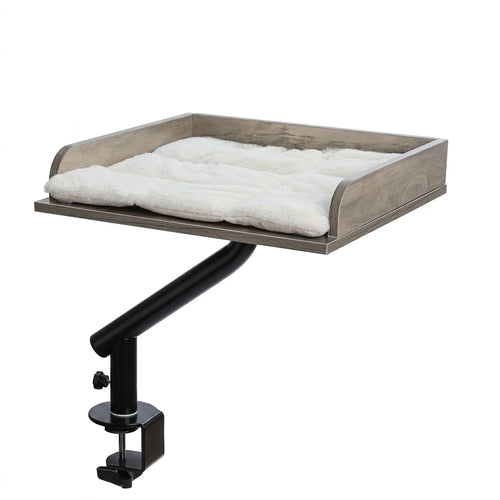
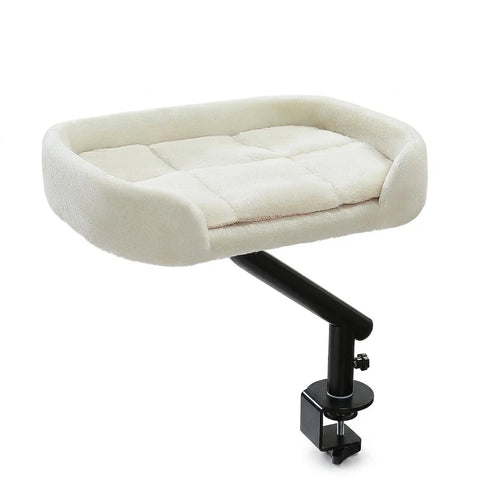
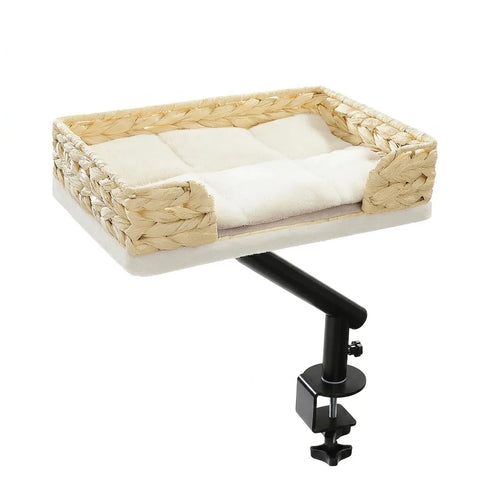
- 01A high lookout post for larger cats€39.99 (about $44)
- 02For outings with a cat who craves adventure€79.99 (about $88)
- 03A floor-to-ceiling vertical course, perfectly stable€199.99 (about $220)
📚 Sources and references
- TICA (The International Cat Association). Savannah breed standard. https://tica.org
- LOOF (Livre Officiel des Origines Félines). Savannah breed standard and status of cats resulting from hybridization. https://loof.asso.fr
- International Cat Care. Information on the Savannah cat and hybrid breeds. https://icatcare.org
- French Ministry of Agriculture. Keeping non-domestic animal species: certificate of capacity and facility authorization. https://agriculture.gouv.fr
- Bradshaw, J. (2013). Cat Sense: How the New Feline Science Can Make You a Better Friend to Your Pet. Basic Books.
FAQ
-
An F1 Savannah, the direct offspring of a serval, typically sells for €10,000 to €20,000 (about $11,000 to $22,000) from a specialist breeder. That price reflects the difficulty of breeding, the frequent sterility of hybrid males and the scarcity of available kittens. In France, keeping an F1 also requires a certificate of capacity, so the purchase price is only part of the picture. Le Félin does not sell cats, so these amounts are for reference only.
-
Yes, but not every generation. In France, F5 Savannahs and later generations are considered domestic cats and can be kept freely, like any other cat breed. F1 through F4 generations, on the other hand, are treated as non-domestic species and fall under strict regulation. Always check current law with your local authorities before acquiring a first-generation cat.
-
The Savannah is an athletic, fearless cat brimming with energy and endlessly curious. It is deeply loyal to its family, follows its humans from room to room and craves a lot of interaction, so much that it is often compared to a dog: it fetches, walks on a harness and answers to its name. Its sharp intelligence needs constant stimulation: without daily play and challenges, it can become destructive or noisy.
-
The F1 is the direct offspring of a serval and carries about 50% wild blood: it is huge, strongly typed, with behavior closest to a wild cat, and owning one is regulated in France. The F5 is five generations further along, with about 5% serval: it keeps the spotted coat, big ears and slender build, but in a more manageable size, with a much more sociable temperament and the status of a domestic cat. The F5 is the recommended generation for private owners.
-
No, a well-socialized Savannah from the domestic generations (F5 and later) is not dangerous for children: it is playful, sociable and handles the bustle of a family home well. Its power and quickness do call for clear rules, though: play with toys rather than hands, respect its rest time and supervise small children. Take more caution with earlier, less predictable generations, and with small pets, which it sees as prey.
-
An F7 Savannah sits at the low end of the breed's price range, generally €1,500 to €3,000 (about $1,650 to $3,300) from a breeder. Far removed from the serval, it keeps the spotted coat and elegant silhouette while behaving like a classic domestic cat. On top of the purchase budget, expect an annual cost of living of €800 to €1,500 (about $880 to $1,650), comparable to that of an active large-breed cat.
-
A male F1 Savannah can reach 40 to 45 cm (16 to 18 in) at the shoulder, up to 100 cm (39 in) in total length and 12 kg (26 lb), making it the largest of the domestic cats. From the F4 on, size drops back to 30 to 38 cm (12 to 15 in) at the shoulder and 5 to 9 kg (11 to 20 lb). Growth is slow: full adult size is only reached between 2 and 3 years. That size calls for oversized gear, from the cat tree to the litter box.
-
For an F5 Savannah or a later generation in France, no special permit is needed: only the obligations common to all cats apply (microchip identification, registration in the I-CAD database, a veterinary certificate and a transfer statement). For F1 through F4 generations, however, you need a certificate of capacity and a prefectural authorization, along with compliant facilities. Always ask for a LOOF pedigree that states the generation.


Your cat’s well-being, our number one priority
A French team that lives with cats, products chosen for their instincts (climbing, scratching, watching, hiding) and over 100 guides written to help you choose well.
- Free deliveryFrance and Europe, no minimum
- Secure paymentCard, Apple Pay, PayPal, Shop Pay
- 30-day returnsSatisfied or refunded
- Expert advice100+ guides and tutorials, support in France