Scandinavian-Style Cat Tree: Elegant Design, Sturdy Wood

Do you dream of a special corner just for your cat, but most cat trees look like gray carpet towers that clash with your living room? That's the dilemma every design-conscious cat lover faces: giving your companion room to climb, scratch, and perch without sacrificing your home's carefully curated look. Good news: that compromise is a thing of the past.
Why Choose a Scandinavian-Style Cat Tree
Scandinavian style isn't just a decor trend: it's a thoughtful approach for homes where cat furniture is often an aesthetic compromise. While most competitors offer beige sisal wrapped around gray posts, a Scandinavian-style cat tree brings real design cohesion to your space instead of clashing with it.
Furniture That Blends In, Not Stands Out
In practice, what sets a cat tree design like this apart comes down to specific choices you rarely find elsewhere:
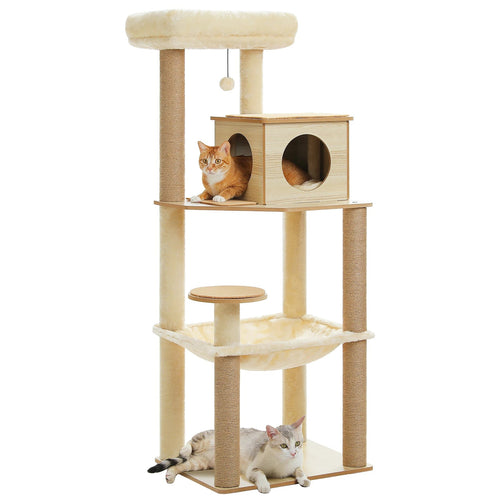
- Solid light wood (beech, birch, oak) instead of low-grade laminate panels, like our wooden cat tree models.
- Clean lines and splayed legs reminiscent of Nordic furniture, unlike classic cat trees that stack platforms with no visual logic.
- A neutral, natural palette (off-white, soft gray, raw wood) that blends into a living room instead of clashing with it.
- Quality textiles in felt or wool, more durable and warmer than synthetic carpet.
The Right Balance Between Beauty and Function
The common mistake is choosing furniture that's pretty but wobbly, or sturdy but ugly. Scandinavian design reconciles both: weighted structures, generously wrapped sisal scratching posts, and perches your cat will actually use. You'll find that balance across our entire range of cat trees, from compact models to XXL versions for multi-cat households.
In short, you no longer have to hide the cat tree in a back room: it becomes a genuine piece of furniture, just as enjoyable for you as it is for your cat.

Key Features of Our Cat Trees
Most cat trees look alike: beige sisal, gray carpet, a bulky structure that dominates the room. Our Scandinavian-style cat tree takes the opposite approach, and commits to it: it fits into your home instead of taking it over. That's exactly what competitors overlook: they think cat, we think cat plus decor.
What Really Sets Our Models Apart
- Solid light wood and natural finishes: oak, beech, or birch, in true Nordic spirit. No loud carpet, just clean lines that pass the open-concept living room test.
- High-density natural sisal: scratching posts that actually last, unlike low-grade rope that frays within weeks.
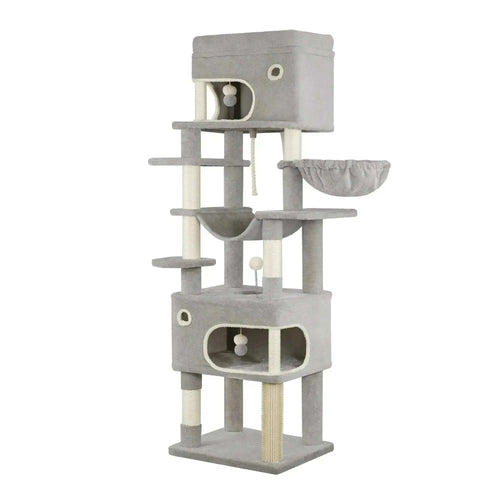
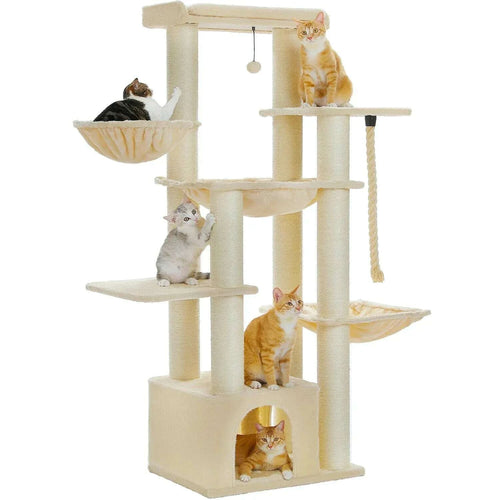
- Platforms and resting spots designed around real cat behavior: tiered heights for climbing and observing, enclosed nooks for hiding, a high perch for surveying the room, addressing genuine behavioral needs, not just a marketing checkbox.
- Serious stability: a weighted base and optional wall anchoring, including on our XXL cat tree sizes for larger cats or multi-cat households.
Another real difference: material consistency. Our wooden cat tree line uses durable, modular wood that's easy to clean and easy to replace piece by piece, a feature rarely offered elsewhere, where the whole thing gets tossed the moment one part wears out.
The result: furniture that lasts, that your cat actually adopts, and that you never have to hide. Explore our full cat tree design selection or browse the entire cat tree collection to compare heights and configurations.
Setup and Care for Your Cat Tree Design
Plan the Setup: Choose the Spot Before You Screw Anything In
Most guides stop at unboxing. But it's the placement that determines how stable and long-lasting your Scandinavian-style cat tree will be. Choose a wall corner near a window: your cat gets to watch the outside world, and the piece is supported on two sides. On hardwood floors, slip felt pads under the base to prevent micro-scratches and wobbling.
- Tighten in two passes: assemble without forcing anything, check it's level, then tighten everything fully. Scandinavian light wood shifts slightly during the first few weeks.
- Recheck the screws after two weeks: a quarter turn is often all it takes to remove any play. It's the step nobody mentions, and it's the one that gets rid of the creaking.
- Taller models: on an XXL cat tree, use the wall-anchoring strap if one is included, especially in multi-cat homes.
Care That Protects the Wood and Fabric
Scandinavian design thrives on the contrast between natural wood and light-colored textiles, two materials that need different care. Dust the wooden posts with a barely damp cloth, avoiding any oily product that would dull the wood grain. For cushions and scratching areas, a weekly brush in the direction of the fibers lifts out fur and lint before it gets embedded.
- Sisal: trim any loose threads with scissors rather than pulling them, so you don't unravel the wrap.
- Stains: blot, never rub; warm water and a little mild soap are enough for light-colored fabrics.
Set up and cared for properly, this type of furniture keeps its good looks for years. Check out the other models in our cat tree design collection, or browse our entire cat tree range to compare heights and finishes.
In Summary
A Scandinavian-style cat tree is more than just cat furniture: it's a lifestyle choice, one that gives your cat a space to explore and rest without sacrificing your home's aesthetic. Clean lines, the warmth of natural wood, and functionality built around animal well-being make these structures the perfect blend of Nordic design and love for cats. Whether you're after a compact model for an apartment or an XXL cat tree for a more generous space, whether you prefer a raw wooden cat tree for a natural touch or a fully contemporary piece from our cat tree design selection, Le Félin offers pieces built to last and to please, both you and your cat. Explore our complete cat tree collection now and find the piece that will fit naturally into your home.
FAQ
-
The most popular models combine a solid natural wood post, platforms in plywood or ash wood, and a discreet weighted base. Nordic brands like Katris, Omlet, and Tiger Timber stand out for their careful finish and sturdiness. The best choice is a model certified VOC-free (volatile organic compounds), made from sustainable materials, so you get both good looks and a healthy cat.
-
Go for a neutral palette, off-white, light gray, untreated natural wood, and clean shapes with no exposed sisal scratching post on the visible faces. Make sure the platforms are limited in number but generous in surface area, so you avoid a cluttered "Christmas tree" look. A wall-mounted or modular cat tree blends even better into a minimalist living room since it frees up floor space.
-
For an active cat, a minimum height of 120 cm (about 47 in) is recommended so it can survey its territory from an elevated perch. Models reaching 150 to 180 cm (roughly 59 to 71 in) are perfect for apartments with high ceilings and cats that love to jump high. If you go with a wall-mounted tree instead, installing it between 80 and 160 cm off the floor closely mimics the experience of a freestanding tree while staying easily accessible.
-
Start with a raw birch or pine log, screwed into a Baltic birch plywood base weighted with a steel plate hidden under a felt cover. Attach two or three oiled natural wood platforms at varying heights using wood screws and hidden metal brackets. Wrap the post in natural sisal for the scratching zone, and finish the platforms with a wool felt pad for comfort, all in just a few hours for under $80.
-
For a Maine Coon, a Ragdoll, or any cat over 6 kg (about 13 lbs), the platforms should measure at least 40 x 40 cm and the beds should have a diameter over 35 cm. The central post needs to be solid wood (diameter of at least 8 cm), and the base wide enough, at least 50 x 50 cm, to absorb jumps without wobbling. Always check the manufacturer's stated weight capacity, which should exceed 10 to 12 kg per platform.
-
Entry-level Scandinavian-inspired models run between $80 and $150, though the material quality is often lower at that price point. Mid-range design cat trees, made from real solid wood with a careful finish, land between $180 and $350. Handcrafted pieces or specialty Nordic brands can exceed $400 to $600, a price justified by durability, certified materials, and an aesthetic that truly blends into your home.
-
The first thing to check is that the base makes up at least a third of the tree's total height and is heavy enough. You can add weight under the base (hidden steel plates) or discreetly anchor the top of the post to the wall with a thin stainless steel cable, invisible but effective. Always place the tree on a flat, hard floor, and avoid thick rugs that can throw off the structure's balance, a thin non-slip mat under the base is enough to keep it from sliding.
-
A classic cat tree focuses above all on functionality: exposed sisal covering the whole structure, beds fully wrapped in plush fabric, bright colors, and busy shapes that rarely match the rest of your furniture. The Scandinavian model, on the other hand, follows a "less but better" philosophy: visible natural materials, a neutral palette, clean lines, and open volumes that make it a genuine piece of decor. A Nordic design cat tree meets the same needs for your cat while never sacrificing the look of your home.


Our Products