Do Cat Whiskers Grow Back? (Yes, Here's When)

Yes, a cat's whiskers do grow back. When a whisker falls out naturally, the follicle stays active, and a new one takes about 2 to 3 months to reach its full length again (a bit slower in older cats). Occasional whisker loss is normal: just never trim them, since they're essential sensory organs for your cat's balance and spatial awareness.
Do Cat Whiskers Grow Back?
The short answer is a resounding yes. Whiskers, scientifically called \"vibrissae,\" are made of keratin, just like your cat's claws and your own fingernails. They aren't irreplaceable vital organs, but temporary sensory tools. If your cat loses a whisker, the hair follicle (the root) deep beneath the skin stays active and is already preparing the next one.
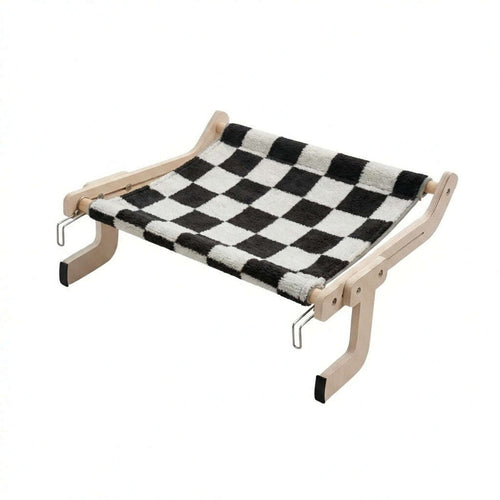
That radar deserves a good lookout post: the Cat Window Perch attaches to the glass in seconds, at €29.99, free delivery.
That said, regrowth is a much slower process than for regular fur. Unlike a coat that renews itself fairly quickly, a whisker is thicker, stiffer, and rooted three times deeper in the dermis, sitting inside a capsule packed with nerve endings and blood vessels. On average, it takes two to three months for a whisker to reach its full length and become fully functional again. During this \"transition\" period, your cat may be slightly less precise in its movements, but nature has it covered: a new whisker often starts growing in before the old one has even fully fallen out.
Why Is My Cat Losing Its Whiskers?
It's completely normal to find one or two whiskers a month while cleaning your home. This is part of your cat's natural \"shedding\" cycle, though it's far more subtle and less noticeable than seasonal fur loss. Whiskers never fall out all at once (thankfully, or your cat would be tactilely blind and completely disoriented!).
A whisker's life cycle breaks down biologically into three distinct phases: the anagen phase (active growth), the catagen phase (a transition where blood flow stops), and the telogen phase (rest and shedding). When a whisker reaches the end of its life, it naturally detaches from the follicle to make room for the tip of the new whisker to break through the skin. This is a healthy, necessary renewal that keeps your cat's sensory toolkit sharp and rigid, rather than relying on old, frayed, or softened whiskers that would poorly transmit vibration signals.
If your cat is healthy, you'll probably never even notice a gap on its muzzle, since the shedding is asynchronous: while the whisker on the left falls out, the one on the right is growing in. It's only when you notice sudden, massive, or localized loss that you should be on alert.

Is It Serious If a Cat Loses a Whisker?
In the vast majority of cases, it's absolutely nothing to worry about. It simply means the hair cycle is working the way it should. That said, whisker loss can become a welfare concern for your cat if it happens in large amounts. A cat without its whiskers (or with too few of them) may feel temporarily disoriented, struggle to judge distances at night, or hesitate before jumping.
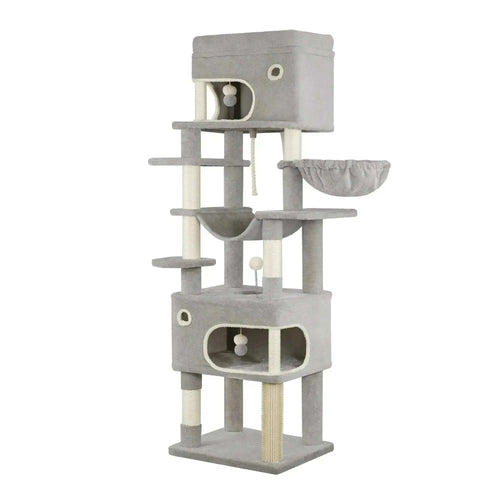
During this period of sensory vulnerability, your cat needs to feel completely safe. It may become more anxious or clingy. To help it through this phase, it's important to offer a calming, enclosed retreat, like a cat house where it can hide away and sleep soundly without fear of being startled by an environment it can't sense as well.
From a medical standpoint, if the loss comes with redness, scabs, itching, or bald patches (alopecia) on the muzzle, it's no longer just shedding: it's a symptom of an underlying skin condition. Specialists at ESCCAP France's feline dermatology division often point out that ringworm and feline acne are common causes of whisker follicle damage.
Broken Cat Whisker: What Should You Do?
Sometimes a whisker doesn't shed cleanly with its root still attached: instead, it snaps clean in the middle or bends at a 90-degree angle. This can happen during rough play, territorial fights between cats, or simply from wear and tear in an adventurous cat that likes to poke its nose into everything.
Another common cause, especially in winter, is what we might call a \"curiosity burn.\" A cat fascinated by a scented candle, or getting too close to a space heater, can singe the tips of its whiskers. The heat curls or snaps the keratin instantly. If you spot a broken whisker, never pull on it and never trim it to \"even out\" the muzzle. The base of the whisker is extremely well innervated and connected to the trigeminal nerve. Pulling on it would cause sharp pain, comparable to a human having a fingernail torn out. Let nature take its course: the damaged section will fall out on its own during the next cycle.
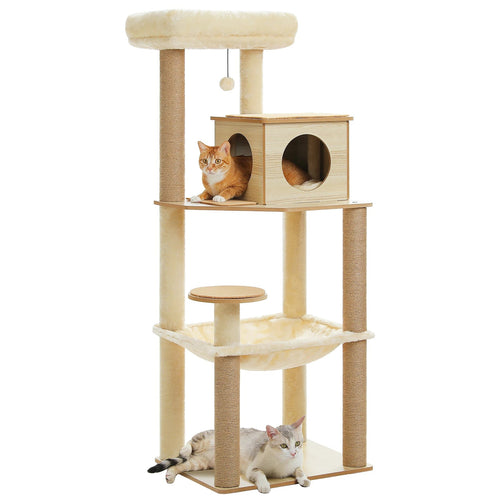
To keep your cat from breaking its whiskers while playing in cramped or ill-suited spots, give it well-finished play structures instead. A Scandinavian design cat tree lets your cat climb, jump, and rub its cheeks (facial marking) against soft, natural materials, lowering the risk of whisker breakage compared to rough furniture or wire mesh.

What Causes Cat Whiskers to Fall Out?
Beyond natural renewal, several environmental or medical factors can speed up whisker loss or prevent it from growing back properly:
- Intense stress (telogen effluvium): A move, the arrival of a new baby, or another pet can trigger an emotional shock severe enough that the cat's body puts its follicles on \"pause.\" Whiskers and fur then fall out in clumps a few weeks after the event.
- Nutritional deficiencies: A whisker is made of pure protein. A poor-quality diet lacking in essential fatty acids (Omega-3 and 6) and animal protein will produce whiskers that are brittle, dull, and prone to breaking.
- Parasites and illness: Mange, ringworm, or severe allergies attack the skin and hair root directly. If you suspect a parasitic cause, a visit to the vet is essential.
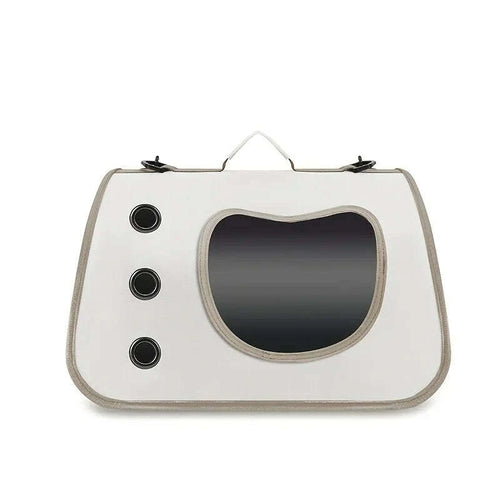
If you need to take your cat to the vet to have its muzzle examined, the trip itself shouldn't add extra stress to its condition. Settle it comfortably into a secure, well-ventilated cat carrier, which will help prevent further injury if it panics during the ride.
My Cat Has No Whiskers on One Side
This kind of asymmetry often puzzles owners. If your cat is sporting a full, lush set of whiskers on the left and nothing at all on the right, there are two likely explanations. The first is purely mechanical: it always sleeps on the same side against a rough surface (like concrete or a coarse rug), which wears down the whiskers through repeated friction night after night.
The second explanation is behavioral, and fascinating. It's often seen in cats living in groups or in mothers with their kittens. This is called "barbering" (or excessive grooming). A dominant cat, or an overly zealous mother, may lick and nibble at a companion's or kitten's whiskers until they're trimmed down to the skin. It's a sign of affection that's a bit too intense and obsessive, but generally not dangerous to the physical health of the "victim," though it can affect their sense of orientation.
That said, stay alert: if your cat frantically scratches just one side of their face to the point of pulling out whiskers, it could point to deep dental pain (an abscess, gingivitis) or an ear infection on that side. Watch whether they're eating normally, tilting their head, or if their breath has changed.

A home that protects the whiskers
Whiskers grow back on their own: your job, over those three months, is mainly not to damage them again. Three adjustments are enough to take the daily rubbing out of the equation.
📚 Sources and References
- International Cat Care. Resources on cat sensory anatomy and care. https://icatcare.org
- MSD Veterinary Manual. Integumentary System of Cats (coat, hair and whiskers). https://msdvetmanual.com
- Turner, D. C. & Bateson, P. The Domestic Cat: The Biology of its Behaviour. Cambridge University Press
- Bradshaw, J. (2013). Cat Sense. Basic Books
FAQ: Do Cat Whiskers Grow Back?
-
Usually, yes, but with age, it's not uncommon for a black whisker to grow back white. It's the same process as gray hair in humans (melanin loss in the follicle). It's a sign of wisdom, not illness!
-
The full cycle is fairly slow compared to the rest of the coat. It takes about 2 to 3 months for a whisker to reach its maximum length and the optimal stiffness it needs to work as an effective radar.
-
No, not at all. If it falls out naturally (a dead root in the telogen phase), the cat doesn't feel a thing, just like you don't feel your hair fall out in the shower. Pulling it out, on the other hand, is extremely painful.
-
Yes. Whiskers grow in proportion to a cat's body width. As a kitten grows and fills out, their whiskers lengthen right along with them, so they can keep judging whether a tight squeeze is a go or a no-go.
-
If the shedding is normal (part of the coat cycle), it's not necessary. If it's linked to a deficiency or a dull coat, veterinary supplements rich in brewer's yeast or omega-3s can help strengthen keratin. Getting the opinion of veterinary experts is recommended before starting any supplement routine.


Your cat’s well-being, our number one priority
A French team that lives with cats, products chosen for their instincts (climbing, scratching, watching, hiding) and over 100 guides written to help you choose well.
- Free deliveryFrance and Europe, no minimum
- Secure paymentCard, Apple Pay, PayPal, Shop Pay
- 30-day returnsSatisfied or refunded
- Expert advice100+ guides and tutorials, support in France
Our Products