Indoor Cats: Ideal Apartment Size and Expert Tips

Why the Ideal Living Space for an Apartment Cat Matters
Plan on roughly 215 to 270 square feet for one cat, 430 square feet for two, and 645 square feet for three. That said, a small, well-organized home with plenty of vertical setup beats a large empty space: for a cat living in an apartment, vertical setup (cat trees, shelves, perches) matters just as much as floor space 🐾.
The available space and how you organize it directly affect a cat's physical and mental well-being.
An indoor cat who lacks space or stimulation can become stressed, frustrated, overly restless, or on the contrary very withdrawn. For a single cat, the general guideline is around 215 to 270 square feet.
But that number is just a benchmark: what really matters is how you set up the apartment for your cat.
A few key elements for a well-designed cat apartment:
- separate zones: resting, playing, eating, and the litter box;
- plan vertical spaces for climbing and observing;
- offer spots where the cat can hide and feel safe.
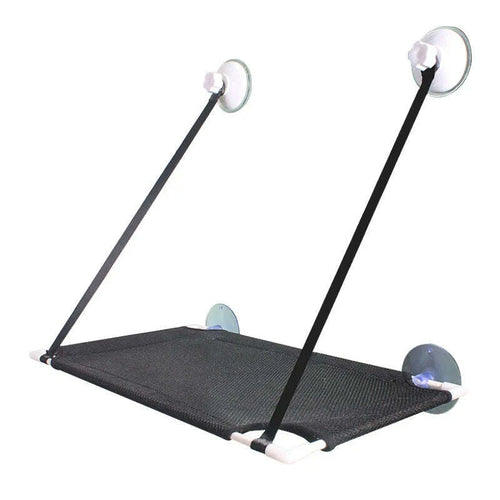
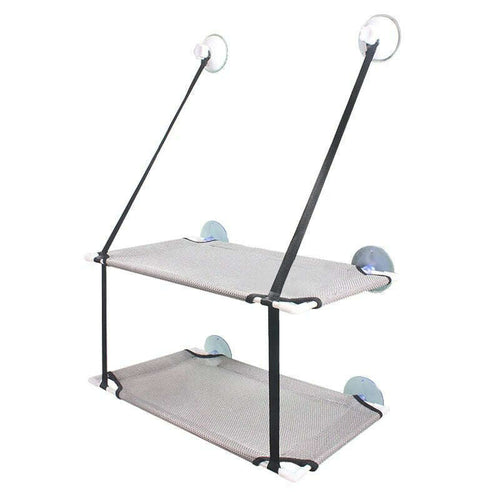
The small-space reflex: a Cat Window Perch adds a lookout post without taking up a single square metre, at €29.99, free delivery.
A cat living in an apartment needs to move, climb, and watch what's going on, even if it never goes outside. A well-organized space therefore includes:
- enough floor space,
- vertical zones (cat tree, shelves, perches, cat furniture),
- several quiet spots to sleep.
💡Key takeaway: more than square footage, it's the quality of how the space is organized that really shapes the well-being of a cat living in an apartment.
For more on this topic, listen to our podcast on Spotify on how to make your indoor cat happy.
How Much Space Should You Plan For, Based on the Number of Cats?
For a single cat in an apartment, 215 to 270 square feet used well is often enough to create a comfortable environment. That's roughly a studio or a small, well-organized home with distinct zones:
- a resting area (a cat bed or small cat house),
- an eating area for the bowls,
- a spot for the litter box,
- play and climbing zones.
When you have multiple cats in an apartment, it's important to increase the available space and multiply the resources to reduce tension between cats:
- add 150 to 215 square feet per additional cat whenever possible;
- set up several vertical spaces: shelves, cat trees, hammocks near windows;
- install multiple beds, multiple scratching posts, and enough hiding spots.
Even in 540 to 645 square feet, two or three indoor cats can live together peacefully if each one has:
- enough litter boxes (generally one per cat, plus one extra),
- at least one cat tree with multiple levels,
- wall walkways or shelves to reduce conflicts on the ground.
The ideal space for a cat also depends on its personality and breed:
- some calmer cat breeds, like the British Shorthair, the Russian Blue, or the Sacred Birman, adapt better to apartment life;
- a very active cat or a large breed like the Maine Coon will need more space and stimulation;
- some hairless cat breeds prefer warm, sheltered spots.
The important thing is to choose a cat suited to apartment living and to give it a rich, secure environment ✨

Making the Most of Vertical Space to Compensate for a Small Apartment
When square footage is tight, the best strategy is to think vertically. A cat in an apartment loves surveying its territory from a high vantage point. Using the walls and the tops of furniture greatly increases the space a cat perceives, without knocking down any walls 🐾.
Ideas for creating vertical spaces:
- Cat tree: the foundation, with scratching posts, platforms, and hideaways.
- Wall shelves: arranged like steps, they create a small climbing course.
- Window perches: hammocks or mounted shelves for watching the outside world.
- Wall-mounted or corner scratching posts: perfect for saving floor space and letting the cat scratch to its heart's content.
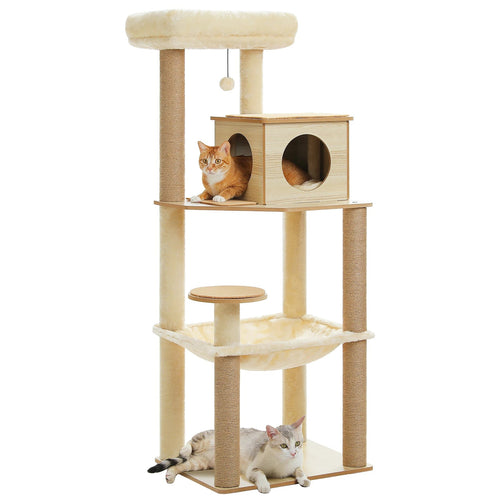
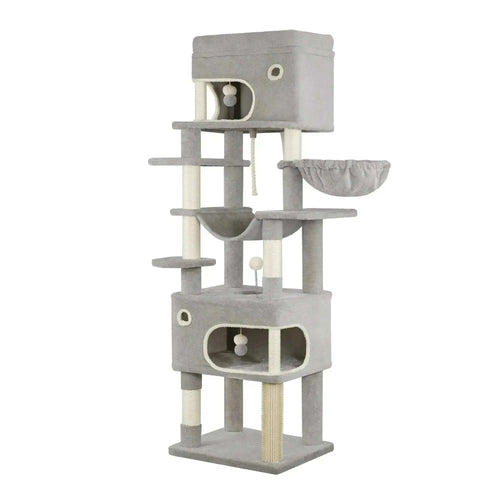
In a small space, choose a tall, slim cat tree. It takes up less floor space while still offering several levels for resting and watching the room.
By choosing sturdy cat trees and scratching posts, you give your companion:
- exercise,
- elevated spots to settle in,
- observation zones where it feels safe.
On Le Félin, you can point readers toward space-saving cat trees and wall-mounted scratching posts designed for small apartments.

Must-Have Gear for an Apartment Cat
Apartment living calls for a few adjustments to ensure a cat's comfort, well-being, and balance. Contrary to popular belief, a cat that never goes outside can live very happily if its indoor environment is enriched and suited to its natural needs: climbing, observing, hiding, scratching, playing, and resting undisturbed. The gear below is essential for giving an indoor cat a functional, stimulating home 🐾.
1. The Cat Tree: The Centerpiece of Its Territory
The cat tree is the single most important piece of furniture in an apartment designed for a cat. It partially replaces what nature would otherwise offer: a high vantage point to keep watch, surfaces to climb, and a personal space to retreat to.
- scratching posts to satisfy its daily need to mark territory,
- several platforms to climb progressively and observe,
- a nook or hideaway to feel safe,
- sometimes a hammock or plush areas for sleeping.
In a small apartment, go for a compact but tall model, to save floor space while still offering several levels to explore. The more height a cat has access to, the more its territory “expands” without actually changing your home's real square footage ✨.

2. Scratching Posts for Cats: Essential for Their Well-Being
Scratching posts play a key role for cats, well beyond simply protecting your furniture. They let a cat:
- release stress through scratching,
- mark its territory through the pheromones in its paw pads,
- stretch out fully, which is vital for its muscles.
To do it right, plan for:
- one scratching post per cat,
- plus a second one in the main living area.
Wall-mounted or corner scratching posts are especially well suited to small spaces: they take up almost no floor space while offering a vertical surface cats love. They're a great fit for an apartment cat that likes to scratch at wall corners and furniture.

3. Cat Bed or Cat Hammock: An Essential Refuge
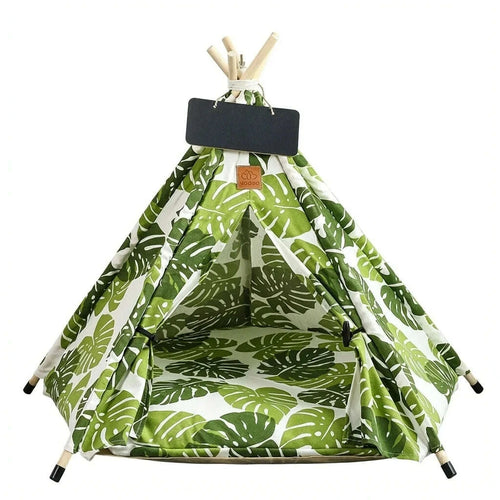
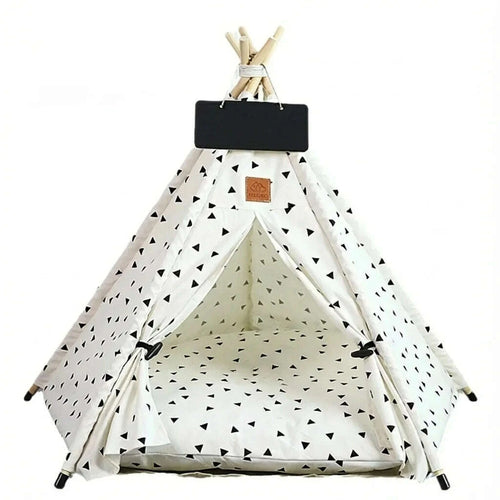
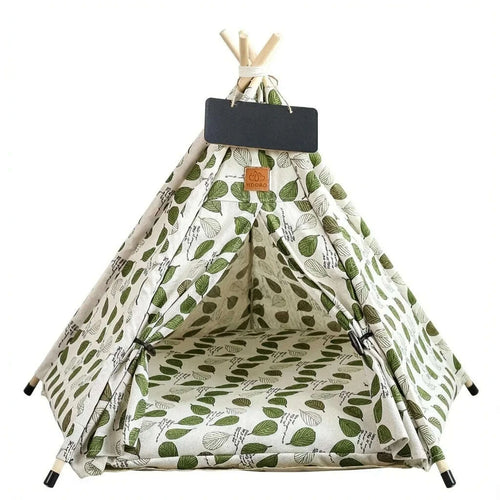
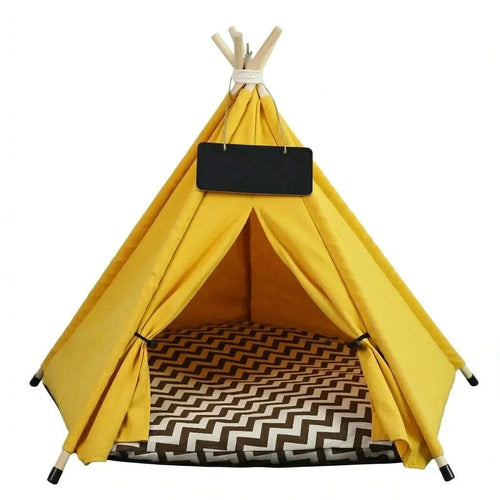
An indoor cat needs a place where it can retreat, sleep, and feel safe. Soft cat beds, small cat houses, or enclosed cat huts fill this role perfectly.
They offer:
- a quiet resting spot away from foot traffic,
- a place where the cat can hide when stressed,
- a true personal territory essential to their sense of balance.
In an apartment, this kind of retreat is essential, since your cat can't just head outside to get some alone time. Having multiple hiding spots helps keep them calm and makes it easier for multiple cats to live together peacefully.

4. Litter Box: A Crucial Element to Never Overlook
The litter box is a key part of daily life for an indoor cat, since that's where they do all their business inside. Poor management can lead to stress, inappropriate marking, or conflicts between cats.
It should be:
- large enough,
- placed in a quiet spot,
- away from the food bowl and resting areas,
- cleaned daily.
If you have multiple cats, plan for one litter box per cat, plus one extra. A clean litter box goes a long way toward supporting an indoor cat's emotional balance 🐾.

Practical Tips for Setting Up a Small Apartment
Even with just 20 to 25 m² for an indoor cat, it's entirely possible to create a pleasant, stimulating environment.
A few simple ideas:
- Use the tops of furniture (wardrobes, bookshelves) as elevated resting spots, adding a cushion or a small non-slip mat.
- Install a radiator cat bed or a cat window perch to give them a great vantage point without taking up any floor space.
- Choose built-in cat furniture: coffee tables with a hideaway, shelves with a little house, benches with storage.
- Make use of underused corners: behind a sofa, under a table, or in a nook can all hide great little resting spots for your cat.
To keep boredom at bay, mix up daily activities:
- interactive toys,
- balls, tunnels,
- fun kibble dispensers,
- short daily play sessions with your pet.
Cats love routine, but they also enjoy the occasional small surprise: a new toy, a box to explore, a cushion moved to a different spot.
Recognizing Signs of Stress or Boredom
Even if you seem to be hitting the ideal square footage for a cat, certain signs should raise a flag with an indoor cat:
- excessive scratching on furniture,
- very frequent or unusual meowing,
- nighttime restlessness,
- staying isolated in a single room,
- excessive licking, apathy, or loss of appetite.
If this happens, ask yourself a few questions:
- does the cat have enough elevated spaces?
- do they have a variety of hiding spots and resting nooks?
- are they getting enough play and interaction during the day?
Sometimes, all it takes is adding a Luxury Design Cat Tree, a new scratching post, or rearranging the furniture to help your cat feel better. If the issues persist, it's worth consulting a veterinarian or a behavior specialist for tailored advice.
Conclusion: Making the Most of Every Square Meter for an Indoor Cat
In short, for an indoor cat, you can use 20 to 25 m² for a single cat as a baseline, then adjust based on the number of cats and their personalities. But that number only means something if the home is:
- well organized (resting, play, meals, litter box),
- enriched with elevated spaces (cat trees, shelves, perches),
- complemented with the right gear (scratching posts, cat house, cat hammock, toys).
Even in a small home, it's possible to create a comfortable, stimulating apartment for your cat. The key is designing the space with your feline in mind, not just the humans ✨.
🐾 Make the most of your indoor cat's space.
Make the Most of Your Indoor Cat's Space
A well-organized apartment starts with a cat tree: in a single piece of furniture, your cat gets elevated zones, a resting nook, and a scratching post, without sacrificing your square footage.

If your home has a balcony, be sure to cat-proof the balcony.
How Many Square Meters Do You Need Per Cat?
The "20 to 25 m² per cat" guideline is just a baseline, to be adjusted based on your home's layout and how much vertical space you add. Here's a clear breakdown:
| Number of Cats | Recommended Space | Watch Out For |
|---|---|---|
| 1 cat | 20-25 m² | Make use of vertical space (tree, shelves) |
| 2 cats | ~40 m² | Double up on litter boxes, bowls, and beds |
| 3 cats | ~60 m² | Provide several retreat areas |
| 4+ cats | +15 to 20 m² per additional cat | Add more resources and perches |
Remember that layout matters more than square footage: a well-designed studio, full of vertical space and hiding spots, beats a big, empty apartment any day.
Kitting out a small flat without cluttering it
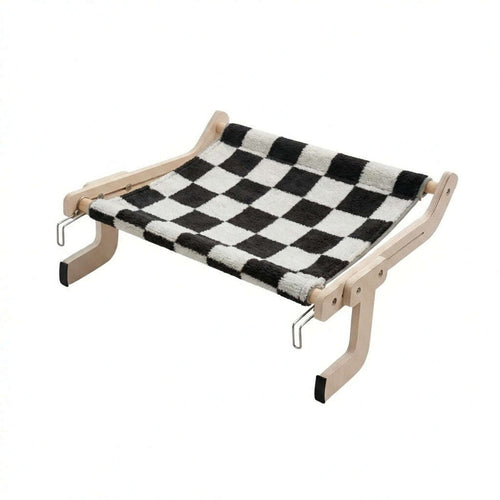
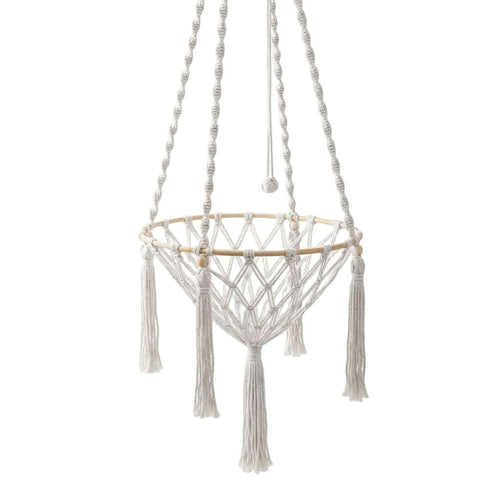
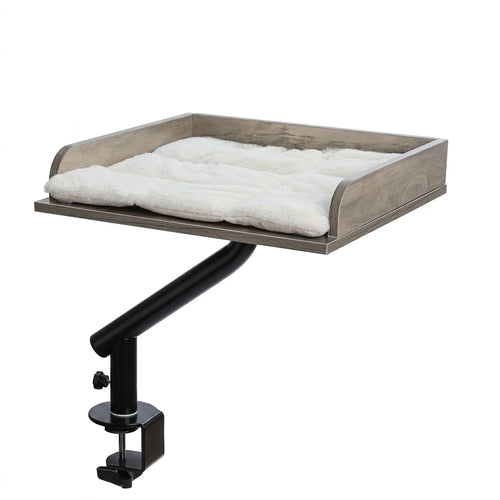
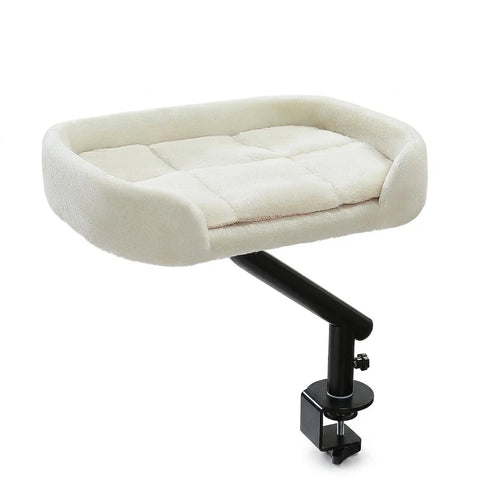
Floor area matters less than living spots up high: three pieces of kit that add some without using any floor space.
📚 Sources and References
- International Cat Care. Indoor cats. https://icatcare.org
- Cornell Feline Health Center. Environmental Enrichment for Indoor Cats. https://vet.cornell.edu
- MSD Veterinary Manual. Normal Social Behavior and Behavioral Problems of Domestic Cats. https://msdvetmanual.com
- Turner, D. C. & Bateson, P. The Domestic Cat: The Biology of its Behaviour. Cambridge University Press.
- Bradshaw, J. (2013). Cat Sense.
Frequently Asked Questions
-
A cat can thrive in as little as 20 to 25 m², as long as you make use of vertical space (cat tree, shelves). Plan for roughly 15 to 20 additional m² per extra cat.
-
Yes. Square footage matters less than how the space is set up: vertical zones, hiding spots, a scratching post, a window with a view, and daily playtime are enough to keep them happy and balanced.
-
Plan for around 430 square feet for two cats, with doubled-up resources (two bowls, two litter boxes, several beds) to avoid territorial conflicts.
-
Yes, a well laid-out studio works fine for a cat, especially a mellow one. Add plenty of vertical spaces and secure the window or balcony.


Your cat’s well-being, our number one priority
A French team that lives with cats, products chosen for their instincts (climbing, scratching, watching, hiding) and over 100 guides written to help you choose well.
- Free deliveryFrance and Europe, no minimum
- Secure paymentCard, Apple Pay, PayPal, Shop Pay
- 30-day returnsSatisfied or refunded
- Expert advice100+ guides and tutorials, support in France
Our Products