What Age Is a Cat Considered an Adult?

A cat is generally considered an adult at one year of age, when its physical growth slows down considerably and sexual maturity is reached. However, full psychological and behavioral development can continue until around two years of age.
The Stages of Cat Development
Here are the key milestones that take a kitten to adulthood, along with the associated ages:
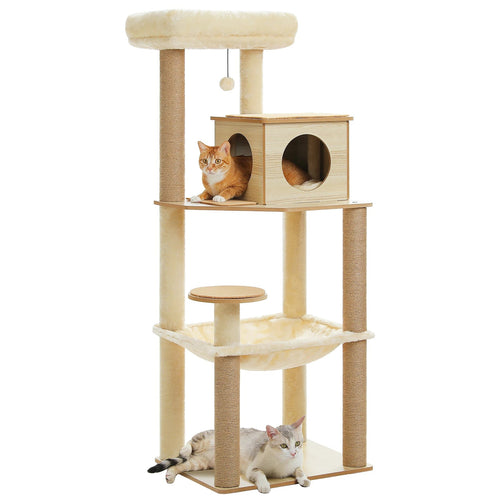
Through these first months of fast growth, the Cat Tree for Kittens, Le Petit Cosy gives them a sisal scratching post and a padded den within 40 x 40 cm, at €69.99, free delivery.
| Stage | Age | Milestone |
|---|---|---|
| Kitten | 0 to 6 months | Very rapid growth |
| Junior | 6 to 12 months | Puberty (around 5 to 9 months) |
| Adult | From 12 months | Physical maturity reached |
| Behavioral maturity | 18 to 24 months | Personality fully set |
| Large breeds (Maine Coon, Ragdoll, Savannah) | Up to 3 to 4 years | Late growth completion |
A cat is therefore considered an adult from 12 months old, even though behavioral maturity doesn't stabilize until around age 2. To convert your cat's actual age into human years, use our cat age calculator; for lifespan information, see cat life expectancy.
At What Age Is a Cat an Adult?
A cat is generally considered an adult around 12 months old, even though behavioral and physical maturity keeps developing well beyond that: we'll cover this in the sections below. Feline aging isn't linear: it's very fast in the first year, then slows down noticeably.
Looking to convert your cat's age precisely into human years? Check out our dedicated guide, complete with a full conversion chart: cat age in human years.
At What Age Does a Cat Calm Down
The Famous Feline Adolescent Phase
Nighttime zoomies, frantic sprints for no apparent reason (the famous "midnight crazies"), and surprise attacks on your ankles are the trademarks of kittenhood and young adulthood. Luckily, this phase doesn't last forever. As a rule, cats start calming down and settling into a steadier rhythm between 18 months and 2 years old. That's when brain maturity is fully reached. They shift from a rowdy teenager to a confident adult. Sleep time increases slightly, and waking hours are spent more on calmly watching over their territory than on wrecking your furniture.
Why Environment Matters for Burning Off Energy
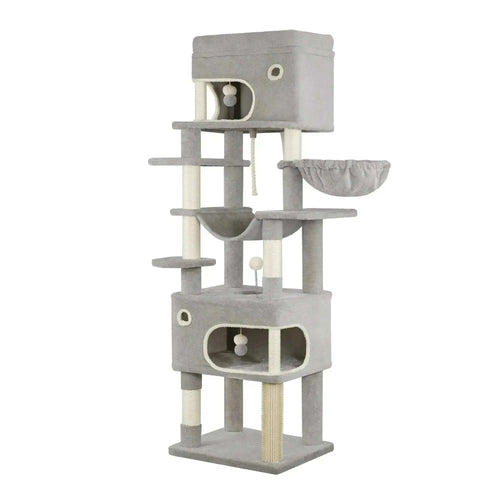
While biology does its part, environment plays a major role in helping a cat settle down. If you live in an apartment and your young cat seems impossible to handle, it's probably because their territory lacks the setup needed to burn off that predator energy. To channel this hyperactivity without wrecking your decor, giving them an original designer cat tree is an excellent solution. Climbing is the activity that burns the most calories for a cat. What's more, given the repeated wear and growing strength of a young adult, choosing sturdy, premium materials like a wooden cat tree will guarantee optimal stability and durability over the long run.

Until What Age Does a Cat Keep Growing
Peak Growth and Breed Differences
A cat's growth curve is intrinsically tied to its genetics. For domestic shorthair "moggies" and medium-sized breeds (like the Siamese or Chartreux), bone growth pretty much stops around 9 to 12 months. Muscle development, on the other hand, continues until about 15 months, filling out the cat's frame. Things look very different for so-called giant breeds. According to the technical records of the Livre Officiel des Origines Félines (LOOF), Maine Coon, Savannah, and Ragdoll cats grow extremely slowly, a process that can stretch on until age 3 or even 4 before they reach their final weight and size.
Sizing Up Furniture for Adult Size
Once growth is complete, it's time for a full overhaul of your companion's gear. The covered litter box you bought when they weighed just 1 kilogram (about 2 pounds) can end up far too cramped, keeping them from turning around properly and leading to litter box avoidance. The same goes for their resting spots. Once they reach their final size, you'll need to swap that tiny kitten bed for a cat bed that's perfectly suited to their new frame. If you own a large breed or your cat weighs over 6 kilograms (about 13 pounds), investing directly in a bed for large cats will keep their joints from hanging off the edge and stiffening up during deep sleep.

At What Age Does a Cat Lose Its Teeth
The Switch from Baby Teeth to Permanent Teeth
Like humans, cats are born without teeth. Around two to three weeks old, the first baby teeth (deciduous teeth) start poking through the gums. Kittens have a total of 26 baby teeth, extremely sharp and pointed. The switch to adult teeth is a fast process that usually starts around the fourth month. The kitten then gradually loses its baby teeth, making way for 30 permanent teeth that are thicker and sturdier. This tooth replacement process wraps up completely between 6 and 7 months of age, marking a major physiological milestone on the path to adulthood.
How to Ease a Kitten's Teething Pain
Losing teeth is no small thing for a young cat. During this period (between 4 and 7 months), the gums can become inflamed, red, and quite painful. You'll often catch your kitten trying to chew on anything within reach: electrical cords, shoes, or even your fingers, all in an effort to relieve that gum pressure. They may also turn their nose up at dry kibble if it's too hard to chew. To help, try lightly moistening their meals with warm water to soften the food, and offer specific soft rubber chew toys (like matatabi sticks or chilled dental toys) to channel that irresistible urge to chew.

📚 Sources and References
- International Cat Care. Cat life stages (kitten to senior). https://icatcare.org
- MSD Veterinary Manual. Behavior of Cats. https://msdvetmanual.com
- Bradshaw, J. (2013). Cat Sense. Basic Books.
- Turner, D. C. & Bateson, P. (Eds.). The Domestic Cat: The Biology of its Behaviour. Cambridge University Press.
FAQ: At What Age Is a Cat an Adult
-
This is a persistent myth. Spaying or neutering (usually done around 6 months) doesn't stop bone growth. In reality, it slightly delays the closure of the growth plates, which means a cat fixed early can sometimes end up a bit taller on its legs than an intact cat, while also gaining fat mass more quickly.
-
The food transition should line up with the end of the growth spurt. For most cats, it's best to gradually switch from a high-calorie "Kitten" formula to an "Adult" formula around 12 months of age. For very large breeds like the Maine Coon, this transition can be pushed back to 15 or 18 months.
-
Yes, it's completely normal. In fact, most owners never find their kitten's baby teeth at all. They're usually swallowed along with food and digested naturally, or sometimes quietly spit out around the house without causing any health problems whatsoever.
-
If teething is already over, this behavior in a 1 to 2 year old cat is often called "petting-induced overstimulation" or the "love bite." It's an emotional overload caused by too much stimulation. The cat has had enough and uses a light corrective bite to ask you to stop the interaction.
-
If you adopted a shelter cat and don't know their exact age, a vet will check their teeth (enamel wear, tartar buildup) and the clarity of the lens in their eyes. Physically, a fully grown adult cat has a broad chest and a confident stride, while a young adult often still moves with a lanky, gangly gait.


Your cat’s well-being, our number one priority
A French team that lives with cats, products chosen for their instincts (climbing, scratching, watching, hiding) and over 100 guides written to help you choose well.
- Free deliveryFrance and Europe, no minimum
- Secure paymentCard, Apple Pay, PayPal, Shop Pay
- 30-day returnsSatisfied or refunded
- Expert advice100+ guides and tutorials, support in France
Our Products