Cat Life Expectancy

A cat lives 12 to 16 years on average, but an indoor cat that's spayed or neutered and well cared for often lives past 18, with some reaching 20 years or more. Diet, maintaining a healthy weight, spaying/neutering, and an annual vet visit are the main factors behind a long life: cats with outdoor access typically live two to three times shorter lives.
Life Expectancy by Breed
Life expectancy varies significantly from one breed to another. Here are the average ranges seen in well-cared-for domestic cats:
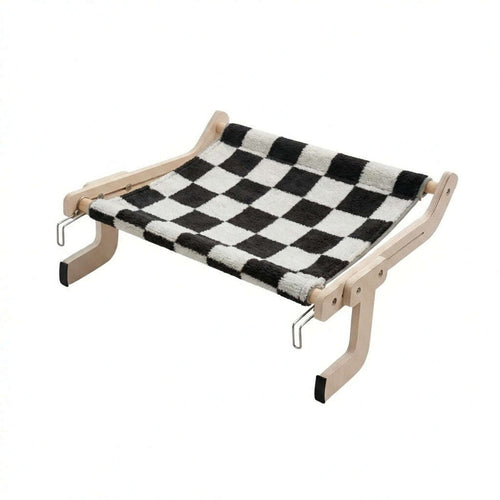
Staying indoors doubles his life expectancy: the Cat Window Perch gives him the show outside without the danger, at €29.99, free delivery.
| Breed | Average Life Expectancy |
|---|---|
| Siamese | 15 to 20 years |
| European Shorthair / Domestic Shorthair | 14 to 18 years |
| Birman | 14 to 16 years |
| British Shorthair | 12 to 17 years |
| Ragdoll | 12 to 17 years |
| Persian | 10 to 17 years |
| Bengal | 12 to 16 years |
| Maine Coon | 12 to 15 years |
| Chartreux | 12 to 15 years |
| Sphynx | 8 to 14 years |
Beyond breed, lifestyle plays a decisive role: an indoor cat lives on average 2 to 3 times longer than a cat with outdoor access, and spaying or neutering often adds 2 to 3 years to life expectancy.
At What Age Is a Cat Considered a Senior
The Veterinary Classification of Life Stages
The transition from adulthood to old age doesn't happen overnight, but gradually. According to guidelines from the American Association of Feline Practitioners (AAFP), a cat officially enters the "mature" or "senior" category starting at age 11. Between 11 and 14, the first signs of metabolic slowdown begin to appear, even though the cat may look perfectly healthy on the outside. From age 15 onward, cats are classified as "geriatric," which calls for much stricter medical monitoring and specific adjustments at home.
Metabolism and Physiological Slowdown
Starting at age 7, even though a cat isn't yet considered a senior, its body is already undergoing invisible changes. Basal metabolism slows by about 20%. That means energy needs decrease, while body fat tends to increase if the cat keeps eating the same diet. Internal organs, like the kidneys and liver, start losing a fraction of their filtering efficiency. This is the ideal early stage to schedule an annual bloodwork panel with your vet, so chronic conditions can be caught before serious clinical symptoms appear.
The Importance of Environmental Prevention
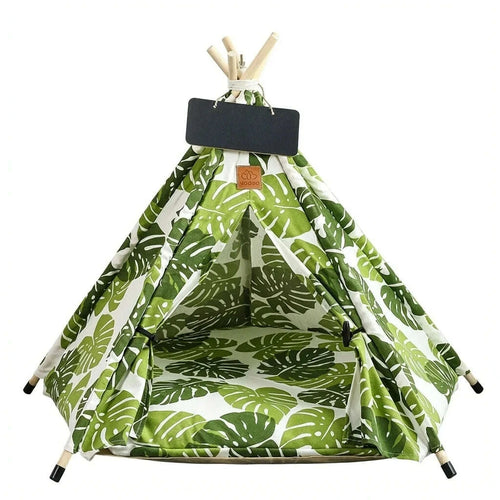
Accepting that your companion is aging is the first step toward giving them a peaceful later life. Starting around age 10, prevention also means adapting their living space. An aging cat will find it increasingly hard to regulate body temperature and to make the strenuous physical effort needed to reach their usual hiding spots. Giving them a designer cat house placed right on the floor offers a secure, warm, insulated retreat they can reach without any climbing at all. Anticipating these needs can considerably extend a healthy lifespan.
A 15-Year-Old Cat in Human Years
The Scientific Method for Calculating Cat Age
There's a persistent myth that you just multiply a cat's age by seven to get the human equivalent. That method is scientifically wrong. A cat's development is exponential early in life, then levels off. A cat's first year corresponds to roughly 15 human years. By the end of its second year, it's the equivalent of 24. After that, add 4 human years for every additional year of feline life. Applying this official formula, a 15-year-old cat is physiologically equivalent to a 76-year-old person. If you'd like to check other milestones in your companion's life, it's well worth looking into cat age in human years to adjust their care accordingly.
The Psychology and Behavior of a 76-Year-Old Cat
At 76 in human years, a cat's psychology shifts. Just like an elderly person, a 15-year-old cat becomes more set in its routines, less tolerant of change, and sometimes more anxious around loud noises or new arrivals in the home. Its senses (hearing, sight, smell) decline subtly. Losing sharpness of smell in particular can lead to a drop in appetite, since cats choose their food mainly by scent. It's important to be extremely patient, to warm up wet food slightly to bring out its aroma, and to avoid moving house or rearranging furniture unnecessarily.
Absolute Comfort Needs at This Venerable Age
A 76-year-old body needs high-quality rest. At 15, your cat will spend between 16 and 20 hours a day sleeping. Sleep also becomes lighter and more fragmented. The muscle loss that's inevitable at this age makes hard surfaces quite painful on protruding bones. It's essential to invest in a memory foam cat bed that relieves pressure points. A cat bed with raised rims will also give ideal support for the head and spine, helping your cat fall into truly restorative sleep.

Signs of Aging in Cats
Changes in Coat and Grooming
One of the first visible signs of aging shows up in the coat. A senior cat's fur tends to become duller, drier, and sometimes tangles more easily along the lower back and flanks. Two factors are behind this: reduced sebum production, but above all, a loss of flexibility. A cat with joint stiffness can no longer twist and stretch enough to groom itself thoroughly. Dandruff can appear too. That's when you'll need to step in with gentle daily brushing, which also works as a stimulating massage for blood circulation.
Decreased Mobility and Activity
Another telltale sign of aging is a change in attitude toward vertical space. A cat that once leaped effortlessly to the top of the wardrobe will now hesitate, size up the height, or simply give up. Jumping down also becomes hesitant, since it jars the front legs painfully on landing. Play sessions get shorter and less intense. To work around this loss of agility, it's best to swap out towering cat trees for a small unique cat tree. Its lower, easy-to-reach platforms protect fragile joints while still letting your cat keep a proud eye on its territory.
Cognitive Decline and Nighttime Vocalizations
Just as humans can develop Alzheimer's disease, cats can develop Feline Cognitive Dysfunction Syndrome (CDS). Signs of this senility include spatial disorientation (the cat seems lost in a familiar room), forgetting how to use the litter box, or staring blankly at a wall. A very common symptom is excessive vocalization, especially at night. The cat meows loudly and hoarsely because it feels disoriented or anxious in the dark, and its declining senses can no longer reassure it. Setting up night-lights near its living spaces can go a long way toward calming it down.

How to Relieve Arthritis in Cats
Identifying Silent Pain
Arthritis is a degenerative disease of the joint cartilage that affects more than 80% of cats over age 12. Unlike dogs, cats are masters at hiding pain, an instinct inherited from their wild ancestors to avoid showing weakness to predators. They rarely limp. Instead, they become withdrawn, sleep more, resist being picked up or petted along the lower back, and seem stiff after waking up. A cat that suddenly stops scratching its vertical scratching post is also a red flag, since the stretching motion works the spine hard, and the spine is often affected by arthritis.
Medical Treatments and Targeted Nutrition
Managing arthritis should always start with a visit to the vet. Cat-specific nonsteroidal anti-inflammatory drugs (NSAIDs) may be prescribed as a short course or an ongoing treatment to break the pain cycle. Nutrition also plays a major therapeutic role alongside medication. Studies published by the World Small Animal Veterinary Association (WSAVA) show that a diet enriched with Omega-3 fatty acids (EPA and DHA) from fish oil, along with chondroitin and glucosamine, significantly helps lubricate the joints and slow cartilage breakdown.
Setting Up an Ergonomic Environment
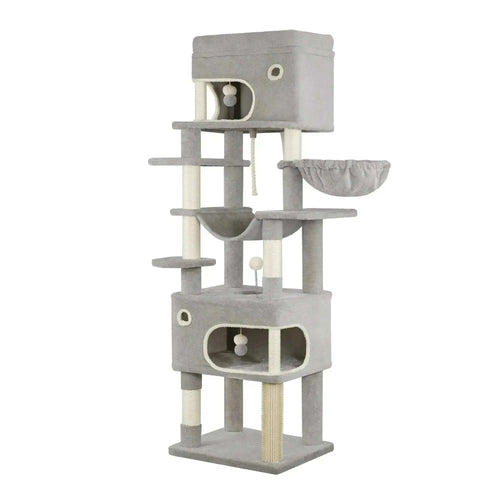
Medical treatment is only effective when paired with a complete overhaul of your cat's environment. Your goal is to eliminate daily joint strain entirely. Place food and water bowls on slightly raised stands, and above all, make it easy for your cat to reach the couch and your bed. If your cat is still large-bodied in old age and feels unsteady on its feet, giving it an ultra-sturdy resting structure with extra-wide steps, like a Maine Coon cat tree, will guarantee complete safety during its now-limited vertical movements. Finally, make sure to place its bed away from drafts and dampness, both of which make inflammatory pain worse.

How Old Is the World's Oldest Cat
Creme Puff's Incredible Record
A cat's lifespan can sometimes defy every law of biology. The all-time record belongs to a cat named Creme Puff. Born on August 3, 1967, in Austin, Texas, she passed away on August 6, 2005, at the astonishing age of 38 years and 3 days. Applying the scientific cat-to-human age calculator, Creme Puff would have reached an almost unimaginable 168 years in human terms. This extraordinary record still fascinates the scientific community and cat lovers around the world today.
Theories Behind Her Secret to Longevity
Creme Puff's story inevitably raises questions about the secret to such longevity. Her owner, Jake Perry, was known for giving his cats a rather unconventional lifestyle. Beyond exceptional genetics, Creme Puff's diet included dry kibble paired with unusual ingredients like broccoli, eggs, turkey, and even coffee with cream in the morning. While modern vets strongly advise against this kind of diet, an extremely stimulating environment, zero stress, and a life spent entirely indoors are undoubtedly the pillars behind such an extraordinarily long life for a house cat.

For vet visits, here's how to put a cat in a cat carrier without the stress.
Setting up your home for a cat who lasts
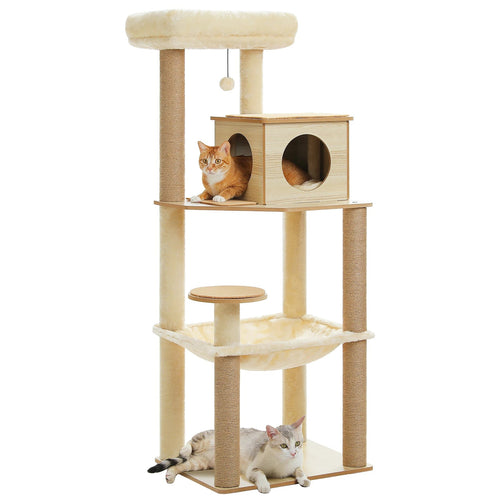
Longevity depends far less on a supplement than on daily life: territory of his own, beds that respect the joints and warmth in the right place. Here is what you need for those final years, without changing a thing about your decor.
📚 Sources and References
- International Cat Care. Caring for your senior cat. https://icatcare.org
- American Association of Feline Practitioners (AAFP). Feline Life Stage Guidelines. https://catvets.com
- Cornell Feline Health Center. Health Information for Cat Owners: Senior Cats. https://vet.cornell.edu
- WSAVA (World Small Animal Veterinary Association). Global Nutrition Guidelines. https://wsava.org
FAQ: Cat Life Expectancy
-
Absolutely. Veterinary statistics show that indoor cats have an average life expectancy of 12 to 15 years (sometimes more), while cats with free, unsupervised access to the outdoors see that average drop to 3 to 5 years, mainly due to traffic accidents, bite-transmitted viral diseases (FIV, FeLV), and predators.
-
Yes, absolutely. Starting around 8 or 9 years old, it's recommended to switch to a "senior" formula. These foods are lower in phosphorus to protect the kidneys (a weak point in older cats), lower in calories to prevent obesity from reduced activity, and enriched with very high-quality protein to help prevent muscle loss.
-
A sudden, marked increase in water intake (polydipsia) combined with very frequent urination is never normal. In senior cats, it's the number one symptom of Chronic Kidney Disease (CKD), diabetes mellitus, or hyperthyroidism. This calls for urgent bloodwork at the vet.
-
Even though an older cat's immune system is more fragile, the vaccination schedule depends on its lifestyle. If your cat goes outside or is around other animals, booster shots remain crucial, since even a simple respiratory infection (cat flu) can be fatal at that age. Talk to your vet about tailoring the protocol to your cat's needs.
-
To help prevent cognitive decline, swap intense physical play (running, jumping) for games that stimulate the mind and sense of smell. Hide small treats in a snuffle mat, use food puzzles, and offer cat grass (catnip) or valerian to engage its senses without straining its joints.


Your cat’s well-being, our number one priority
A French team that lives with cats, products chosen for their instincts (climbing, scratching, watching, hiding) and over 100 guides written to help you choose well.
- Free deliveryFrance and Europe, no minimum
- Secure paymentCard, Apple Pay, PayPal, Shop Pay
- 30-day returnsSatisfied or refunded
- Expert advice100+ guides and tutorials, support in France
Our Products