The Egyptian Cat: A Paw-Print Deity and the Ancient Legacy of the Mau

The term "Egyptian cat" refers to the Egyptian Mau, the only naturally spotted cat breed and a direct descendant of ancient Egypt's cats. Expect to pay $800 to $1,800 from a breeder for this lively, sociable, and remarkably fast feline (up to 30 mph). Here's its complete profile: coat, temperament, price, health, followed by its extraordinary history, from the goddess Bastet to today.
Hairless Egyptian Cat: Sphynx or Mau?
Many people searching for a "hairless Egyptian cat" are actually thinking of the Sphynx, that warm-skinned, wrinkled, hairless cat. The confusion makes sense: its silhouette echoes the cat statues of ancient Egypt. But the Sphynx has nothing Egyptian about it: it was born in Canada in 1966 from a natural genetic mutation.
A hairless cat like the Sphynx is forever seeking warmth: the Radiator Cat Bed hangs from the radiator on its adjustable metal hooks, at €39.99, free delivery.
The true Egyptian cat is the Egyptian Mau: it has a short coat and a uniquely spotted pattern. So there is no truly hairless Egyptian cat breed. If you're after a hairless cat, look to the Sphynx; if you want the heir to the pharaohs' cats, the Mau is the one for you.
Quick recap: don't mix them up
"Egyptian cat" = the Mau (short spotted coat, ancient breed). "Hairless cat" = the Sphynx (recent Canadian breed). The two are often confused because of the Sphynx's "Egyptian statue" look.
Egyptian Mau: Breed Profile
| Other name | Egyptian Mau ("mau" means "cat" in ancient Egyptian) |
|---|---|
| Origin | Egypt: a natural breed with ancient lineage |
| Coat | Spotted, a pattern unique among cats: silver, bronze, or smoke |
| Size & weight | Medium build, 5.5 to 11 lbs |
| Life expectancy | 12 to 15 years |
| Temperament | Lively, sociable, playful, deeply attached to its owner |
| Notable trait | The fastest domestic cat breed in the world (up to 30 mph) |
| Price | $800 to $1,800 from a LOOF-registered breeder |
The Origin of a Myth: From Felis silvestris lybica to the Mau
Modern genetic studies have upended our understanding of feline domestication. Every domestic cat lineage alive today traces back to a single subspecies: Felis silvestris lybica, the wildcat of the Near East and North Africa. Mitochondrial DNA analysis of hundreds of ancient specimens, including Egyptian mummies, has made it possible to trace this species' journey with remarkable precision.
| Era / Wave | Location | Domestication Mechanism | Genetic Signature |
|---|---|---|---|
| Neolithic (~10,000 years ago) | Fertile Crescent / Anatolia | Drawn in by grain stores and rodents | Clade IV-A |
| Pharaonic Egypt (~2000 BCE) | Nile Valley | Ritual, religious, and social selection | Clade IV-C |
| Classical / Roman Period | Mediterranean Basin | Spread via maritime and military trade routes | Mixed Clade A & C |
| Middle Ages / Ottoman Empire | Near East / Europe | Emergence of the blotched tabby pattern | Taqpep Mutation |
This timeline shows that while the first encounter between humans and cats was opportunistic, the second wave, specifically the Egyptian one, brought deep cultural and religious integration. The Egyptians didn't just tolerate the cat; they shaped it through selective breeding that favored docility and specific aesthetic traits, like the spotted coat that still defines the Mau today.

🔬 The Secret Behind the Spotted Coat
One fascinating aspect of the cat's genetic history is how stable its visual appearance has stayed over millennia. Research shows that cats depicted in Egyptian frescoes, such as those in the tomb of Nakht at Thebes (circa 1400 BCE), displayed exclusively a striped or spotted coat. The blotched tabby pattern, so common today, only emerged between 500 and 1300 CE, first in the Ottoman Empire before spreading to Europe. This finding underscores the historical authenticity of the Egyptian Mau, which has preserved the original markings of its sacred ancestors.
The Cult of Bastet: The Cat Goddess of Bubastis
The cat's rise in Egypt can't be understood without exploring Bastet, patron goddess of the city of Bubastis, whose influence spanned dynasties and left a deep mark on pharaonic civilization.
The Transformation of Bastet: From Lioness to Cat
Bastet underwent a remarkable iconographic and symbolic evolution. Originally, during the Old Kingdom, she was depicted with a lioness's head, sharing her fierce nature with Sekhmet. She was considered the daughter of the sun god Ra, acting as his avenging protector, the "Eye of Ra," capable of destroying the enemies of cosmic order.

Over the centuries, however, and especially from the Middle Kingdom onward, her personality softened. She took on the form of a domestic cat or a woman with a cat's head, coming to symbolize protection of the home, fertility, motherhood, and joy. This "domestication" of the goddess perfectly mirrors that of the animal itself in Egyptian society: from useful predator, the cat became a member of the family, an indispensable companion imbued with a divine aura.
The temple of Bubastis stands on an island formed by two branches of the Nile, surrounded by magnificent trees and reached by a causeway of red granite. The festivals of Bubastis are the most magnificent and joyous in all of Egypt.
Bubastis: The Sacred City and Its Festivals
The city of Bubastis (Per-Bastet) became the beating heart of this cult. Herodotus, the Greek historian of the 5th century BC, left vivid accounts of the splendor of this city and its temple. According to him, the festivals of Bubastis were the most magnificent and joyous in all of Egypt.
Hundreds of thousands of pilgrims (some accounts cite a figure of 700,000) converged on the city by boat, celebrating the goddess with music, dancing, and wine consumption that outpaced that of the rest of the year combined.
These festivities were not mere entertainment: they were meant to appease the goddess so she would not revert to her destructive lioness form, thereby ensuring the country's protection and a bountiful harvest.
Funerary Rites and Mummification: The Passage to the Afterlife
Reverence for the cat reached its peak at the moment of death. Herodotus reports that when a cat died of natural causes in an Egyptian household, all the residents would shave their eyebrows as a sign of deep mourning. The animal's body was then carefully embalmed and transported to Bubastis to be buried in sacred repositories.
Archaeological excavations have confirmed the scale of this practice. Millions of cat mummies have been discovered in the necropolises of Tell Basta. These mummies were often wrapped in linen bandages forming sophisticated geometric patterns and placed in wooden or bronze sarcophagi, some richly adorned with hieroglyphs.

It's worth noting that beyond household pets, mummification became a votive industry in its own right. Pilgrims would buy cat mummies, bred within the temples, to offer to the goddess as a sign of devotion or to ask for a favor. This practice, however surprising it may seem today, reflects the perception of the cat as a direct messenger between humans and the divine.
The Egyptian Mau: The World's Fastest Athlete
The modern Egyptian Mau isn't just a strikingly beautiful breed; it's a living genetic and historical link to ancient Egypt. Its very name, "Mau," simply means "cat" in the ancient Egyptian language, underscoring its status as an archetype.

Morphology and Performance: The Pharaohs' Athlete
| Characteristic | Technical Description | Functional / Historical Implications |
|---|---|---|
| Coat | Naturally spotted | The only naturally spotted domestic breed with no human manipulation involved; the pattern is present on the skin itself |
| Posture | "Tiptoe" stance (longer hind legs) | Gives an elegant gait and exceptional jumping power |
| Speed | Up to 30 mph (48 km/h) | The fastest domestic cat in the world |
| Eyes | "Gooseberry" green | A slightly "worried" expression created by the brow line; a regal, watchful gaze |
| Forehead Marking | "M" or scarab-shaped pattern | Echoes the sacred scarab, a symbol of solar rebirth |
| Body Structure | Skin flap (flank flap) | Allows for greater leg extension while running |
Its silhouette, often described as a balance between the compactness of the Burmese and the elegance of the Siamese, directly evokes the artistic depictions found in the tombs of the Valley of the Kings. This morphological continuity is a compelling point for breed purists and feline history enthusiasts alike.
The Modern Revival: Nathalie Troubetskoy's Legacy
The survival of the Egyptian Mau as a distinct breed owes an enormous debt to the providential intervention of Russian princess Nathalie Troubetskoy in the 1950s. At that time, the breed was on the brink of extinction: it's estimated that only about a dozen identifiable "typical" specimens remained in the world, scattered and threatened by crossbreeding, postwar upheaval, and dwindling bloodlines.
While living in Rome, Troubetskoy met a cat belonging to the Egyptian ambassador to Italy. Captivated by its beauty and temperament, she set out to save the bloodline by tracking down specimens close to the original type. She managed to obtain cats imported directly from Cairo, including the famous female "Baba," regarded as one of the founding pillars of the program. Starting with these cats, she launched a rigorous breeding program (selection, registration, controlled reproduction) to stabilize the breed and keep it from disappearing for good.

In 1956, fleeing Europe's political climate, she emigrated to the United States with her cats, establishing the "Fatima" cattery. Her meticulous work in selection and promotion earned the breed official recognition from the Cat Fanciers Federation in 1968, followed by the CFA in 1977. Without her dedication, this unique genetic heritage could easily have been diluted into the general cat population, losing traits thousands of years in the making.
📚 Sources and References
- Driscoll, C. A. et al. (2007). The Near Eastern Origin of Cat Domestication. Science, 317(5837), 519-523. DOI: 10.1126/science.1139518
- Ottoni, C. et al. (2017). The palaeogenetics of cat dispersal in the ancient world. Nature Ecology & Evolution, 1(4), 0139.
- Herodotus. (5th century BCE). Histories, Book II (Euterpe). English translation: Penguin Classics, 1972.
- The International Cat Association (TICA). (2024). Egyptian Mau Breed Introduction. https://tica.org
- Cat Fanciers' Association (CFA). (2024). Egyptian Mau Breed Profile. https://cfa.org
- Musée Granet, Aix-en-Provence. (2019). The Egypt Archaeological Space - Educational Resources.
- World History Encyclopedia. (2024). Herodotus on Cats in Egypt. https://www.worldhistory.org
Giving the pharaohs’ cat some height
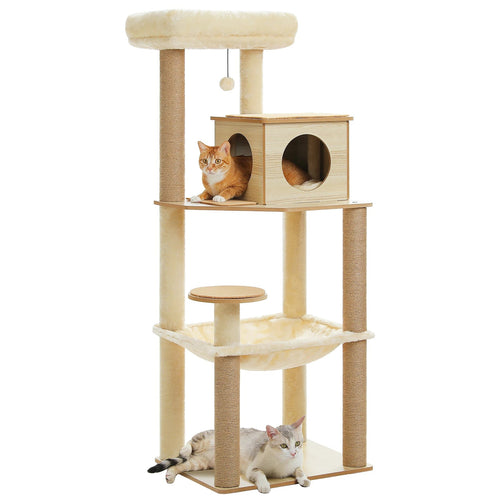
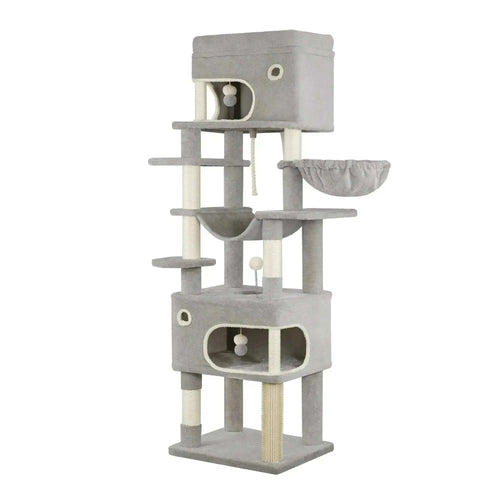
The Egyptian Mau is the fastest domestic cat in the world, and it copes badly with boredom and with being left alone. Giving it verticality, a lookout post and something to scratch is respecting what it has been for three thousand years.
FAQ
-
Cats were mummified because they were seen as earthly incarnations of the goddess Bastet. Mummifying them ensured their passage into the afterlife and allowed them to be offered as divine offerings. Millions of cat mummies have been discovered in the necropolises of Tell Basta (Bubastis). The practice grew into a full-fledged votive industry, with pilgrims buying mummies to offer to the goddess.
-
The Egyptian Mau can reach speeds of up to 30 mph (48 km/h) , making it the fastest domestic cat breed in the world. This exceptional performance comes from a unique flap of skin along its flanks called the "flank flap" or "flank fold," which allows for maximum leg extension while running.
-
The cult of Bastet was centered on the Egyptian cat-headed goddess, protector of the home, fertility, and motherhood. The city of Bubastis (Per-Bastet) was her main center of worship, where festivals drew as many as 700,000 pilgrims celebrating the goddess with music, dancing, and offerings.
-
Yes, the modern Egyptian Mau is considered the living genetic link to the cats of ancient Egypt. Its naturally spotted coat, gooseberry-green eyes, and athletic build match the depictions found in tombs in the Valley of the Kings.
-
In ancient Egypt, killing a cat was a crime punishable by death . Cats were considered sacred and their protection was absolute. Exporting cats out of Egypt was also strictly forbidden, which helped preserve the genetic purity of the Egyptian Mau for thousands of years.


Your cat’s well-being, our number one priority
A French team that lives with cats, products chosen for their instincts (climbing, scratching, watching, hiding) and over 100 guides written to help you choose well.
- Free deliveryFrance and Europe, no minimum
- Secure paymentCard, Apple Pay, PayPal, Shop Pay
- 30-day returnsSatisfied or refunded
- Expert advice100+ guides and tutorials, support in France
Our Products