Egyptian Mau
🇪🇬 Egypt
700–1400 €
From Egyptian temples to 21st-century hybrids, trace the feline bloodline: four major eras, dozens of breeds, one story.
Breeds shaped by climate and trade routes, with no human intervention.
The cat-show era: standardization and the first controlled crossings.
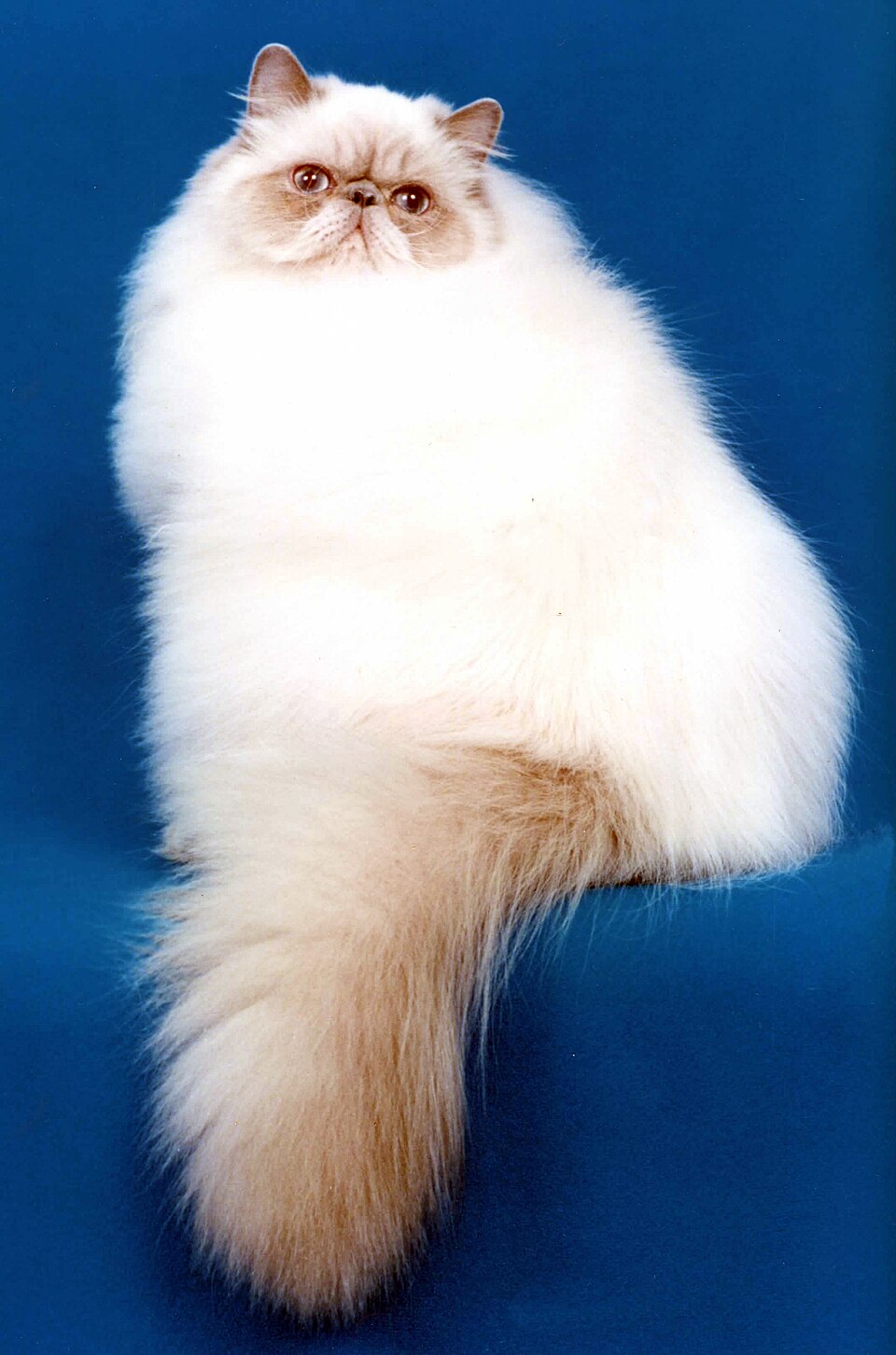
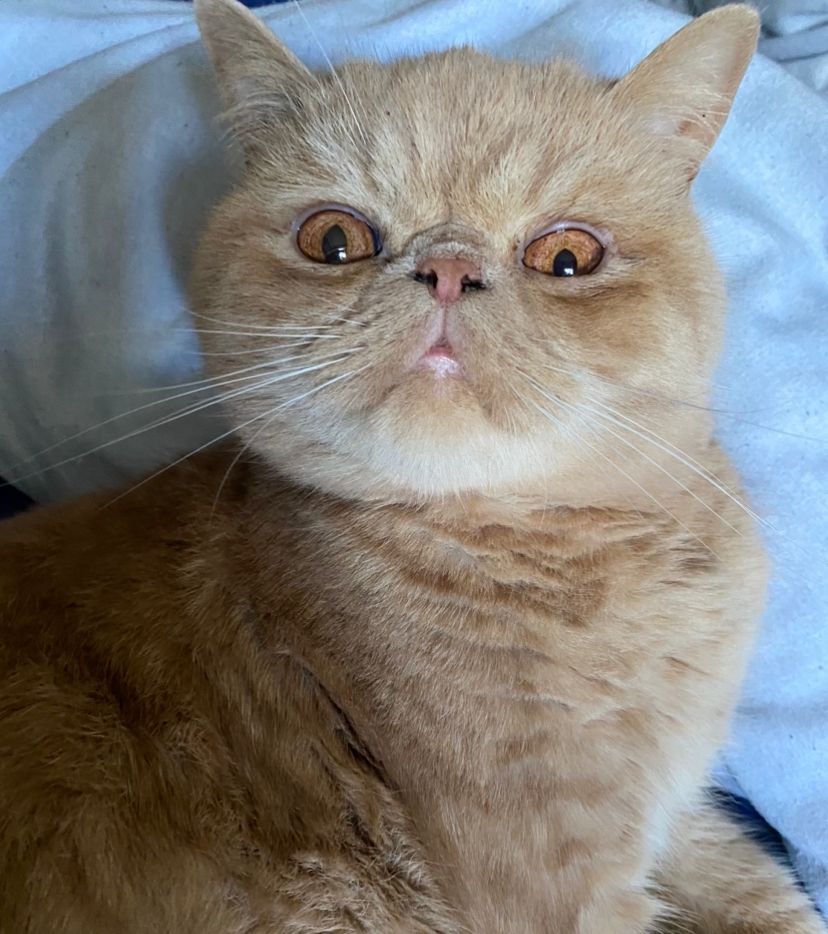
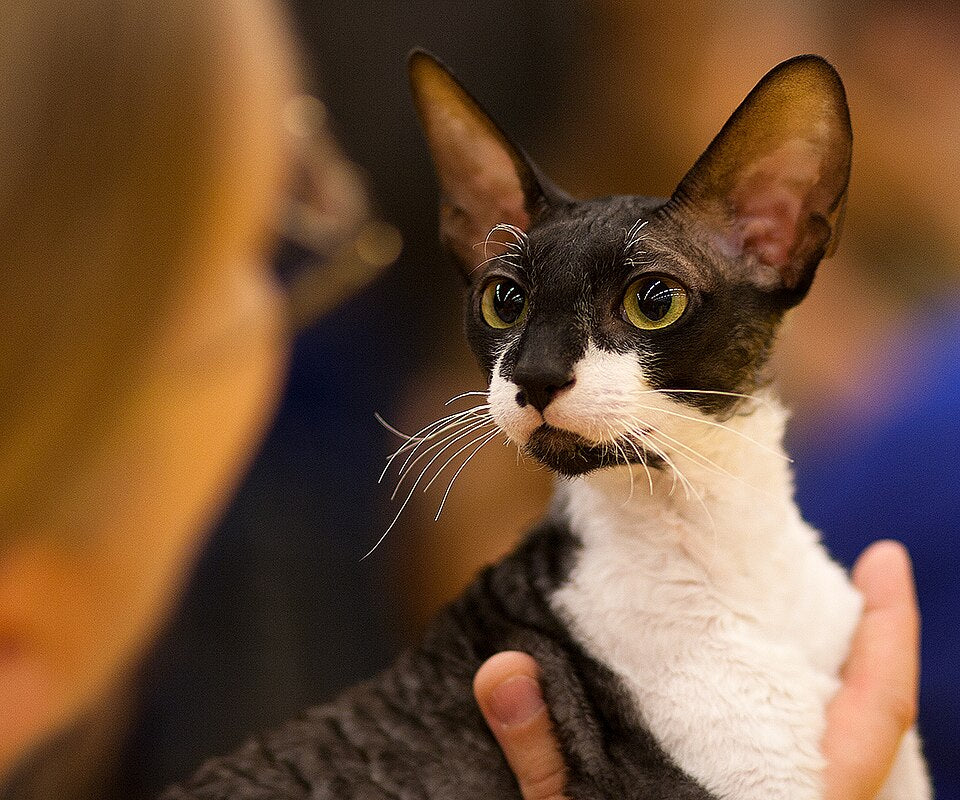
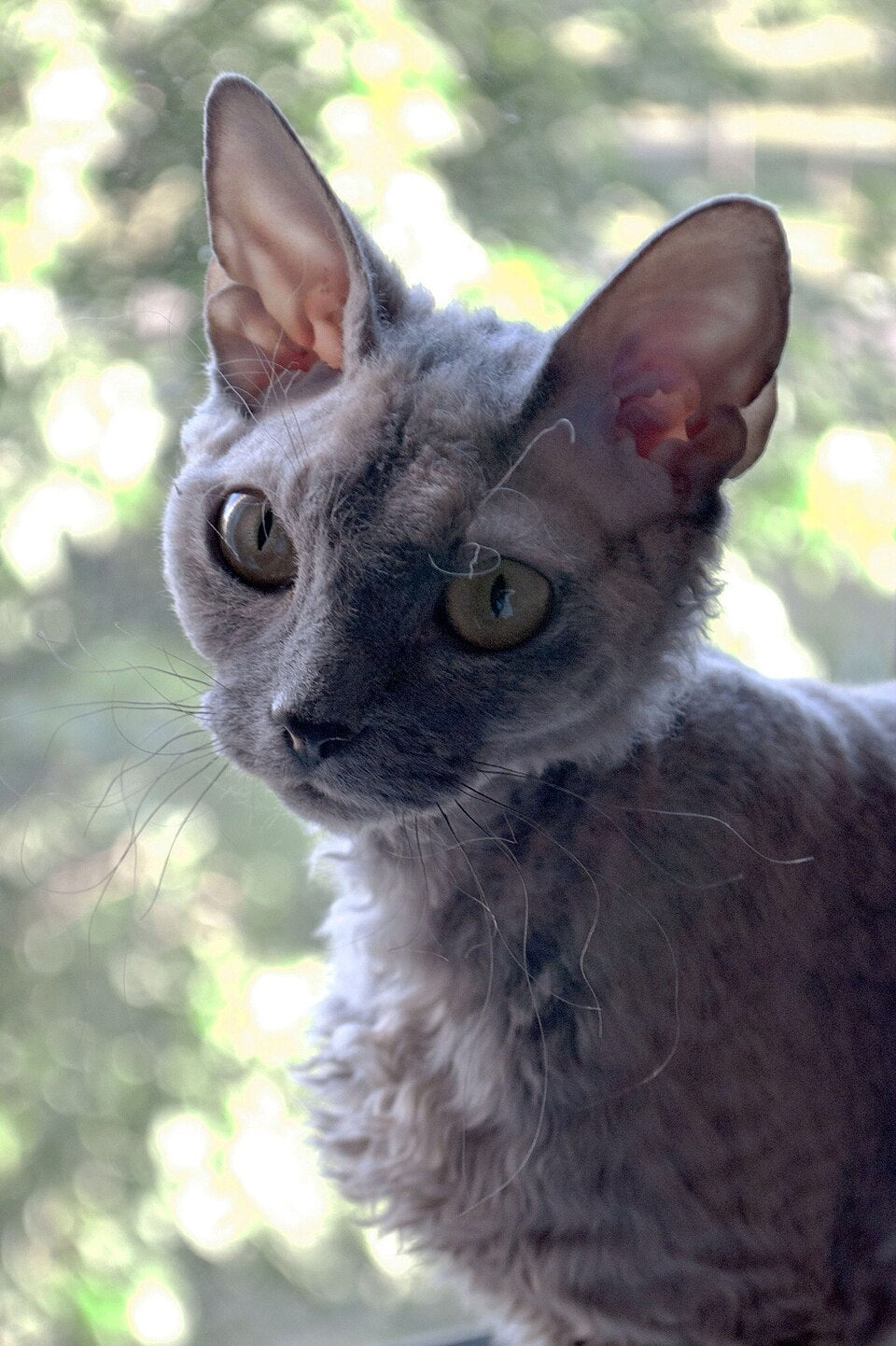
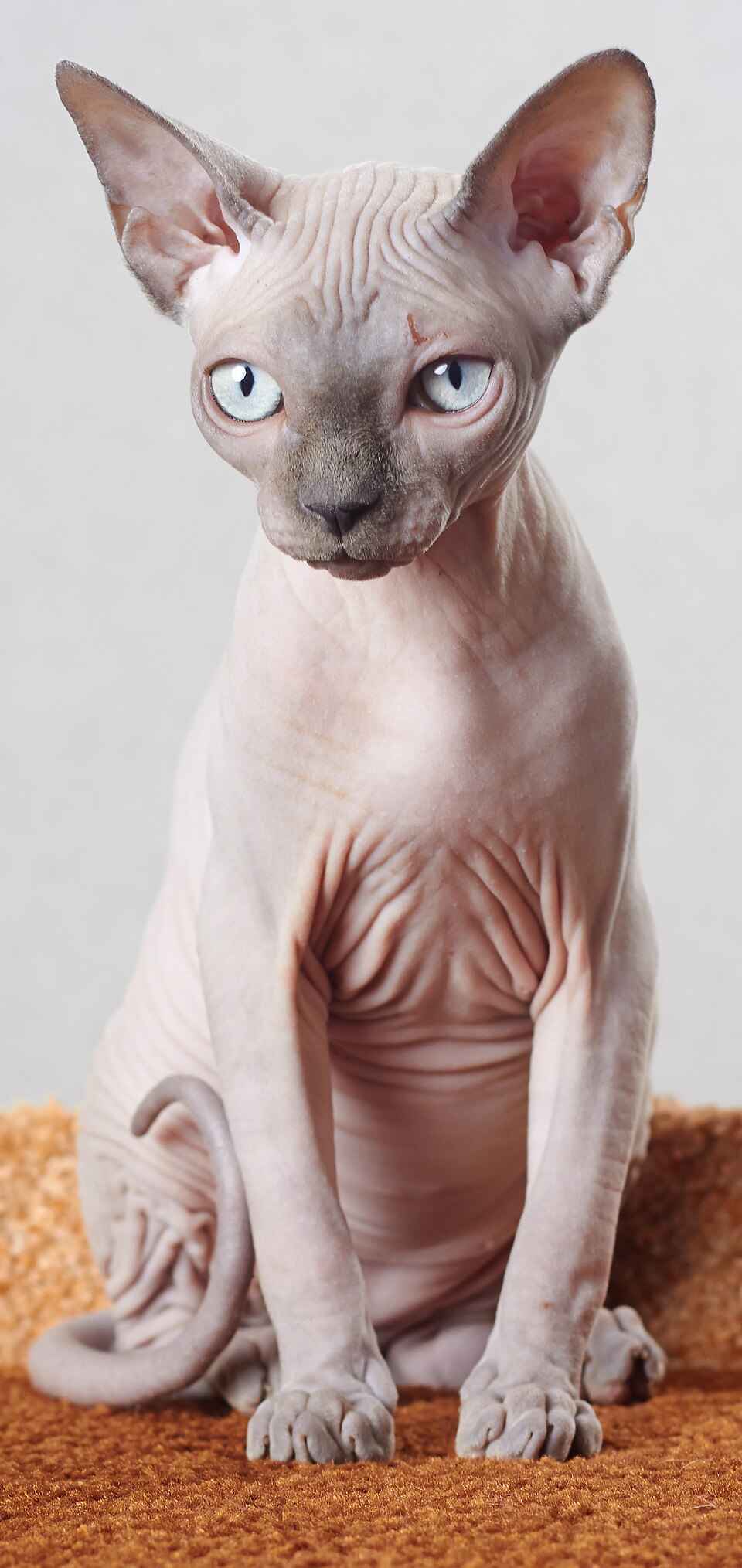
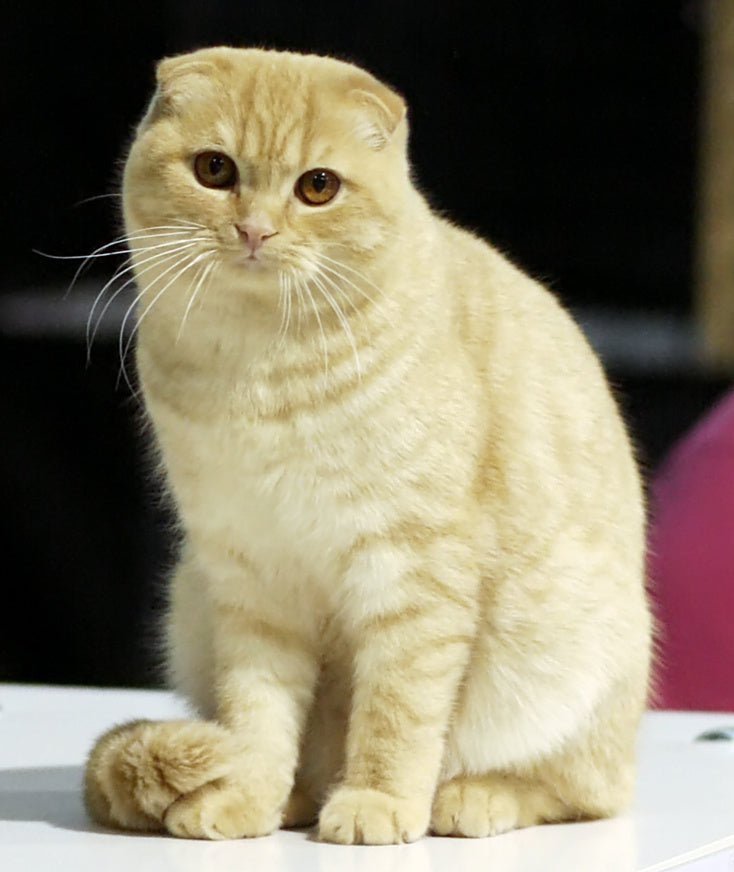
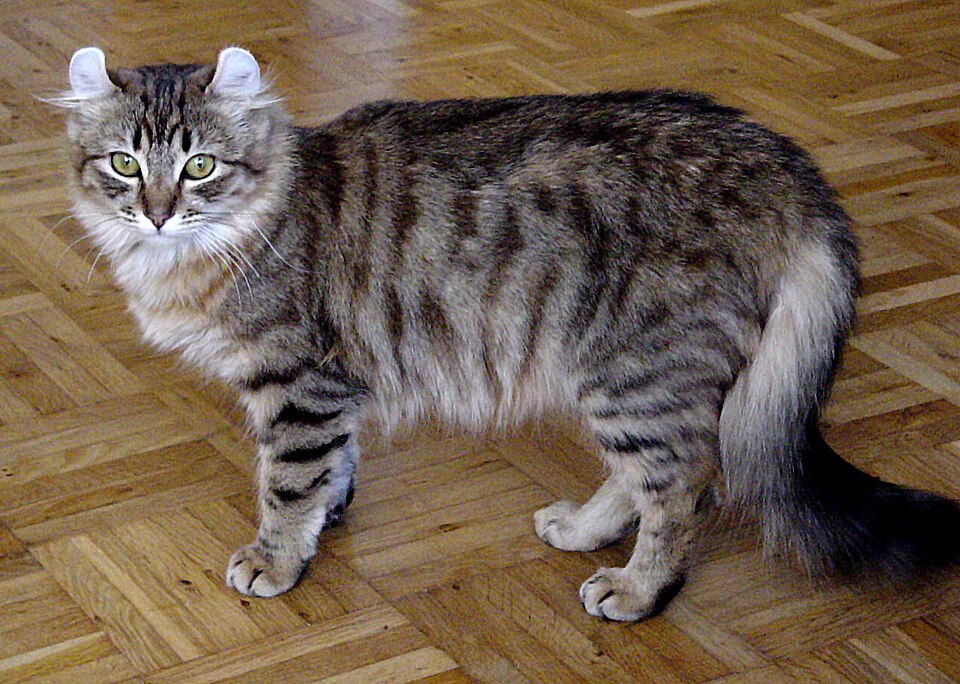
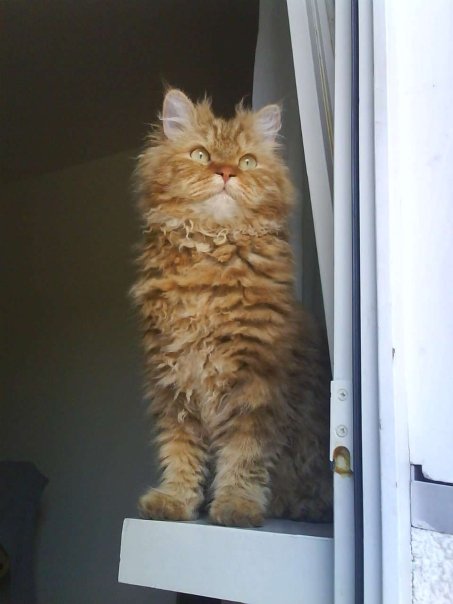
Spontaneous mutations fixed into breeds: curly coats, folded ears, hairless skin.
Bold crossings, sometimes with wild cats, for looks and gentleness.
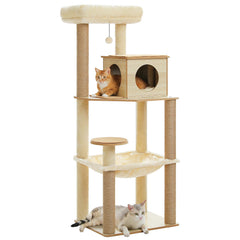
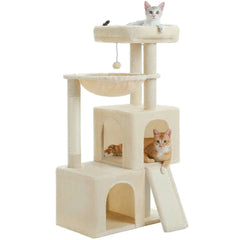
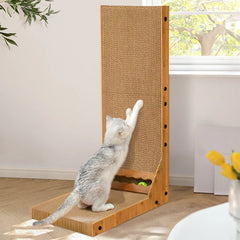
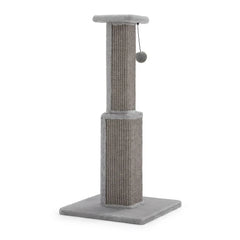
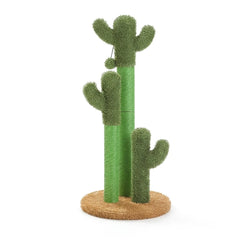
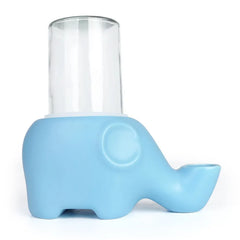
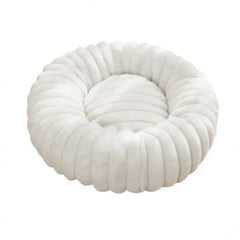
Cat trees, fountains, and stylish beds: gear up for every personality, from the giant Maine Coon to the chilly Sphynx.
Shop Now →Before they were breeds, cats were a long evolutionary story. The most distant ancestors of felines, the Miacids, lived around 50 million years ago: small carnivorous mammals from which both cats and dogs descend. Much later came Pseudaelurus, 9 to 20 million years ago, considered the last common ancestor of modern felines.
From that stock, felines diversified into eight major genetic lineages. The domestic cat belongs to the lineage of the genus Felis. DNA studies have shown that nearly all of our cats descend from a single wild subspecies, Felis silvestris lybica, native to the Near East. It was there, in the Fertile Crescent, that cats joined humans more than 9,000 years ago, drawn by the grain stores of the first farming villages and the rodents they sheltered.
In other words, every breed shown in this tree, from the Persian to the Bengal, shares the same ancestor. Their differences in coat, size, or temperament are the result of centuries of selection, first natural, then through breeding.
This tree groups breeds by how they came to be, from the oldest to the most recent. Each family uses the color of its era in the tree above.
Formed on their own, by adapting to a climate or region before any human selection: Egyptian Mau, Siamese, Turkish Angora, Chartreux. Some origins go back thousands of years.
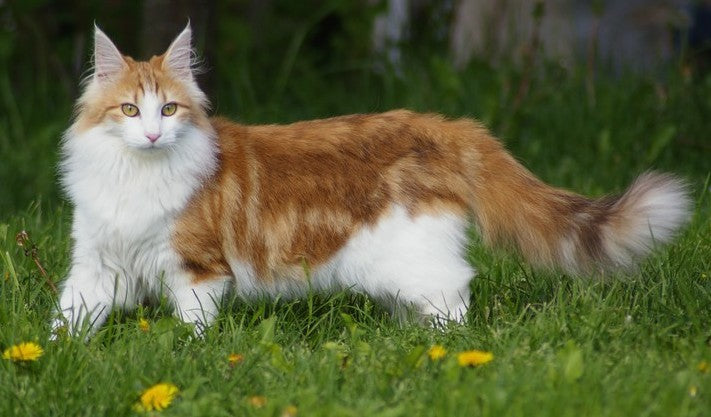
Developed and stabilized by breeders from existing populations: Maine Coon, Persian, Norwegian Forest Cat.
Born of a spontaneous mutation fixed through breeding: the Sphynx’s hairless skin, the Scottish Fold’s folded ears, the Devon Rex’s curly coat.
Recent crossings, sometimes with wild felines: Bengal, Savannah. They appeared between the 1960s and the 1980s.
The number of breeds varies depending on the organizations that recognize them. The LOOF (Livre Officiel des Origines Félines, the French feline registry) recognizes around sixty breeds; internationally, the FIFe recognizes about fifty, and other federations such as TICA or the CFA keep their own lists. That is why the same breed may be accepted by one and not another, or follow a slightly different standard.
A cat is considered purebred when it holds a pedigree issued by one of these organizations, attesting to its parentage and conformity to the standard. This tree presents a selection of the most iconic breeds: it does not aim to be exhaustive, but to give clear reference points on kinship ties and the history of each lineage.
Beyond lineage, each breed has its own traits. Here are a few pointers to guide you; click a breed to read its full profile.
Feline registries (LOOF in France, FIFe internationally) recognize between 50 and 70 official breeds. This family tree presents a selection of the most iconic ones, from ancient natural bloodlines to contemporary hybrids.
The Egyptian Mau and the Siamese are among the oldest breeds: their ancestors can be traced back to ancient Egypt and the temples of Siam more than 3,000 years ago.
Expect to pay generally $650 to $2,200 from breeders, depending on the breed, bloodline, and coat; some rare breeds like the Savannah run into the thousands. These figures are estimates: Le Félin doesn't sell cats, but offers everything you need to equip them.
Calm, homebody breeds like the British Shorthair, Ragdoll, Chartreux, and Persian thrive indoors. Each breed's "Apartment Living" rating helps you compare.
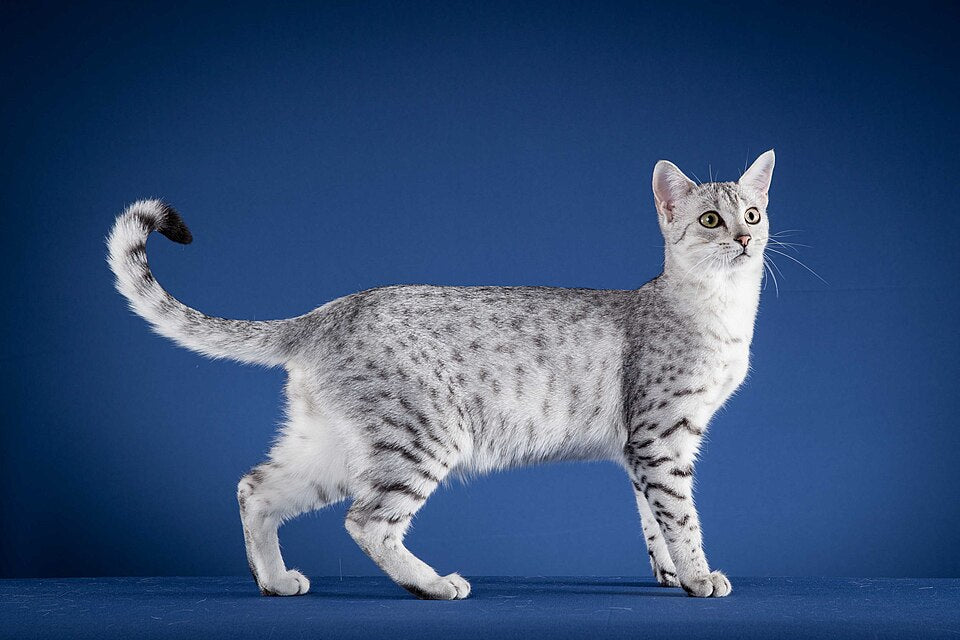
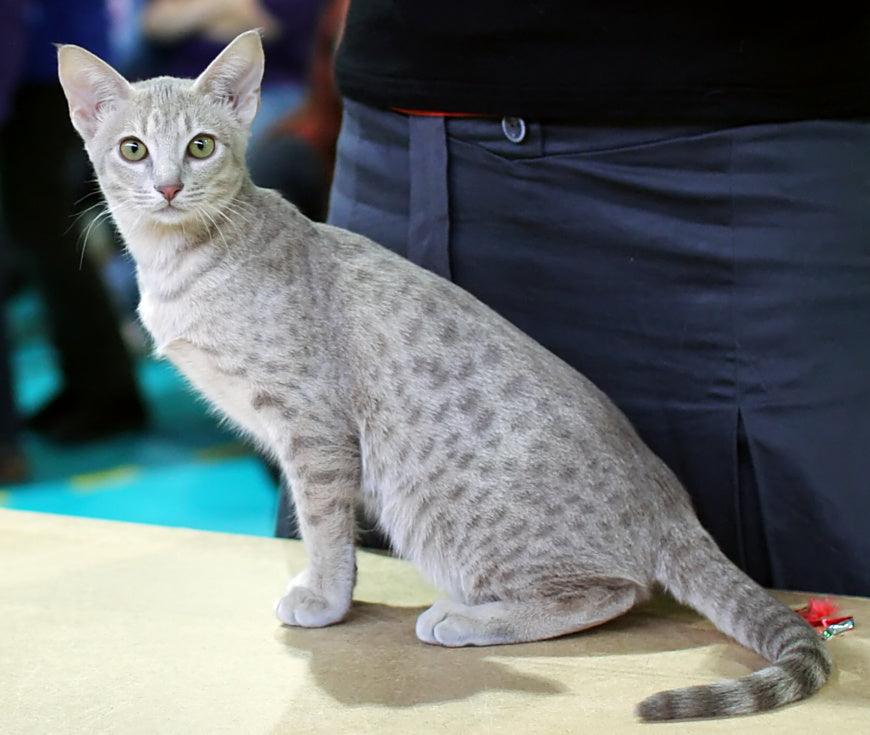
Revered in ancient Egypt and immortalized in pharaonic frescoes, the Mau is one of the few naturally spotted cat breeds. It's considered a direct ancestor of the modern domestic cat.
It's the fastest domestic cat in the world, reaching speeds close to 30 mph!
Egyptian MauNatural breed: no recorded ancestors or descendants in this tree.
Indicative breeder market prices. Le Félin does not sell cats: we outfit yours.
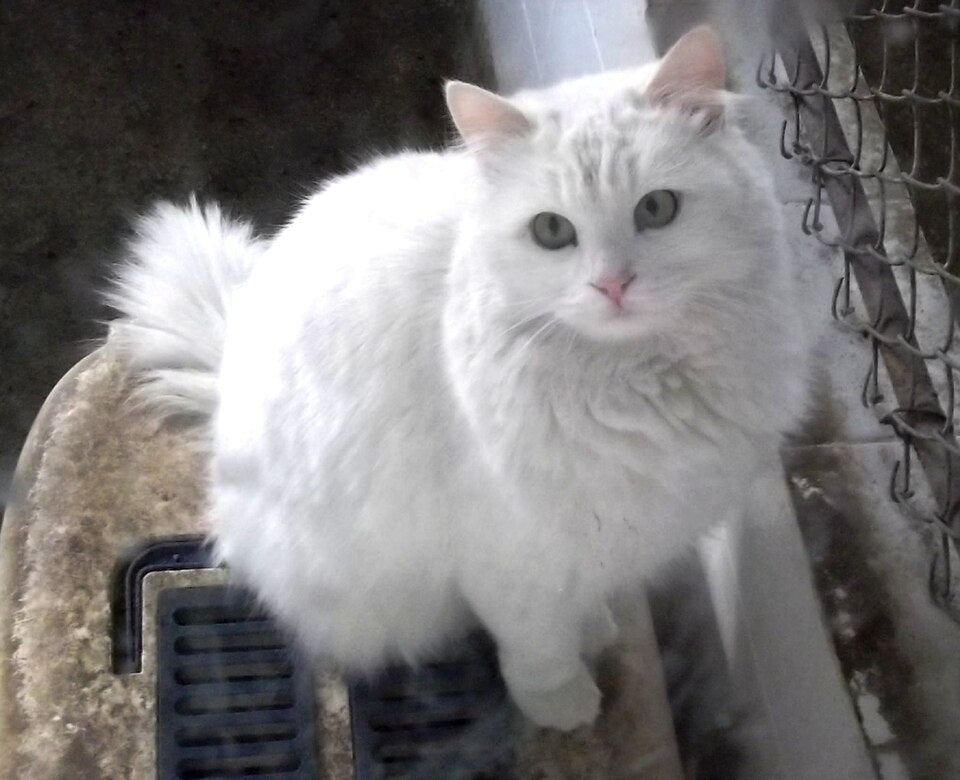
Hailing from Ankara, the Angora is the oldest long-haired cat breed known in the West. Once a diplomatic gift from Ottoman sultans, it's the source of the long coat found in many modern breeds.
Many have odd eyes: one blue and one amber or green.
Turkish AngoraIndicative breeder market prices. Le Félin does not sell cats: we outfit yours.
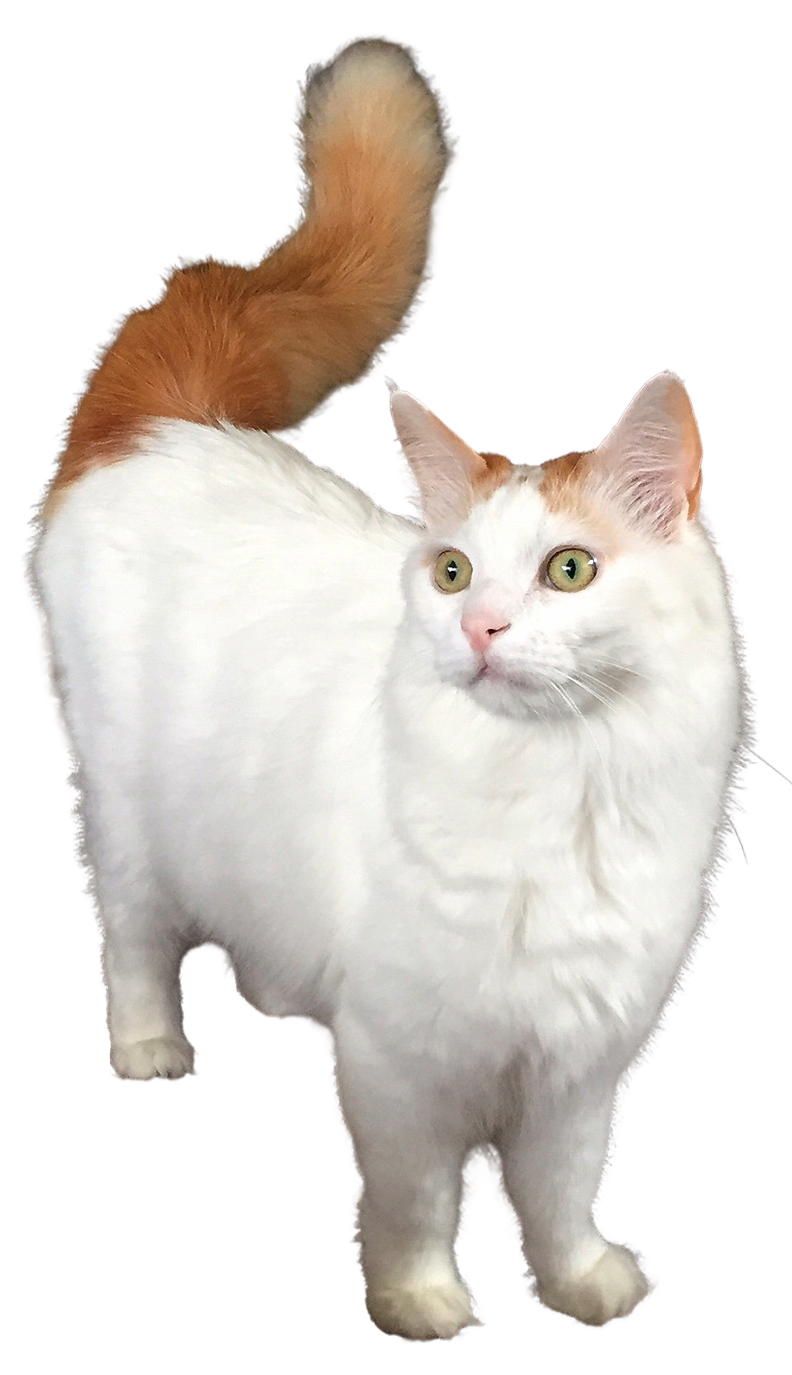
From the Lake Van basin, this white cat with a red-and-white tail loves water: a rare trait among felines. It's a natural breed that stayed isolated for centuries.
Nicknamed the "swimming cat," it loves to paddle and bathe, a rare trait for a feline.
Turkish VanNatural breed: no recorded ancestors or descendants in this tree.
Indicative breeder market prices. Le Félin does not sell cats: we outfit yours.
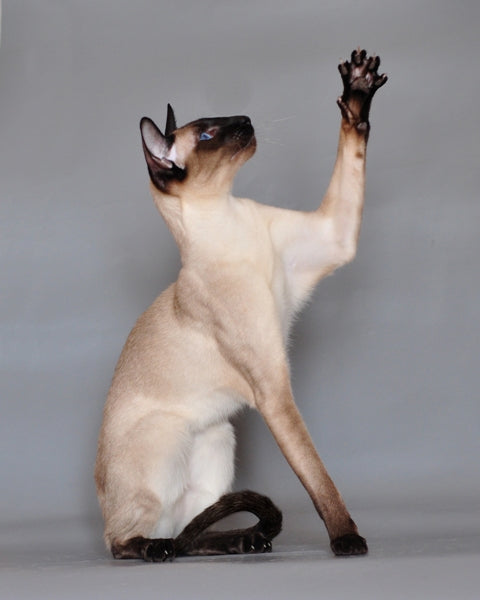
A sacred temple cat of Siam once reserved for royalty, its "colorpoint" coat and sapphire eyes made it the most imitated breed in the world: the foundation of countless descendant breeds.
Kittens are born pure white: their dark markings only appear once they're exposed to cooler temperatures.
SiamoisIndicative breeder market prices. Le Félin does not sell cats: we outfit yours.
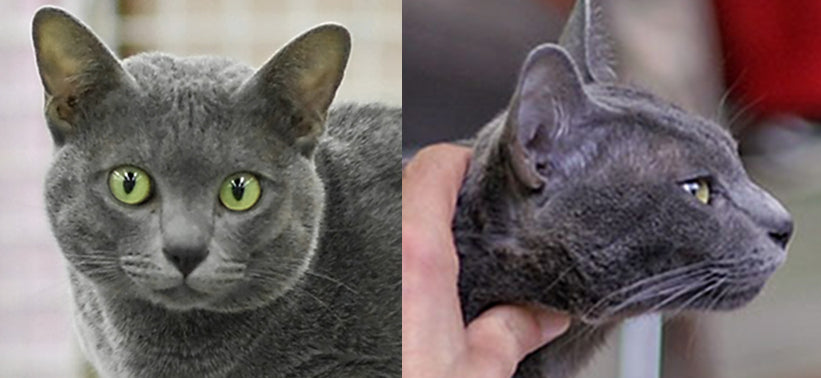
Known as "Si-Sawat," the silver-blue Korat is given in pairs as a good-luck gift at Thai weddings. It's a pure natural breed that was never crossbred for centuries.
In Thailand, pairs are given to newlyweds for good luck.
KoratNatural breed: no recorded ancestors or descendants in this tree.
Indicative breeder market prices. Le Félin does not sell cats: we outfit yours.
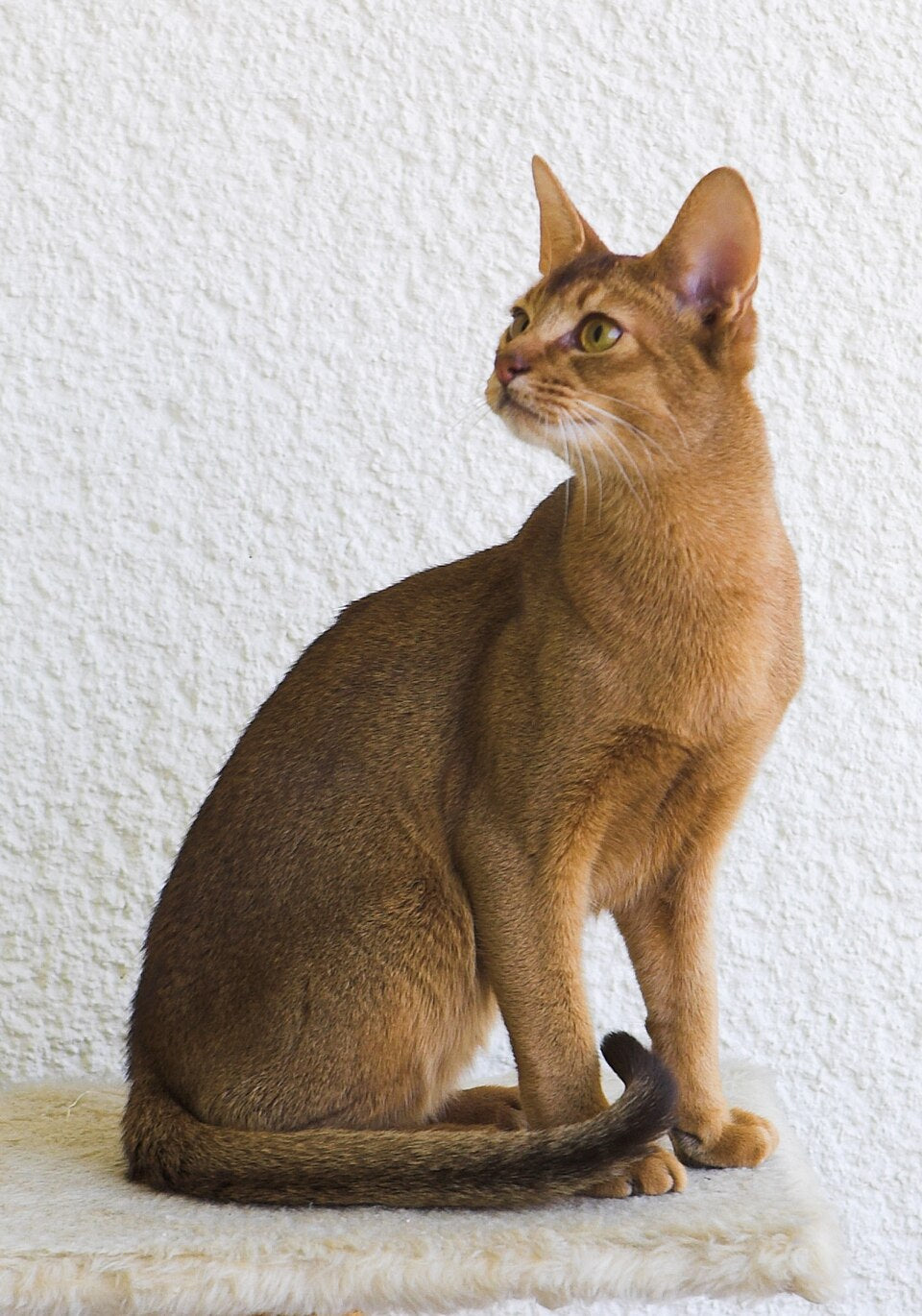
With a "ticked" coat reminiscent of the cats in ancient Egyptian frescoes, the Abyssinian was brought to England from the Indian Ocean coast. It's one of the oldest recognized show breeds.
Each hair is banded with color ("ticked"), giving its coat the shimmer of a wild hare.
AbyssinIndicative breeder market prices. Le Félin does not sell cats: we outfit yours.
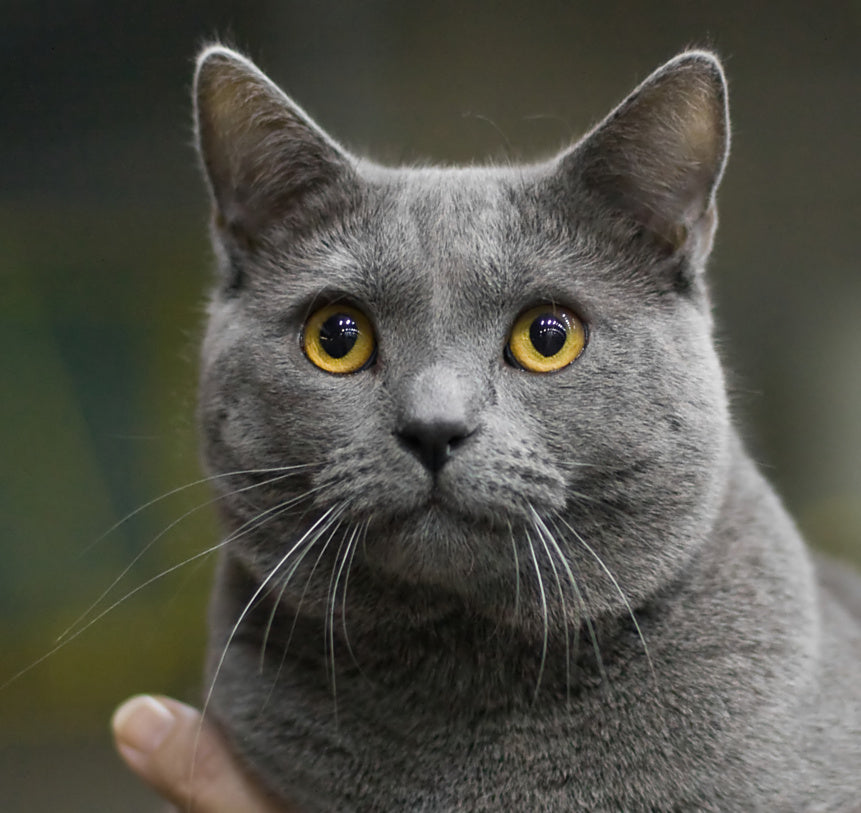
France's blue cat, with its enigmatic smile and woolly coat. Documented as early as the 18th century and celebrated by writer Colette, it's sturdy, quiet, and deeply attached to home.
Known for being nearly silent, it's said to "smile" thanks to its round, cheerful face.
ChartreuxNatural breed: no recorded ancestors or descendants in this tree.
Indicative breeder market prices. Le Félin does not sell cats: we outfit yours.
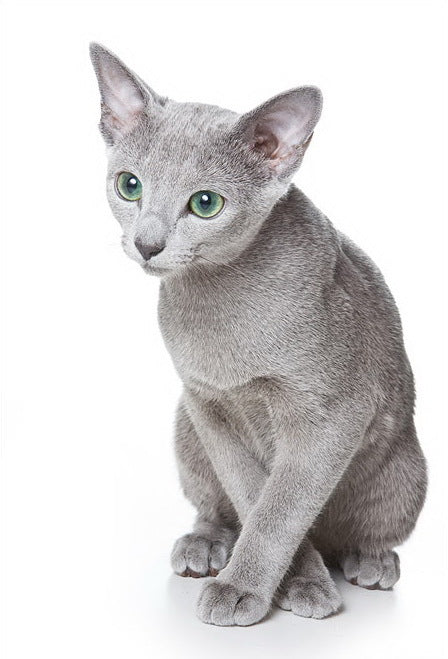
Hailing from the port of Arkhangelsk in Russia's far north, his double coat of silver-tipped blue fur kept him warm through brutal winters. Reserved by nature, he bonds intensely with just one person.
A silvery coat, emerald green eyes… and he produces fewer allergens than most cats.
Russian BlueNatural breed: no recorded ancestors or descendants in this tree.
Indicative breeder market prices. Le Félin does not sell cats: we outfit yours.
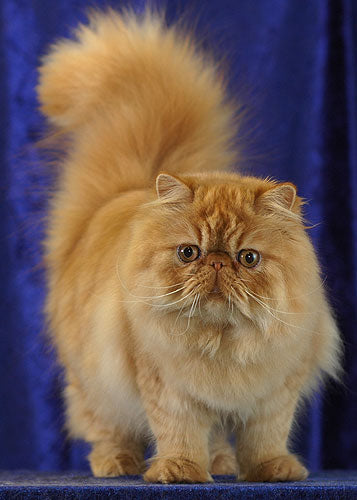
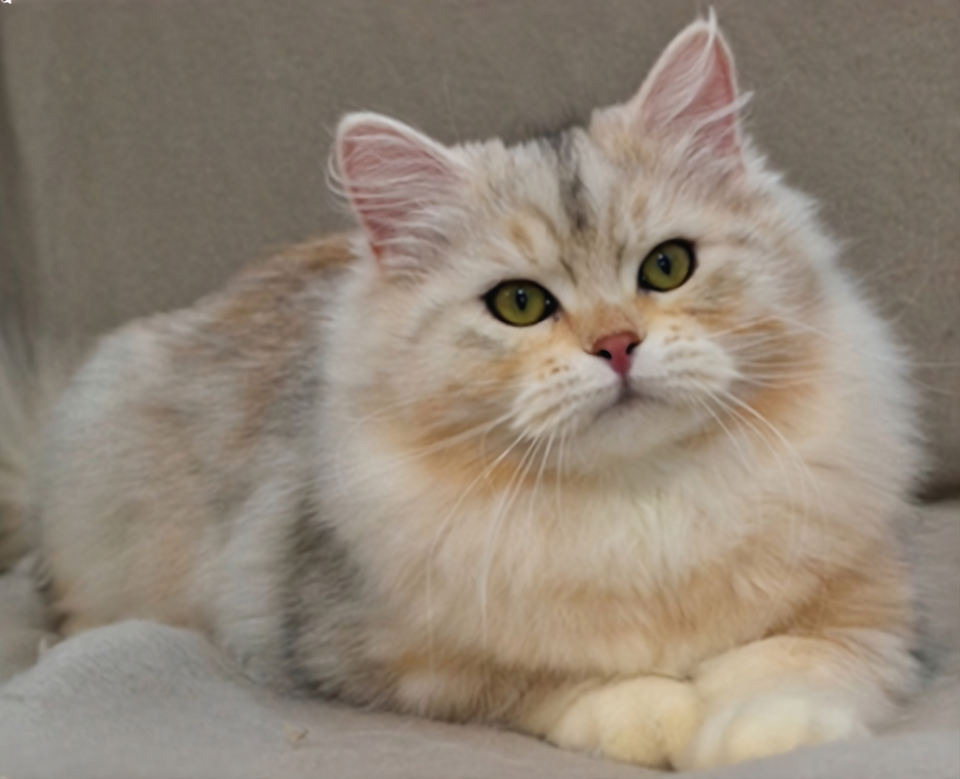
Brought back from Persia in the 17th century, the Persian is the archetype of the luxury cat: flat face, abundant fur, a regal gait. A genetic pillar behind both the Himalayan and the Exotic Shorthair.
It's the oldest long-haired breed recognized in the West.
PersanIndicative breeder market prices. Le Félin does not sell cats: we outfit yours.
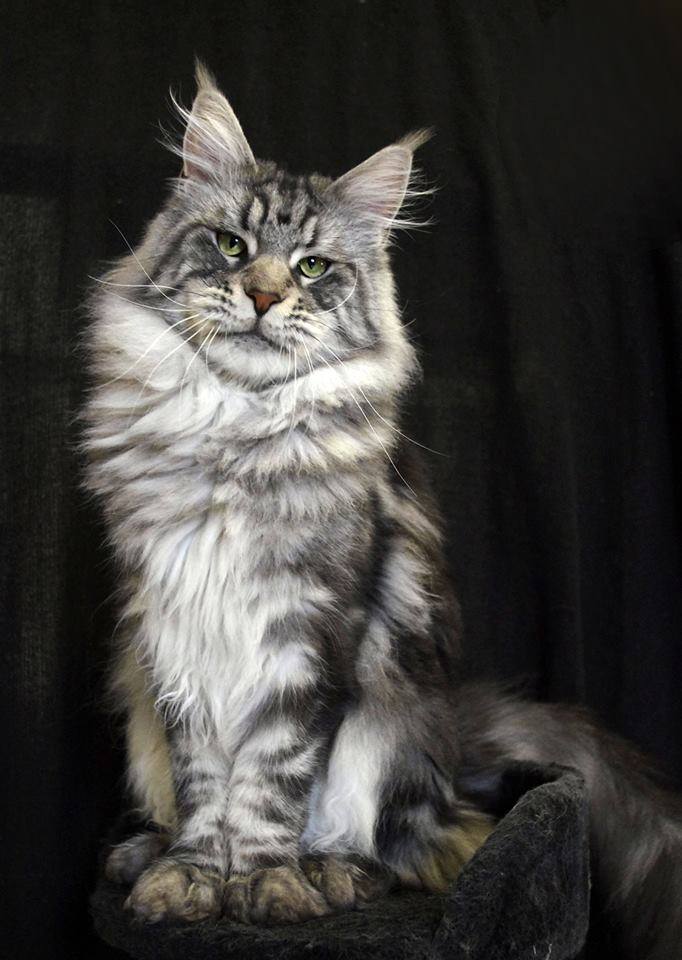
The gentle giant of Maine's farms, shaped by harsh winters: snowshoe paws, a plume-like tail, and record-setting size. The original star of America's cat shows.
The largest domestic cat breed in the world: some measure over 4 feet (1.2 m) from nose to tail!
Maine CoonNatural breed: no recorded ancestors or descendants in this tree.
Indicative breeder market prices. Le Félin does not sell cats: we outfit yours.
The "Skogkatt" of Viking legend, said to have pulled the goddess Freyja's chariot. An exceptional climber with a water-repellent coat, shaped by Scandinavia's forests.
In Viking mythology, he pulled the chariot of the goddess Freyja.
Norwegian Forest CatNatural breed: no recorded ancestors or descendants in this tree.
Indicative breeder market prices. Le Félin does not sell cats: we outfit yours.
Russia's national cat, a true survivor of the taiga. His triple coat withstands temperatures as low as -30°C, and he's known for being hypoallergenic. Affectionate yet powerfully built.
Often well tolerated by allergy sufferers: he produces less Fel d1 protein.
SiberianNatural breed: no recorded ancestors or descendants in this tree.
Indicative breeder market prices. Le Félin does not sell cats: we outfit yours.
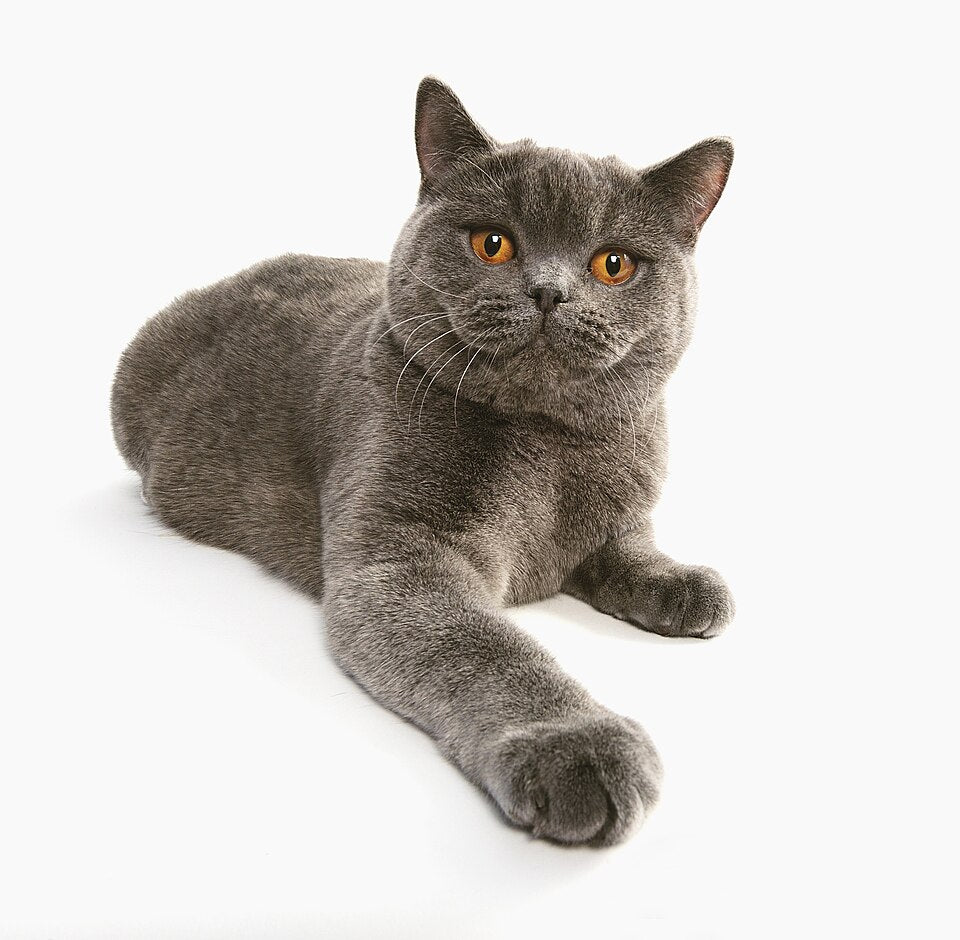
Descended from the Roman cats of England, standardized as early as the first cat show in 1871. Round cheeks and a plush coat: he's said to have inspired the Cheshire Cat from Alice in Wonderland.
He's said to have inspired the Cheshire Cat in "Alice in Wonderland."
British ShorthairIndicative breeder market prices. Le Félin does not sell cats: we outfit yours.
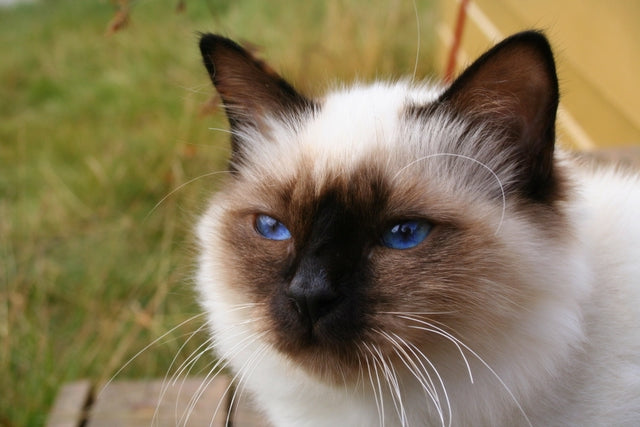
Legend of the Burmese temples: white "gloves" on his paws and blue eyes, a mark of blessing. The breed was rebuilt in France in the 1920s after nearly going extinct.
Legend has it his white "gloves" were a gift from a Burmese goddess.
Birman (Sacred Cat of Burma)Indicative breeder market prices. Le Félin does not sell cats: we outfit yours.
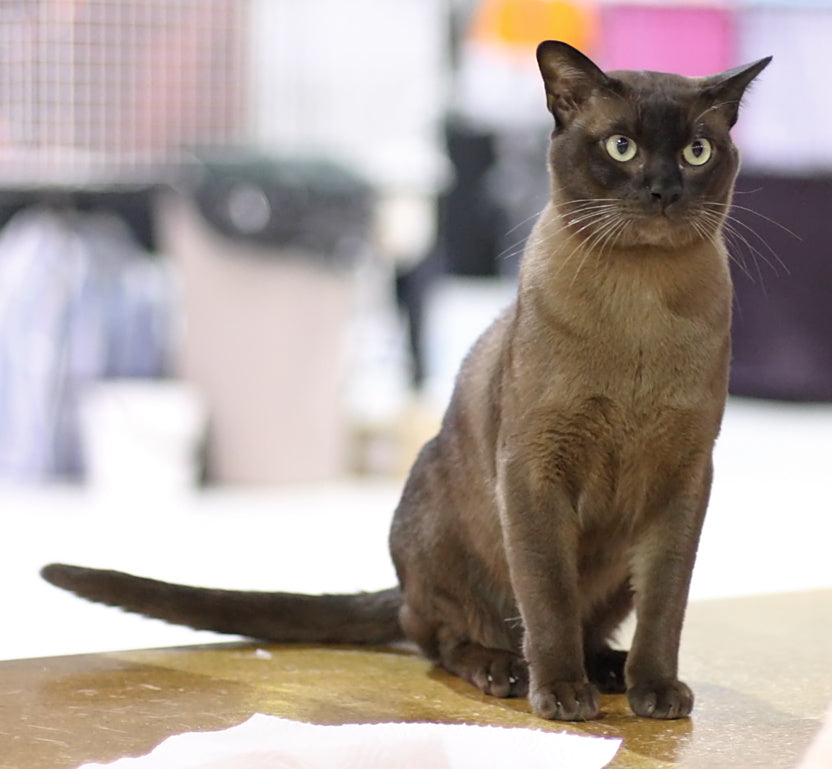
Descended from a brown female cat named Wong Mau, crossed with Siamese cats in the United States. Compact and muscular, with a glossy sable coat, it's one of the most devoted velcro cats out there.
All Burmese cats are said to descend from a single female cat, Wong Mau, who arrived in the US in 1930.
BurmeseIndicative breeder market prices. Le Félin does not sell cats: we outfit yours.
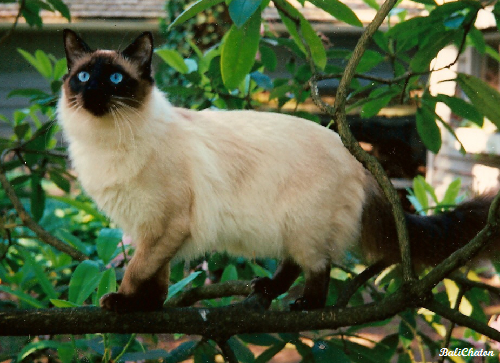
A medium-haired Siamese that appeared naturally in litters. Its graceful silhouette brought to mind the dancers of Bali. All the intelligence of the Siamese, wrapped in a silkier coat.
Its name pays tribute to the dancers of Bali, in honor of its graceful movements.
BalinaisIndicative breeder market prices. Le Félin does not sell cats: we outfit yours.
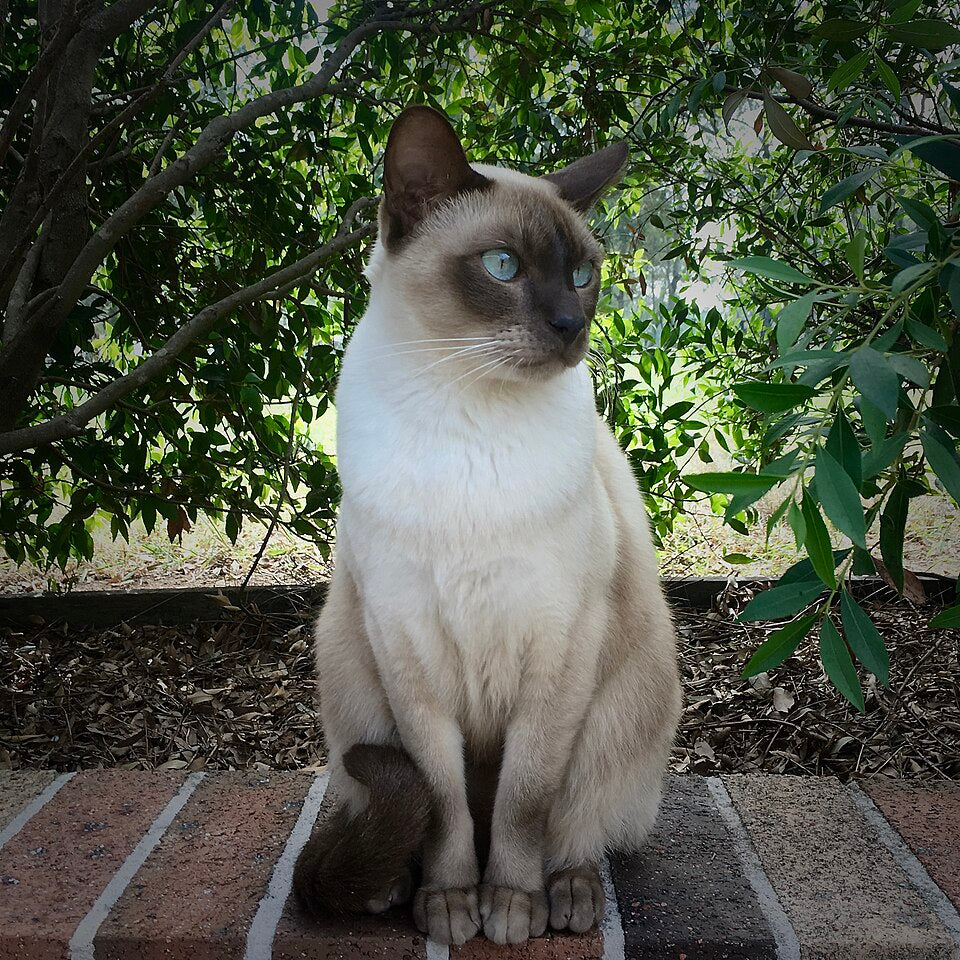
The perfect blend of Siamese and Burmese: aquamarine eyes and a "mink" coat. Balanced in every way, less vocal than the Siamese, more adventurous than the Burmese.
Its eyes often take on a unique aquamarine shade, somewhere between blue and green.
TonkinoisIndicative breeder market prices. Le Félin does not sell cats: we outfit yours.
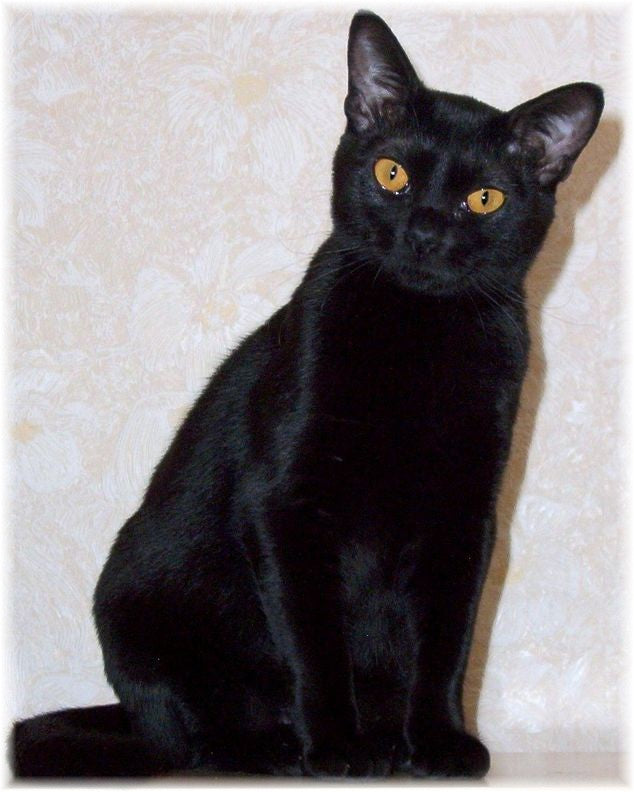
Bred to resemble a miniature black panther, a cross between the Burmese and the black American Shorthair. Its coat is inky and glossy, with copper eyes. A gentle house cat with a wild look.
It was bred to resemble a miniature black panther, copper eyes included.
BombayIndicative breeder market prices. Le Félin does not sell cats: we outfit yours.
The luxury of the Persian dressed in the Siamese's colorpoint pattern: long fur and a dark mask with blue eyes. A gorgeous indoor cat, calm and thoroughly homebody at heart.
It's essentially a Persian wearing the Siamese's colored mask and blue eyes.
HimalayenIndicative breeder market prices. Le Félin does not sell cats: we outfit yours.
Known as "the Persian in pajamas," it has all the round-faced charm of the Persian but with an easy-care short coat. Born from crossing the Persian with the American/British Shorthair, it's the ideal easygoing companion.
Nicknamed "the lazy person's Persian," it has the same adorable face but with a low-maintenance short coat.
Exotic ShorthairIndicative breeder market prices. Le Félin does not sell cats: we outfit yours.
Born from a genetic mutation on a farm in Cornwall, its wavy coat has no guard hairs and feels soft as velvet. It has the build of a greyhound and the energy of a young goat.
It has only an undercoat: its wavy fur is warm and soft as velvet.
Cornish RexNatural breed: no recorded ancestors or descendants in this tree.
Indicative breeder market prices. Le Félin does not sell cats: we outfit yours.
Devon's "pixie cat": big elf-like ears, a curly coat, and a mischievous look. A distinct mutation from the Cornish Rex, appearing a decade later.
With its big elf-like ears, it's nicknamed the "pixie cat."
Devon RexNatural breed: no recorded ancestors or descendants in this tree.
Indicative breeder market prices. Le Félin does not sell cats: we outfit yours.
Descended from a hairless kitten born in Toronto in 1966, the Sphynx isn't really hairless: a fine peach-fuzz down covers its warm skin. Cold-sensitive, it seeks out laps and radiators.
It's not really naked: a fine down covers it, and its skin feels warm to the touch.
SphynxNatural breed: no recorded ancestors or descendants in this tree.
Indicative breeder market prices. Le Félin does not sell cats: we outfit yours.
It all began with Susie, a Scottish cat with ears folded forward in 1961. This cartilage mutation gives her an unmistakable owl-like face.
They all descend from Susie, a Scottish cat with folded ears born in 1961.
Scottish FoldNatural breed: no recorded ancestors or descendants in this tree.
Indicative breeder market prices. Le Félin does not sell cats: we outfit yours.
In 1981, a stray cat with ears curled backward was taken in in California. Her "petal" ears became fixed as a breed found nowhere else in the world.
Its kittens are born with straight ears: they curl backward within a few days.
American CurlNatural breed: no recorded ancestors or descendants in this tree.
Indicative breeder market prices. Le Félin does not sell cats: we outfit yours.
The "teddy bear cat": a curly-coated mutation discovered in Montana, crossed with Persians for extra roundness. Curls all the way down to the whiskers, with a placid temperament.
Even its whiskers are curly: it's nicknamed "the teddy bear cat."
Selkirk RexIndicative breeder market prices. Le Félin does not sell cats: we outfit yours.
A happy accident: a Siamese x Abyssinian cross produced a kitten spotted like an ocelot. Entirely domestic despite its wild look, it's a sociable athlete.
It looks like a wild ocelot, but it's 100% domestic... and born by chance!
OcicatIndicative breeder market prices. Le Félin does not sell cats: we outfit yours.
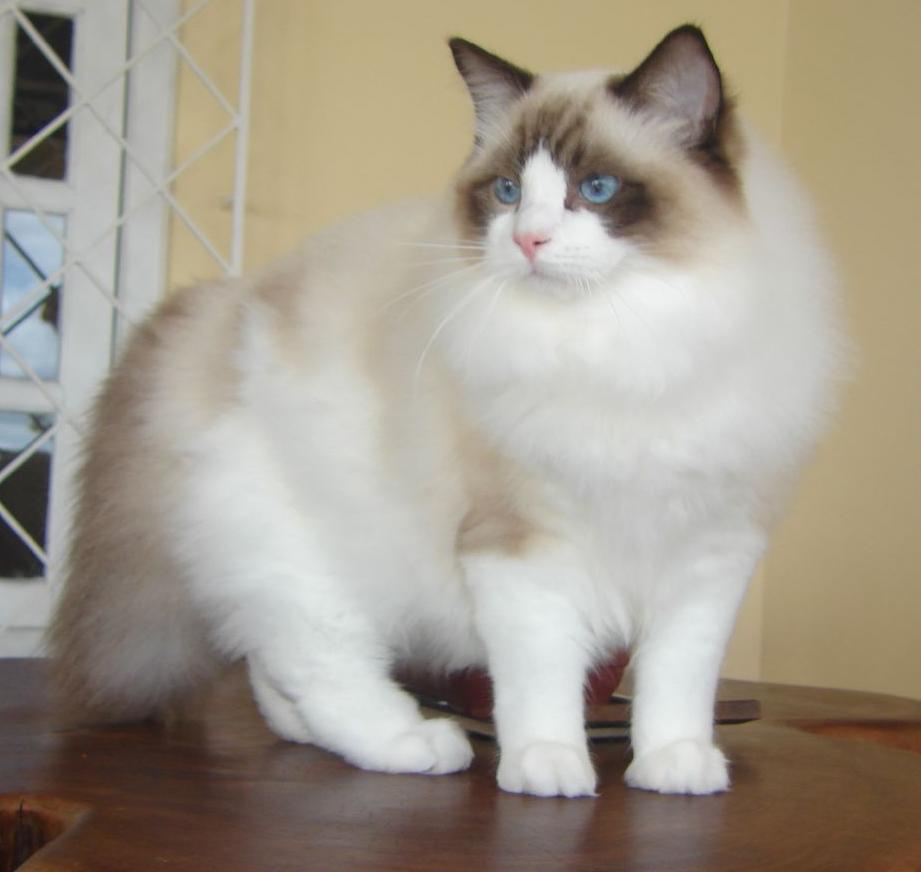
"Rag doll": the Ragdoll goes limp in your arms, completely relaxed. Created in California by Ann Baker, it's a gentle blue-eyed giant, built for indoor life.
When picked up, he goes completely limp, which is how he got his name: "rag doll."
RagdollIndicative breeder market prices. Le Félin does not sell cats: we outfit yours.
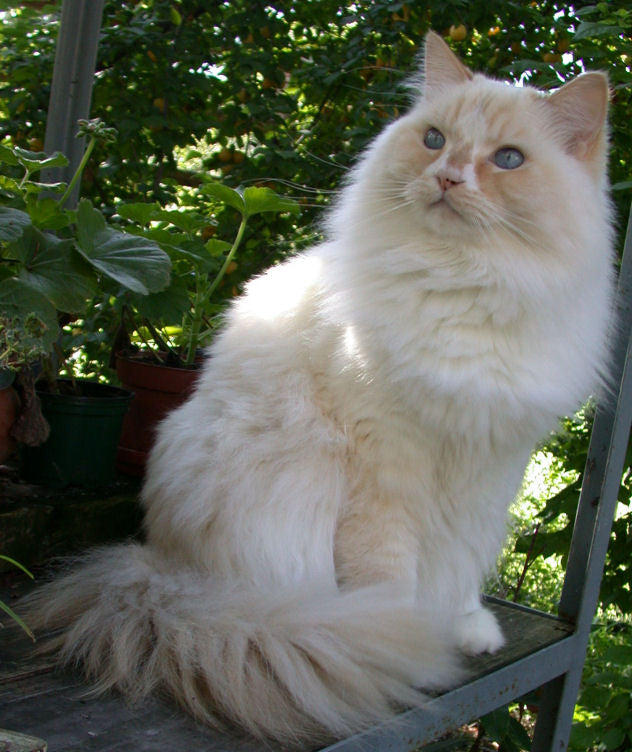
A branch of the Ragdoll expanded to new colors in the 1990s. Same melt-in-your-arms temperament, same impressive size, with an even richer palette of coat colors.
A cousin of the Ragdoll, he comes in a much wider range of coat colors and patterns.
RagamuffinIndicative breeder market prices. Le Félin does not sell cats: we outfit yours.
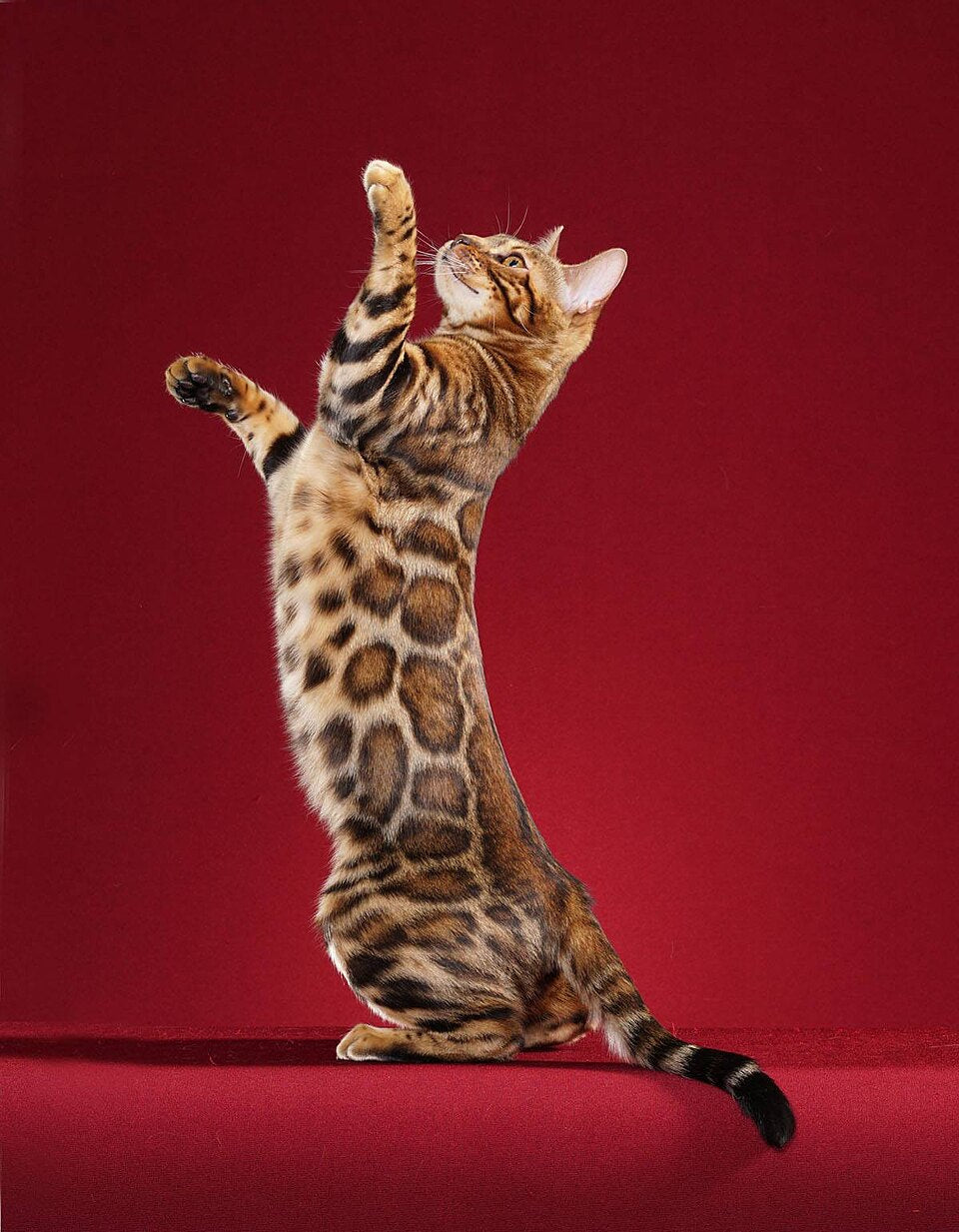
The living room leopard: a cross between a domestic cat and the Asian leopard cat, stabilized as a breed in the 1980s. Golden rosettes, boundless energy, and a love of water.
He descends from the Asian leopard cat, and unusually for a cat, many Bengals love playing in water.
BengalIndicative breeder market prices. Le Félin does not sell cats: we outfit yours.
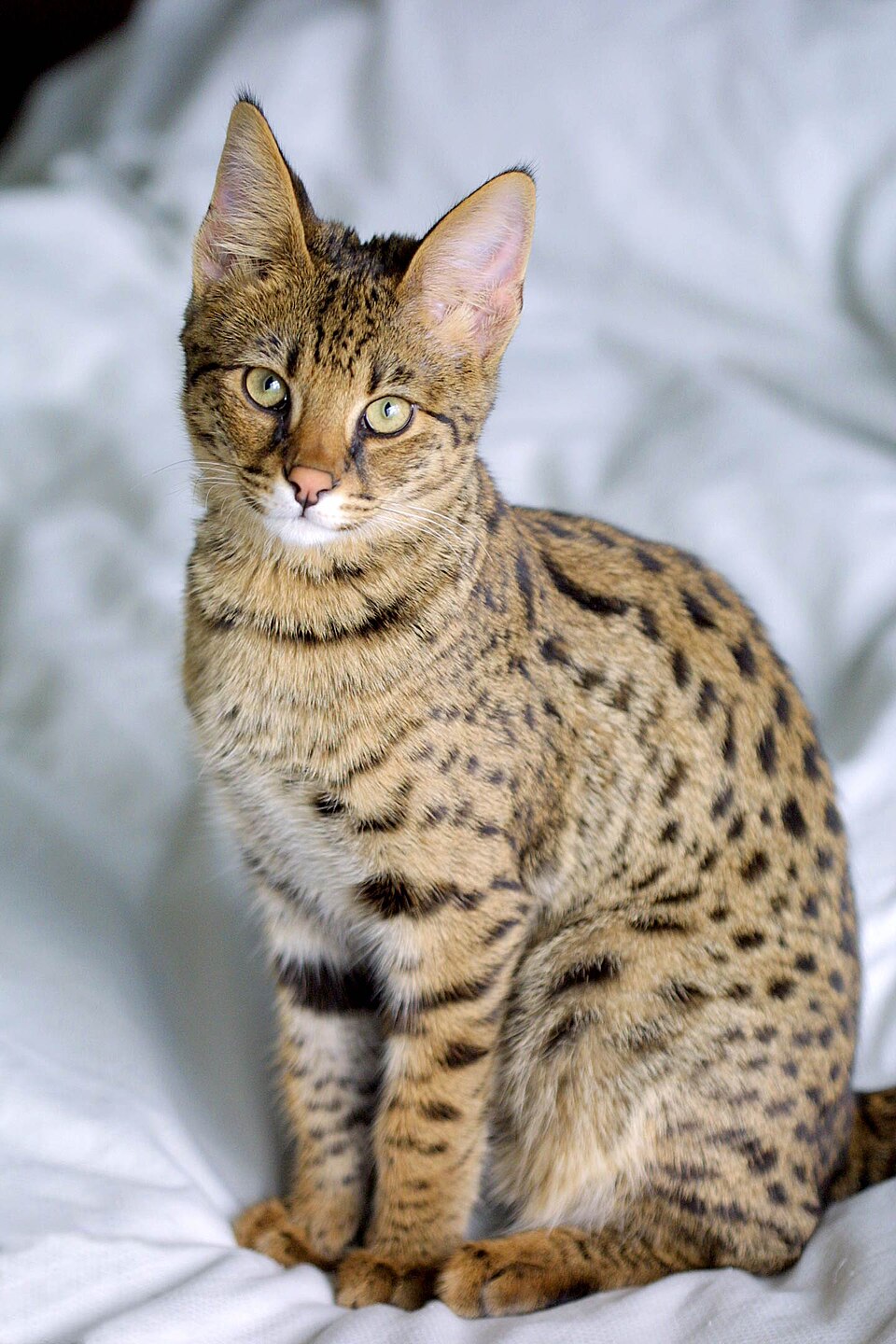
The largest of all domestic cats, born from a cross with the African serval. Endlessly long legs, radar-like ears, the look of a miniature wild cat, and a thirst for adventure.
Descended from the serval, he's the largest domestic cat breed: he can jump up to 8 feet (2.5 m) high!
SavannahNatural breed: no recorded ancestors or descendants in this tree.
Indicative breeder market prices. Le Félin does not sell cats: we outfit yours.
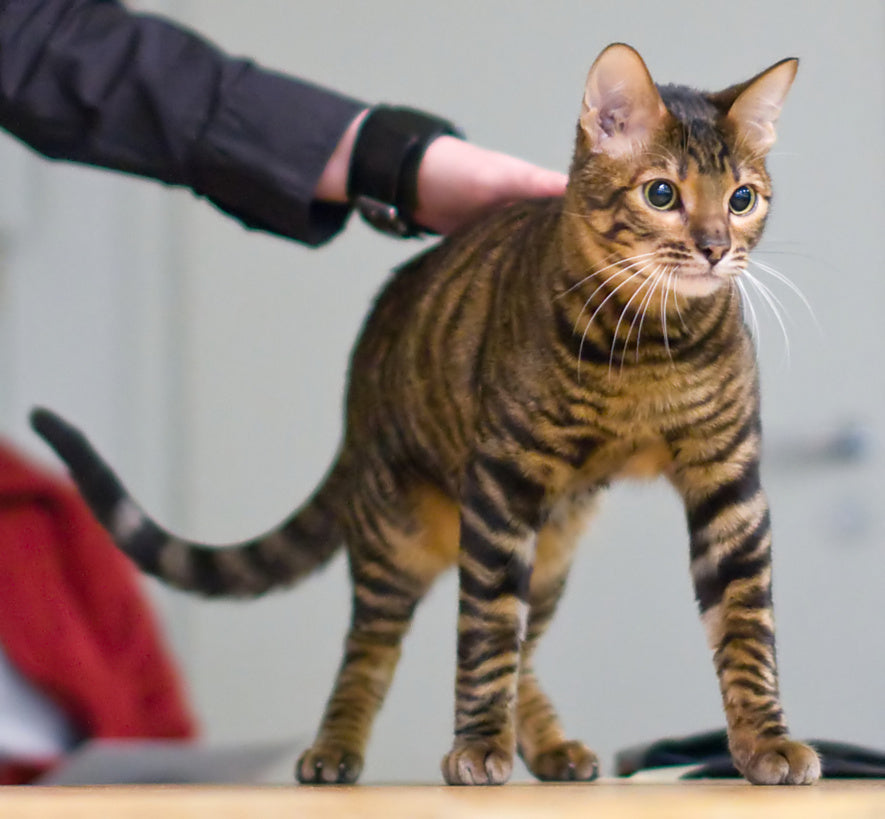
Bred to look like a pocket-sized tiger: a Bengal selectively bred for vertical stripes. A young, rare breed with a golden coat streaked in ink black, gentle despite its wild look.
He was selectively bred to resemble a miniature tiger, vertical stripes included.
ToygerIndicative breeder market prices. Le Félin does not sell cats: we outfit yours.